.webp&w=384&q=75)

Loading, please wait...
Loading, please wait...
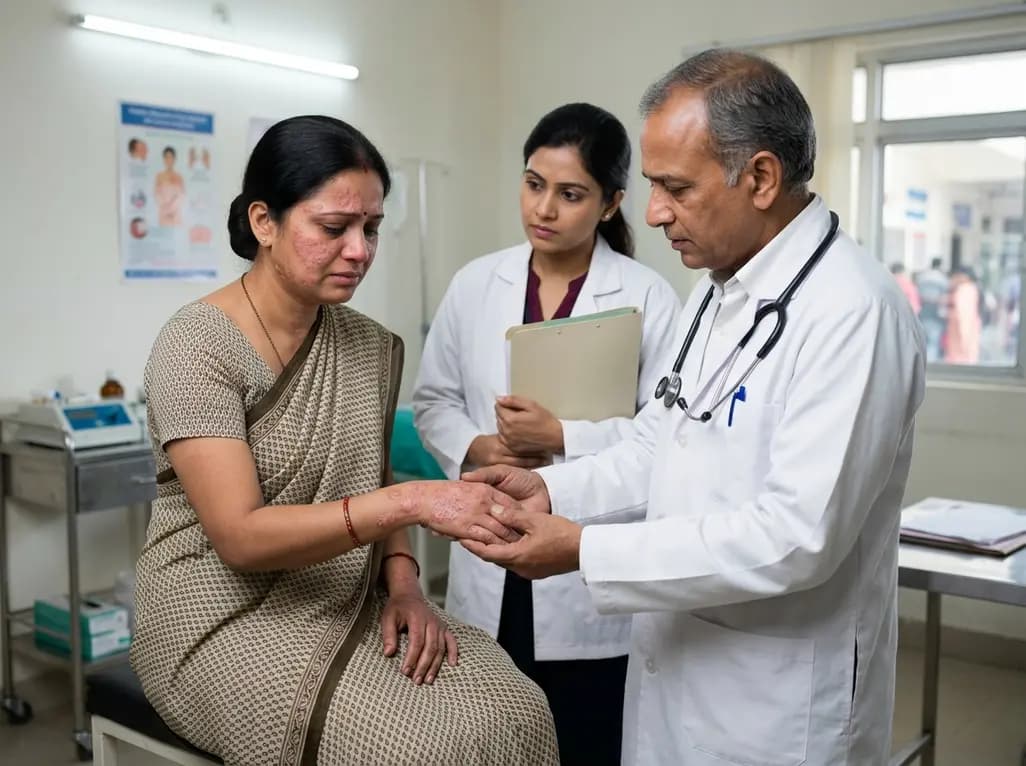
Visible skin disease mental health represents a significant challenge for healthcare providers globally. Specifically, lesions appearing on the hands and face often cause profound psychological distress because these areas are central to social communication. Therefore, clinicians must recognize the deep emotional impact of dermatological conditions. Studies show that visibility often dictates the severity of psychological outcomes, regardless of the underlying medical diagnosis.
Recent research provides striking evidence regarding this psychological burden. For instance, a systematic review involving over 12,000 patients identified a depression prevalence of 38%. Furthermore, anxiety rates reached nearly 44% among individuals with visible skin conditions like vitiligo and acne. Consequently, the visibility of the disease acts as a primary driver for psychiatric morbidity. These figures are notably higher than those found in the general population, highlighting a clear need for specialized intervention.
Additionally, many patients experience suicidal ideation, with rates reported between 5.8% and 23.3%. This alarming statistic underscores the need for immediate mental health screening in dermatology clinics. Moreover, impaired quality of life strongly correlates with these psychological symptoms. Thus, treating the skin alone is often insufficient for total patient well-being. Clinicians should incorporate screening tools like the Hospital Anxiety and Depression Scale (HADS) into routine examinations.
Transitioning to a multidisciplinary approach can significantly improve patient outcomes. Specifically, psychodermatology centers offer combined psychiatric and dermatological support. Notably, such centers address the bidirectional link between stress and skin flare-ups. Consequently, patients receive more holistic treatment that targets both physical symptoms and emotional health. Future research must clarify the causal mechanisms to further refine these integrated care models.
The face and hands are essential for non-verbal communication and social interaction. When skin diseases affect these visible areas, they often lead to feelings of shame, stigmatization, and reduced self-esteem.
Based on current literature, vitiligo, acne, alopecia areata, and rosacea are frequently associated with high rates of depression and anxiety due to their visible nature.
Dermatologists should conduct formal screenings and consider referring the patient to a psychiatrist or a psychodermatology specialist to ensure comprehensive care.
Disclaimer: This content is for informational and educational purposes only. It is not intended as medical advice or a substitute for professional clinical judgment. Refer to the latest local and national guidelines for clinical practice.
References
Grosperrin A et al. Depression and anxiety in visible skin diseases affecting the hands and face: a systematic literature review. Ann Dermatol Venereol. 2026 Jun 02. doi: undefined. PMID: 42229004.
Mohammadi M et al. Global Prevalence of Anxiety, Depression, and Stress Among Patients with Skin Diseases: A Systematic Review and Meta-analysis. J Prev. 2024. doi: 10.1007/s10935-024-00784-0.
Mattoo SK et al. Psychiatric morbidity in vitiligo and psoriasis: A comparative study from India. J Dermatol. 2001;28(8):424-32.

Read summarized clinical updates, watch expert medical content, and earn CME certifications right from your smartphone.
Open your smartphone camera to scan and install.





A systematic review indicates that skin diseases on the face and hands are linked to high rates of depression and anxiety, requiring integrated psychiatric ...
4 months ago

Review how tailored exercise programs benefit frail older patients with heart failure. Explore pathophysiological mechanisms, individualized training prescriptions, and strategies to overcome adherence barriers in clinical practice.
Today

Leucine Rich Bio has introduced South Asia's first comprehensive vaginal microbiome test, BugSpeaks. By profiling microbial dysbiosis, pathogens, and antimicrobial resistance, this next-generation diagnostic platform provides clinicians with deeper insights into recurrent infections, fertility, and reproductive health.
Today

In high-risk pulmonary embolism complicated by severe anemia and active uterine bleeding, systemic thrombolysis is contraindicated. Large-bore aspiration thrombectomy provides rapid hemodynamic rescue without fibrinolysis, supported by inferior vena cava filter placement and multidisciplinary critical care.
Today

This comparative study evaluates posterior labral tears with and without glenohumeral instability, highlighting distinct demographic patterns, MRI underestimation in stable shoulders, and successful arthroscopic repair outcomes.
Today

A clinical study demonstrates that early intervention with tocilizumab, either as monotherapy or bridged with corticosteroids, achieves significant proptosis reduction and resolves active inflammation in treatment-naive thyroid eye disease.
Today
