

Loading, please wait...
Loading, please wait...

Neurocognitive impairment represents a debilitating non-motor manifestation of Parkinson's disease. In particular, deficits in prospective memory and executive control profoundly compromise daily functioning and patient autonomy. Recent clinical investigations demonstrate that virtual reality cognitive training serves as a potent non-pharmacological therapy for neurocognitive rehabilitation. By immersing patients in dynamic, ecologically valid computerized environments, clinicians can systematically stimulate vulnerable frontostriatal networks. Furthermore, integrating telemedicine frameworks allows patients to complete structured cognitive drills safely at home. Consequently, this innovative therapeutic strategy presents a transformative paradigm for managing mild cognitive impairment in vulnerable neurological populations.
Parkinson's disease pathology extends far beyond classical striatal motor circuits, frequently triggering profound executive deficits. Although dopamine depletion in the substantia nigra causes classic motor signs, concurrent frontostriatal disruption degrades higher-order cognitive control. Specifically, patients with Parkinson's disease with mild cognitive impairment experience substantial difficulties with attentional shifting, cognitive updating, and response inhibition. Moreover, these executive deficits severely compromise prospective memory, which refers to the capacity to execute intended actions after an elapsed delay. In daily life, prospective memory enables patients to manage medication schedules, attend appointments, and maintain household safety. Unfortunately, conventional dopaminergic pharmacotherapies provide minimal restorative benefit for these executive circuits. Indeed, excessive dopaminergic stimulation can occasionally exacerbate cognitive impulsivity or worsen attentional instability. Therefore, clinical neurologists increasingly prioritize targeted, non-pharmacological cognitive interventions. Traditional pen-and-paper exercises rarely reproduce the complex multitasking demands required for functional autonomy in real life. Consequently, neurorehabilitation requires interactive platforms that simulate authentic environments. By addressing these cognitive limitations early, clinicians can alleviate caregiver strain and preserve independent living across progressive disease stages.
Immersive technology offers unprecedented neurorehabilitation opportunities by engaging multiple sensory, motor, and cognitive pathways simultaneously. In particular, virtual reality cognitive training places individuals inside three-dimensional, ecologically relevant environments that mirror everyday challenges. Within these virtual scenarios, participants must plan navigation routes, shift focus between competing stimuli, and continuously update working memory. Furthermore, head-mounted displays provide immediate multimodal sensorimotor feedback, creating a strong sense of presence that amplifies neuroplastic adaptation. Research indicates that this rich experiential immersion stimulates frontoparietal and frontostriatal circuits, encouraging synaptogenesis and functional reorganization. Additionally, clinicians can precisely titrate cognitive difficulty to match baseline capacity, preventing either frustration or boredom. Because prospective memory requires detecting situational cues during ongoing tasks, virtual reality replicates authentic real-world cognitive load. Moreover, the interactive nature of gamified tasks markedly improves patient motivation and sustained adherence. When delivered via secure telemedicine platforms, this technology allows continuous clinical monitoring while eliminating exhausting clinic travel. Ultimately, immersive virtual drills bridge the gap between artificial laboratory assessments and real-world functional recovery.
A landmark double-blind randomized controlled trial conducted by Fiorenzato and colleagues rigorously investigated this digital therapeutic approach. The investigators enrolled thirty patients with Parkinson's disease exhibiting mild cognitive impairment, alongside thirty matched healthy older adults. Subsequently, researchers randomized participants into a four-week home intervention comprising twenty distinct training sessions. The experimental group received targeted executive training via immersive head-mounted displays, whereas the control group performed active placebo exercises with low cognitive load. Following the intervention, patients in the active training arm demonstrated statistically significant improvements in prospective memory performance. Specifically, these cognitive gains appeared across both time-based tasks and verbal-response challenges. Furthermore, participants achieved robust improvements in executive functioning, particularly regarding response inhibition assessed via the Stroop test. Remarkably, comprehensive evaluations demonstrated that these therapeutic enhancements remained sustained at a two-month follow-up assessment. In contrast, patients receiving the active placebo protocol exhibited no cognitive gains. Statistical regression analyses confirmed that prospective memory gains were primarily driven by improved inhibitory control and shifting capacity.
Investigating healthy older adults within the same clinical trial revealed remarkable insights into cognitive reserve and neural adaptability. Notably, healthy aging frequently entails subtle prefrontal alterations, resulting in mild declines in executive planning and processing efficiency. In the trial, healthy older adults assigned to the active intervention achieved significant gains in strategic planning abilities, measured using the standardized Zoo Map test. Moreover, these cognitive improvements persisted at the two-month follow-up, mirroring the durable retention observed in the neurological cohort. Conversely, healthy participants assigned to the active placebo condition failed to demonstrate measurable cognitive improvements over time. These comparative outcomes illustrate that immersive virtual reality training promotes domain-specific cognitive transfer tailored to baseline neural integrity. In Parkinson's disease, where frontostriatal dopamine depletion disrupts inhibitory gating, the training directly restores prospective memory and response inhibition. In contrast, in healthy aging, where prefrontal slowing occurs without striatal dopamine loss, the training predominantly strengthens higher-order organization and complex route planning. Therefore, immersive digital interventions offer versatile neurocognitive benefits across both neurodegenerative and healthy populations.
Deploying immersive virtual reality through home-based telemedicine creates a scalable pathway for modern neurorehabilitation. Historically, movement disorder patients face substantial logistical hurdles, including mobility limitations, transportation expenses, and reliance on family caregivers. By transmitting structured therapeutic protocols directly to the patient's home, clinicians can ensure continuous adherence while closely monitoring real-time performance. Furthermore, clinicians can review digital telemetry data remotely, dynamically adjusting task difficulty to maintain an optimal training trajectory. Nevertheless, successful clinical adoption requires thorough baseline screening before initiation. Clinicians must confirm adequate visual and auditory acuity, assess balance safety in sitting postures, and evaluate susceptibility to simulator-induced motion sickness. In addition, providing clear caregiver education ensures technological familiarity and reinforces consistent session participation. Multidisciplinary healthcare teams, including neurologists, geriatricians, and neuropsychologists, should collaborate to integrate these digital tools into routine outpatient management. As healthcare systems strive to deliver cost-effective, personalized medicine, virtual reality telemedicine will play an essential role in preserving cognitive longevity and functional independence.
Virtual reality cognitive training simulates complex daily scenarios that demand concurrent planning, cognitive shifting, and information updating. By strengthening response inhibition and frontostriatal executive control, the intervention enhances the brain's ability to encode, maintain, and execute future intentions amid distracting real-world stimuli.
Yes, elderly individuals can safely use immersive headsets at home when seated comfortably. Current clinical trials demonstrate high compliance, excellent feasibility, and minimal simulator sickness. Pre-screening for severe visual impairment or vestibular instability, alongside caregiver orientation, ensures a safe, well-tolerated digital rehabilitation environment.
Randomized controlled trial data indicate that cognitive improvements in prospective memory, response inhibition, and strategic planning persist for at least two months after completing a four-week training regimen. However, ongoing periodic booster sessions may help maintain these neuroplastic gains over extended periods.
Disclaimer: This content is for informational and educational purposes only... Refer to the latest local and national guidelines for clinical practice.
References
Fiorenzato E et al. Effects of virtual reality cognitive training on executive function and prospective memory in Parkinson's disease and healthy aging. J Neurol Sci. 2025 Jun 15. doi: 10.1016/j.jns.2025.123507. PMID: 40250092.
De Simone MS, Costa A, Tieri G, et al. The effectiveness of an immersive virtual reality and telemedicine-based cognitive intervention on prospective memory in Parkinson's disease patients with mild cognitive impairment and healthy aged individuals. Front Aging Neurosci. 2023;15:1268372.
Kulisevsky J, Pagonabarraga J, Martinez-Horta S, et al. Effects of immersive virtual reality and adaptive cognitive training on cognition and function in Parkinson's disease mild cognitive impairment: a randomized clinical trial. Sci Rep. 2026;16:3183.

Read summarized clinical updates, watch expert medical content, and earn CME certifications right from your smartphone.
Open your smartphone camera to scan and install.





A double-blind RCT demonstrates that home-based immersive virtual reality cognitive training significantly enhances prospective memory and executive inhibition in Parkinson's disease with mild cognitive impairment, while boosting planning in healthy aging.
Today

An observational study from the NIH All of Us Research Program reveals that adding a multi-ancestry polygenic risk score to machine learning models provides only modest improvements in predicting adult weight gain, underscoring the enduring significance of routine clinical and lifestyle factors.
Today

A study in JAMIA Open shows lightweight open-source reasoning LLMs achieve up to 95% sensitivity and accelerate evidence synthesis screening by nearly twentyfold, presenting a cost-effective, scalable AI solution for biomedical research and systematic reviews.
Today
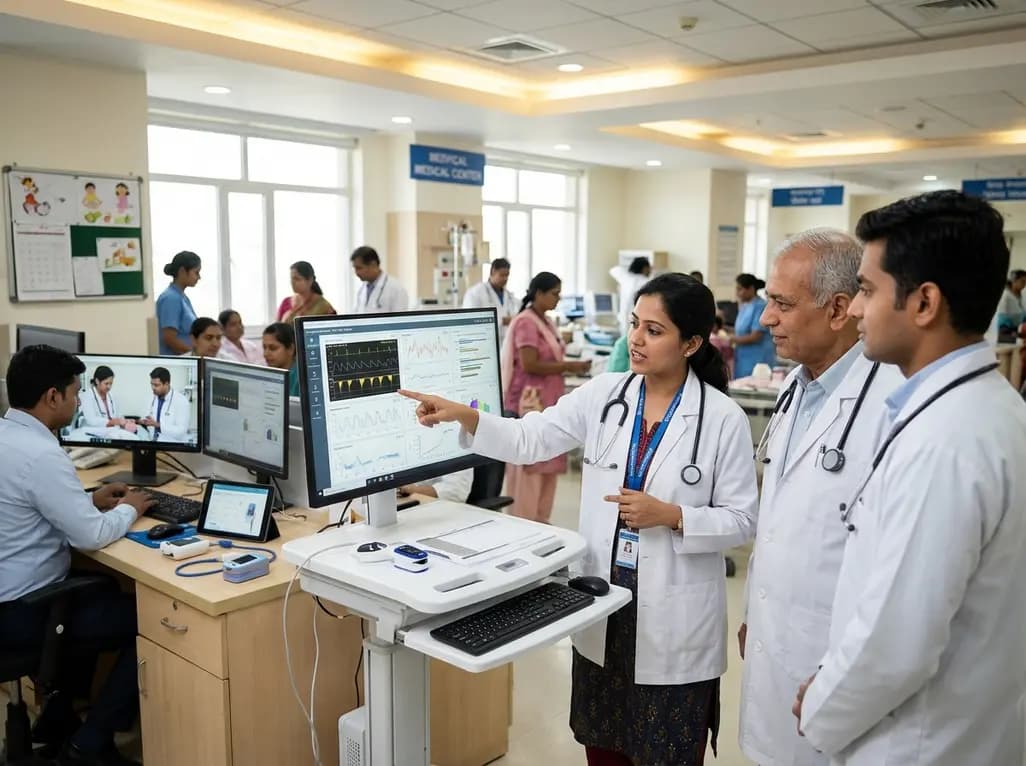
A landmark study details how an enterprise pediatric remote patient management model expanded from a single cardiology pilot to 16 diverse specialty programs by combining centralized digital operations with specialty clinical leadership.
Yesterday

A comparative review of tension band wiring and intramedullary screw fixation in thumb metacarpophalangeal arthrodesis, evaluating union rates, hardware complications, and clinical outcomes.
Yesterday

A breakthrough ultrathin multimodal sensor decouples physical hemodynamic monitoring from disposable electrochemical calibration, achieving long-term wearable glucose prediction with 81.36% accuracy and a 9.12% MARD. This offers a robust, drift-free solution for outpatient metabolic surveillance.
Yesterday
