.webp&w=384&q=75)

Loading, please wait...
Loading, please wait...
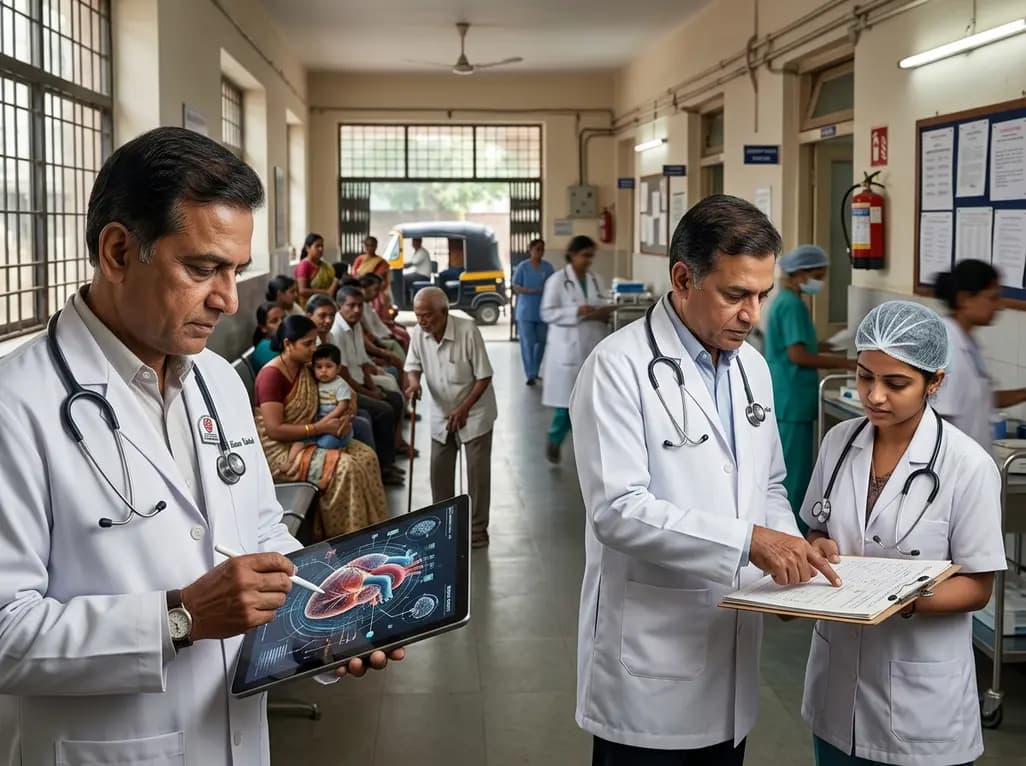
The alarming rise of violence against doctors in India has sparked critical debates regarding the safety of healthcare professionals. Recently, medical practitioners in Bihar voiced urgent concerns on National Doctors’ Day, highlighting a hostile work environment across public and private hospitals. Consequently, many physicians routinely face verbal harassment, physical threats, and extreme aggression during their shifts. Despite the clinical dedication of frontline workers, the deficit in physical security measures exacerbates this vulnerability. Therefore, addressing this workplace crisis is no longer optional; rather, it is essential for sustaining the country's medical infrastructure and preserving the integrity of patient care.
To understand the ongoing systemic crisis, one must first evaluate why medical facilities have turned into high-pressure environments. Consequently, several clinical and administrative challenges trigger public anger, leading to violent outbursts against medical staff. Specifically, patient relatives often blame healthcare professionals for poor clinical outcomes or sudden deaths, even when patients are admitted in critical conditions. Moreover, severe shortages of life-saving infrastructure, critical drugs, and diagnostic equipment in rural clinics frequently restrict the delivery of timely care. This resource deficit causes immense frustration among anxious families. Consequently, they misinterpret administrative delays as professional negligence. Furthermore, poor health literacy and the lack of transparent communication between clinicians and patient guardians further widen the trust gap. Under these tense conditions, emergency wards and intensive care units become highly volatile zones. Ultimately, the systemic failure of public health delivery is unfairly attributed to the bedside doctor, who acts as the visible face of an underfunded system. Consequently, without comprehensive infrastructural reforms, the primary triggers of patient-side hostility will continue to threaten medical practitioners daily.
In response to previous brutal incidents, the state legislature enacted the Bihar Medical Service Institution and Person Protection Act of 2011. This legal framework was specifically established to guarantee a safe working environment and penalize offenders who vandalize hospitals. However, the medical fraternity strongly believes that the enforcement of this legislation remains highly inadequate. For instance, although the act designates assaults on doctors as cognizable and non-bailable offenses, the police rarely complete investigations or file timely chargesheets. Consequently, attackers often evade prosecution, which diminishes the deterrent effect of the protective law. Additionally, medical associations argue that the current penalties and judicial delays fail to discourage aggressive behavior among patient relatives. Therefore, doctors are demanding faster legal intervention, including fast-track courts dedicated to clinical safety cases. Furthermore, they are calling for a more robust central protection act that uniformizes safety standards across all Indian states. Without strict implementation, statutory regulations remain mere paper shields, leaving healthcare professionals exposed to serious bodily harm during their duty hours. Consequently, legislative updates must be paired with operational police accountability to rebuild confidence among practitioners.
The persistent threat of physical and verbal abuse inflicts severe psychological trauma on the medical workforce. Specifically, younger resident doctors and female healthcare workers suffer from heightened levels of anxiety, professional burnout, and chronic stress. Consequently, many junior physicians are increasingly reluctant to work in high-pressure specialties, such as emergency medicine, critical care, and obstetrics. This reluctance ultimately threatens the distribution of specialized healthcare services in rural and semi-urban regions. Furthermore, when doctors work under constant fear of litigation or physical harm, they tend to practice defensive medicine. For example, clinicians may order unnecessary diagnostic tests or hesitate to perform high-risk, life-saving procedures simply to avoid hostile confrontations. As a result, patient care becomes more expensive, clinical outcomes suffer, and the traditional doctor-patient trust relationship is severely eroded. Consequently, the medical environment becomes highly transactional and adversarial. Ultimately, ensuring the safety of healthcare providers is not merely an elite professional demand. It is a fundamental prerequisite for maintaining a compassionate, efficient, and functional national healthcare delivery system that serves the public interest safely.
Hospital administrations must take proactive steps to safeguard clinical spaces and protect their medical staff from aggressive individuals. First, institutions should strictly enforce the "one-patient, one-relative" rule, particularly in emergency departments and intensive care units. Consequently, restricting the crowd size inside clinical zones significantly minimizes the potential for organized violence and chaotic scenes. Additionally, hospitals must deploy well-trained, professional security personnel at all entry and exit points, rather than relying on passive watchmen. Installing high-definition closed-circuit television cameras throughout the premises can also serve as an effective deterrent against anti-social behavior. Furthermore, administrative leaders need to establish clear, rapid-response grievance redressal mechanisms. This system allows families to voice their complaints about treatment delays or administrative issues without confronting the bedside clinicians directly. Meanwhile, implementing emergency panic buttons linked directly to local police stations can ensure immediate assistance during critical security breaches. Therefore, administrative accountability, paired with physical barriers, represents the first line of defense against clinical workplace violence. Ultimately, hospitals must become safe sanctuaries where medical professionals can heal patients without fearing for their personal safety.
While physical security is indispensable, fostering effective communication between clinical teams and patient families is equally vital to preventing conflict. Specifically, clinical training should integrate structured courses on clinical empathy, bad news delivery, and conflict resolution techniques. Consequently, physicians will be better prepared to navigate highly emotional situations and explain complex medical realities clearly. For instance, explaining the severity of a patient's prognosis early in the treatment process can prepare families for negative outcomes, reducing sudden emotional outbursts. Furthermore, transparency regarding hospital billing, treatment options, and resource limitations can significantly reduce suspicion among patient guardians. When doctors communicate with transparency, families are less likely to perceive clinical complications as acts of medical negligence. Additionally, hospitals should employ trained counselors or medical social workers to bridge the information gap during high-stress situations. These professionals can manage anxious relatives while clinicians focus entirely on delivering critical medical care. Therefore, prioritizing clear, compassionate communication can successfully restore mutual respect and rebuild the sacred doctor-patient relationship. Ultimately, de-escalating tension through active dialogue remains one of the most sustainable solutions to clinical workplace violence.
Q1: What are the primary reasons behind the rise of violence against doctors in Bihar?
The escalation of violence is primarily driven by systemic shortages of medical resources, inadequate healthcare infrastructure, and delayed patient arrivals in critical conditions. Families often misinterpret these resource constraints or sudden clinical complications as professional negligence. Furthermore, a lack of transparent communication and poor health literacy among the public widen the trust deficit. Consequently, underfunded emergency wards and district hospitals become highly vulnerable zones where clinicians are unfairly blamed for poor clinical outcomes.
Q2: How does the Bihar Medical Service Institution and Person Protection Act of 2011 safeguard medical professionals?
The Bihar Medical Protection Act of 2011 was specifically enacted to protect healthcare workers and medical property from vandalism and assault. Under this law, any act of violence against clinical personnel is recognized as a cognizable and non-bailable offense. However, medical associations highlight that its implementation remains highly inadequate. Specifically, delays in filing chargesheets and lack of successful prosecutions have significantly diluted the law's ability to act as a strong deterrent against aggressive offenders.
Q3: What clinical and administrative strategies can successfully de-escalate workplace violence in hospitals?
Hospitals can significantly reduce conflict by enforcing strict visitor limitations, deploying professional security, and installing high-definition surveillance systems. Additionally, establishing rapid-response grievance cells allows patient relatives to address administrative complaints without confronting clinicians. From a clinical perspective, training medical professionals in compassionate communication and bad news delivery can help manage patient expectations. Ultimately, bridging the information gap through empathy and transparency is vital for restoring safety and trust in healthcare environments.
Disclaimer: This content is for informational and educational purposes only. It does not constitute medical advice or replace professional judgment. Refer to the latest local and national guidelines for clinical practice.
References

Read summarized clinical updates, watch expert medical content, and earn CME certifications right from your smartphone.
Open your smartphone camera to scan and install.





Explore the critical issue of escalating violence against doctors in India, specifically analyzing the triggers in Bihar, legal protection gaps, psychological impacts, and necessary administrative reforms to ensure a secure, respectful workspace for medical professionals.
3 months ago

As monsoon seasons elevate arboviral disease threats, Tamil Nadu has initiated an ICMR-monitored evaluation of the tetravalent dengue vaccine in Tenkasi district. Clinicians emphasize clinical monitoring, public prevention, and high-quality early pediatric care to reduce disease morbidity across endemic regions.
Today

Leucine Rich Bio has introduced South Asia's first comprehensive vaginal microbiome test, BugSpeaks. By profiling microbial dysbiosis, pathogens, and antimicrobial resistance, this next-generation diagnostic platform provides clinicians with deeper insights into recurrent infections, fertility, and reproductive health.
Today

Review how tailored exercise programs benefit frail older patients with heart failure. Explore pathophysiological mechanisms, individualized training prescriptions, and strategies to overcome adherence barriers in clinical practice.
Today

This comparative study evaluates posterior labral tears with and without glenohumeral instability, highlighting distinct demographic patterns, MRI underestimation in stable shoulders, and successful arthroscopic repair outcomes.
Today

A clinical study demonstrates that early intervention with tocilizumab, either as monotherapy or bridged with corticosteroids, achieves significant proptosis reduction and resolves active inflammation in treatment-naive thyroid eye disease.
Today
