.webp&w=384&q=75)

Loading, please wait...
Loading, please wait...
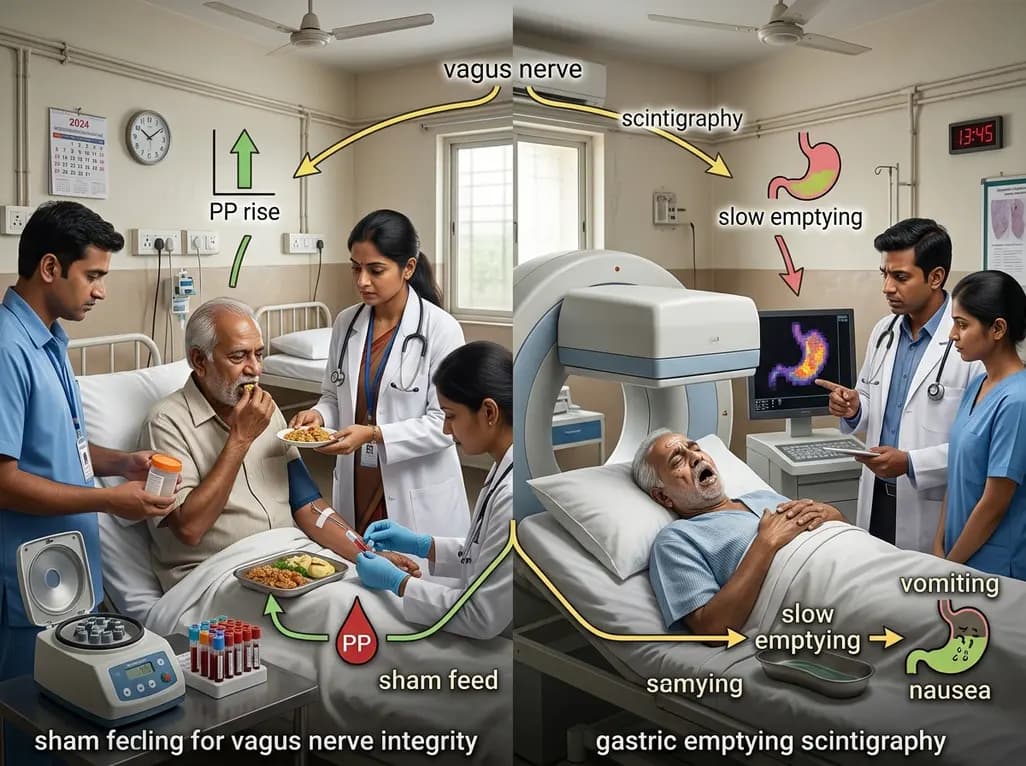
Identifying vagus nerve injury remains difficult because patients often report vague, non-specific symptoms. However, a recent study indicates that a vagus nerve injury assessment using sham feeding-induced pancreatic polypeptide (PP) release is highly effective. This diagnostic method evaluates the nerve's integrity by measuring hormonal changes after a patient chews and spits food. Researchers found that this physiological marker strongly correlates with specific gastrointestinal symptoms.
In a retrospective analysis of 53 patients, clinicians compared sham feeding results with traditional gastric emptying scintigraphy. Specifically, they defined a normal result as a 50% increase in PP levels within 30 minutes of baseline. The study revealed that 91.3% of patients with nausea and vomiting had abnormal sham feeding results. Conversely, gastric emptying scintigraphy only showed a 60.9% correlation with these same symptoms.
Many participants in the study had a history of abdominal surgery, particularly Nissen fundoplication for acid reflux. Doctors frequently observe vagal damage following such procedures. Therefore, sham feeding provides a more reliable diagnostic tool than scintigraphy for evaluating gastroparesis-like symptoms. Additionally, the significant difference in PP changes between normal and abnormal groups highlights the test's clinical validity.
The sham feeding test involves the patient chewing food and spitting it out without swallowing. This process stimulates the cephalic phase of digestion, which normally triggers a vagally-mediated release of pancreatic polypeptide from the pancreas.
Pancreatic polypeptide release is primarily controlled by the vagus nerve. If the nerve is damaged, the expected rise in hormone levels after sham feeding will be absent or significantly diminished, serving as a surrogate marker for nerve dysfunction.
Disclaimer: This content is for informational and educational purposes only. It does not constitute medical advice or a substitute for professional healthcare consultation. Refer to the latest local and national guidelines for clinical practice.
References
1. Li T et al. Assessment of Vagus Nerve Injury Through Sham Feeding. Dig Dis Sci. 2026 Jun 10. doi: 10.1007/s10620-026-10030-8. PMID: 42268357.
2. Malagelada JR et al. Pancreatic polypeptide response to sham feeding as a test for vagal function. Diabetologia. 1980.
3. Camilleri M. Gastroparesis: clinical determinants and management. Lancet Diabetes Endocrinol. 2015.

Read summarized clinical updates, watch expert medical content, and earn CME certifications right from your smartphone.
Open your smartphone camera to scan and install.





A recent study demonstrates that sham feeding-induced pancreatic polypeptide measurement is a highly reliable surrogate marker for vagus nerve injury assessment. It significantly outperforms traditional gastric emptying scintigraphy in correlating with nausea and vomiting symptoms.
4 months ago

As monsoon seasons elevate arboviral disease threats, Tamil Nadu has initiated an ICMR-monitored evaluation of the tetravalent dengue vaccine in Tenkasi district. Clinicians emphasize clinical monitoring, public prevention, and high-quality early pediatric care to reduce disease morbidity across endemic regions.
Today

Leucine Rich Bio has introduced South Asia's first comprehensive vaginal microbiome test, BugSpeaks. By profiling microbial dysbiosis, pathogens, and antimicrobial resistance, this next-generation diagnostic platform provides clinicians with deeper insights into recurrent infections, fertility, and reproductive health.
Today

Review how tailored exercise programs benefit frail older patients with heart failure. Explore pathophysiological mechanisms, individualized training prescriptions, and strategies to overcome adherence barriers in clinical practice.
Today

This comparative study evaluates posterior labral tears with and without glenohumeral instability, highlighting distinct demographic patterns, MRI underestimation in stable shoulders, and successful arthroscopic repair outcomes.
Today

A clinical study demonstrates that early intervention with tocilizumab, either as monotherapy or bridged with corticosteroids, achieves significant proptosis reduction and resolves active inflammation in treatment-naive thyroid eye disease.
Today
