.webp&w=384&q=75)

Loading, please wait...
Loading, please wait...

US fertility rates dropped to a historic low last year, continuing a significant downward trend that began nearly twenty years ago. The Centers for Disease Control and Prevention (CDC) released provisional data showing a 1% decline in births from 2024. Consequently, the general fertility rate fell to 53.1 births per 1,000 women aged 15 to 44. This shift mirrors global patterns as social backdrops and economic priorities change for many families.
Furthermore, since 2007, the fertility rate in the United States has plummeted by approximately 23%. While total births reached 3.6 million in 2025, the persistent decline suggests a fundamental change in reproductive behavior. Experts point to shifting priorities among younger generations as a primary driver. For instance, expanded leisure options and demanding job markets make parenthood less immediate for many.
Although the overall trend is downward, data shows a notable divide between age groups. Fertility rates among women in their 30s and 40s actually increased over the last decade. Specifically, the rate for women aged 30 to 34 rose by 2.7% in 2025. However, these gains were too modest to offset the sharp declines observed in younger cohorts.
In contrast, younger populations are seeing record lows in birth rates. Teenagers aged 15 to 17 saw a massive 11% drop. Meanwhile, the rate for women aged 25 to 29 fell by 4.4%. These statistics indicate that while older women are delaying childbirth, younger women are opting out or delaying significantly longer than previous generations. Therefore, clinical focus on reproductive health must adapt to these changing age-related patterns.
Q1: Why are US fertility rates at a record low?
Economic shifts, increased career demands, and changing social priorities contribute to the decline. Younger women often prioritize education and job stability over early parenting. Additionally, more leisure options and the perceived intensity of modern parenting influence these decisions.
Q2: Is the decline happening across all age groups?
No, the decline is most prominent among women under 30. In fact, fertility rates for women in their early 30s and 40s have seen modest increases. However, these increases are not large enough to balance the overall national decline.
Disclaimer: This content is for informational and educational purposes only. It does not constitute medical advice or replace professional judgment. Refer to the latest local and national guidelines for clinical practice.
References

Read summarized clinical updates, watch expert medical content, and earn CME certifications right from your smartphone.
Open your smartphone camera to scan and install.





US fertility rates hit a record low in 2025, falling 23% since 2007. CDC data shows significant declines among younger women despite gains in older age grou...
6 months ago

An elderly man with partially repaired Tetralogy of Fallot presented with STEMI caused by coronary embolism rather than atherosclerosis. Successful treatment with sustained mechanical aspiration thrombectomy underscores the vital need for high clinical vigilance in adult congenital heart disease.
Today
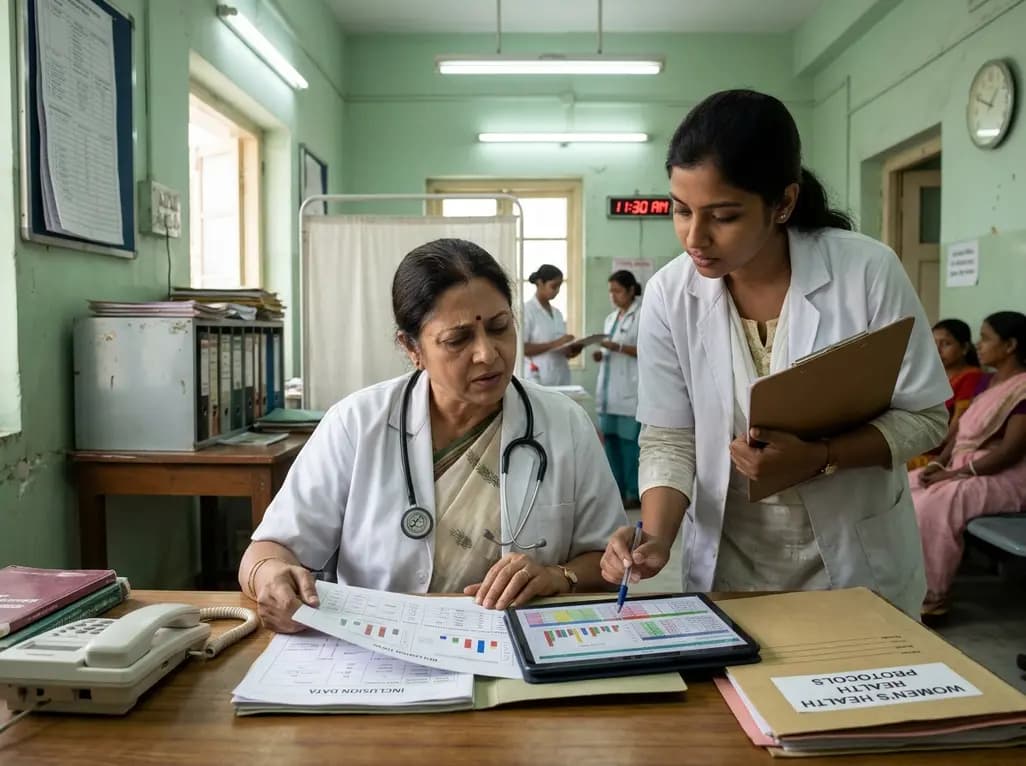
Demanding exhaustive hormonal profiling can inadvertently discourage clinical studies involving females. Methodological standards must align with the specific scientific question to expand, not restrict, equitable evidence for women.
Today

A recent study demonstrates that spinal oxygen sensors do not require mitochondrial electron transport to trigger sympathetic excitation during acute hypoxia, revealing new insights into how mitochondrial oxidative stress modulates autonomic tone in cardiovascular and neurological diseases.
Today

A comparative review of tension band wiring and intramedullary screw fixation in thumb metacarpophalangeal arthrodesis, evaluating union rates, hardware complications, and clinical outcomes.
Today

Following regulatory scrutiny from FSSAI regarding promotional representations and lean muscle preservation claims, Dr. Reddy's Laboratories and Nestlé Health Science are currently reviewing the branding and marketing strategy for their joint nutritional supplement Celevida GLP+.
Today
