.webp&w=384&q=75)

Loading, please wait...
Loading, please wait...

Researchers have identified a novel urinary BlCa-EV protein signature that could revolutionize bladder cancer (BlCa) management. Consequently, this non-invasive approach addresses the urgent need for better diagnostic tools. Bladder cancer currently causes significant morbidity globally. In India, the incidence is rising, particularly in urban hubs like Delhi and Chennai. Therefore, finding reliable biomarkers is essential for early detection and improved outcomes.
Extracellular vesicles (EVs) are promising candidates for liquid biopsies because their cargo remains protected from degradation. Moreover, EVs play a critical role in intercellular communication that drives disease progression. By analyzing these vesicles, clinicians can gain insights into the tumor's molecular profile without invasive procedures. Scientists recently conducted a comprehensive proteomic analysis to bridge the gap between laboratory cell lines and clinical application.
The study employed high-throughput mass spectrometry to analyze cell lysates and matched EVs from six human BlCa cell lines. These lines represented the complete disease spectrum. Initially, researchers established a lysate-to-EV signature common to all malignant cells. Subsequently, they analyzed this profile in urinary EV (uEV) samples from BlCa patients and healthy controls. This rigorous process led to the identification of a robust 13-protein signature specifically enriched in bladder cancer cases.
Key proteins identified in this urinary BlCa-EV protein signature include ITGA2, ITGA6, SCRIB, and TFRC. These markers showed high translational potential. Furthermore, the 13-protein profile remained consistent across different stages of the disease. This consistency suggests that the signature could serve as a reliable tool for both initial screening and long-term monitoring.
This discovery provides a foundation for developing non-invasive diagnostic assays. Currently, many patients undergo invasive cystoscopies, which can be uncomfortable and expensive. Similarly, traditional urine cytology often lacks the sensitivity required for early-stage detection. The new protein signature offers a more precise alternative. Additionally, these proteins may serve as targets for future therapeutic interventions. Specifically, targeting EV-associated proteins could inhibit the communication pathways that bladder cancer cells use to spread. This research marks a significant step toward personalized medicine in urology.
uEVs are effective because they carry a protected cargo of proteins and genetic material from the tumor. Since urine is in direct contact with the bladder lining, these vesicles provide a real-time molecular snapshot of the disease in a non-invasive manner.
The 13-protein signature, including markers like ITGA6 and TFRC, offers higher specificity and sensitivity compared to single-analyte tests. It identifies a robust profile common across the disease spectrum, potentially reducing false-positive and false-negative results associated with traditional cytology.
Currently, this signature is a research breakthrough that requires further validation in larger clinical trials before widespread adoption. However, it represents a promising frontier for future diagnostic assays in Indian oncology centers.
Disclaimer: This content is for informational and educational purposes only. It is not intended to be a substitute for professional medical advice, diagnosis, or treatment. Always seek the advice of your physician or other qualified health provider with any questions you may have regarding a medical condition. Refer to the latest local and national guidelines for clinical practice.
References

Read summarized clinical updates, watch expert medical content, and earn CME certifications right from your smartphone.
Open your smartphone camera to scan and install.





Researchers identified a 13-protein signature in urinary EVs that could enable non-invasive diagnosis and targeted therapy for bladder cancer....
6 months ago

Co-administering antiseizure medications and DOACs frequently causes pharmacokinetic interactions, subtherapeutic drug levels, and thromboembolic failures. This review highlights enzyme induction risks, unpredictable outcomes with levetiracetam, and the vital role of therapeutic drug monitoring.
Today

Demanding exhaustive hormonal profiling can inadvertently discourage clinical studies involving females. Methodological standards must align with the specific scientific question to expand, not restrict, equitable evidence for women.
Today
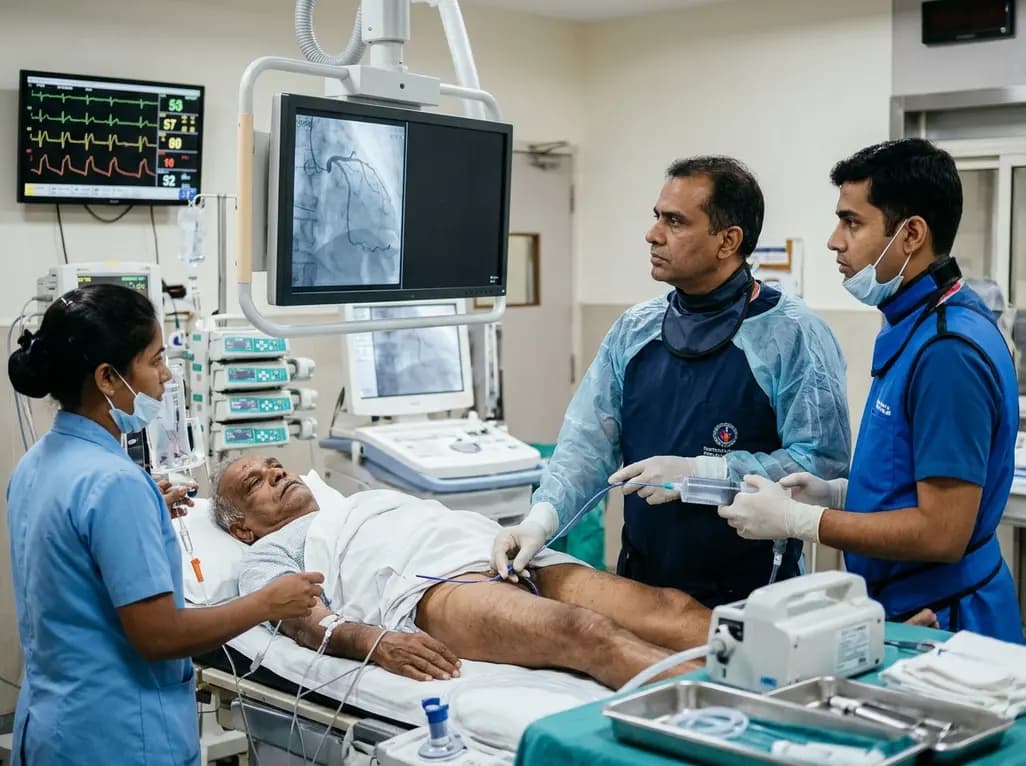
An elderly man with partially repaired Tetralogy of Fallot presented with STEMI caused by coronary embolism rather than atherosclerosis. Successful treatment with sustained mechanical aspiration thrombectomy underscores the vital need for high clinical vigilance in adult congenital heart disease.
Today

A comparative review of tension band wiring and intramedullary screw fixation in thumb metacarpophalangeal arthrodesis, evaluating union rates, hardware complications, and clinical outcomes.
Today

Following regulatory scrutiny from FSSAI regarding promotional representations and lean muscle preservation claims, Dr. Reddy's Laboratories and Nestlé Health Science are currently reviewing the branding and marketing strategy for their joint nutritional supplement Celevida GLP+.
Today
