.webp&w=384&q=75)

Loading, please wait...
Loading, please wait...

Uncalibrated stereo matching in minimally invasive surgery (MIS) remains a significant technical challenge because precise intraoperative calibration is often difficult to maintain. Traditionally, stereo vision models require strictly calibrated images to provide accurate depth information. However, surgeons frequently encounter situations where calibration is unavailable or uncertain during a procedure. Consequently, researchers have sought ways to train models that can function effectively without these rigid requirements. By leveraging synthetic datasets, a new study demonstrates how camera augmentation can bridge the gap between ideal conditions and real-world surgical environments.
The lack of disparity-labeled surgical images usually hinders the training of uncalibrated models. Although synthetic non-medical datasets are plentiful, they typically reflect idealized conditions like perfect rectification. These datasets differ significantly from the uncalibrated images captured during real surgery. Therefore, the research team developed the Camera Augmentation Training Strategy (CATS). This approach alters the camera\'s orientation and intrinsic parameters within existing datasets. Specifically, the system samples geometric augmentation parameters from distributions modeled after real stereo laparoscopes.
By using CATS to retrain advanced architectures like RAFTStereo and IGEV++, the researchers achieved remarkable results. In testing on the SCARED dataset, the uncalibrated models reached end-point errors of 1.41 to 1.42 pixels. Notably, this performance nearly matches the accuracy of calibrated models, which failed entirely when calibration was removed. Moreover, this strategy allows for zero-shot uncalibrated stereo matching, meaning the AI performs well on surgical data without prior exposure to labeled medical images. Consequently, this technology could enhance 3D visualization and robotic guidance in the operating room.
In summary, camera augmentation provides a robust solution for surgical imaging when traditional calibration fails. It enables the use of massive synthetic datasets to solve complex medical imaging problems. Beyond stereo vision, the CATS method is applicable to any task sensitive to camera geometry. This breakthrough paves the way for more resilient surgical navigation systems that do not depend on constant manual calibration.
It allows for accurate 3D depth perception and image alignment even when the laparoscope\'s calibration is lost or unavailable during surgery, increasing the reliability of surgical navigation.
CATS (Camera Augmentation Training Strategy) takes idealized synthetic data and applies geometric distortions that mimic the real-world inaccuracies found in uncalibrated surgical cameras.
While designed for MIS, the researchers noted that the proposed camera augmentation strategy can be applied to any imaging task where camera geometry and calibration are critical factors.
Disclaimer: This content is for informational and educational purposes only. It does not constitute medical advice or endorse any specific technology. Refer to the latest local and national guidelines for clinical practice.
References
Sharifian R et al. Camera augmentation: enabling uncalibrated stereo matching of minimally invasive surgery images by training from the wealth of public synthetic image datasets. Int J Comput Assist Radiol Surg. 2026 May 03. doi: 10.1007/s11548-026-03678-0. PMID: 42070224.
Stoyanov D et al. Real-time stereo reconstruction in robotically assisted minimally invasive surgery. Med Image Comput Comput Assist Interv. 2010;13(Pt 1):275-82.
"
Read summarized clinical updates, watch expert medical content, and earn CME certifications right from your smartphone.
Open your smartphone camera to scan and install.





Researchers introduce CATS, a method enabling uncalibrated stereo matching in MIS by training on augmented synthetic data, improving intraoperative precisio...
5 months ago

Co-administering antiseizure medications and DOACs frequently causes pharmacokinetic interactions, subtherapeutic drug levels, and thromboembolic failures. This review highlights enzyme induction risks, unpredictable outcomes with levetiracetam, and the vital role of therapeutic drug monitoring.
Today

Demanding exhaustive hormonal profiling can inadvertently discourage clinical studies involving females. Methodological standards must align with the specific scientific question to expand, not restrict, equitable evidence for women.
Today
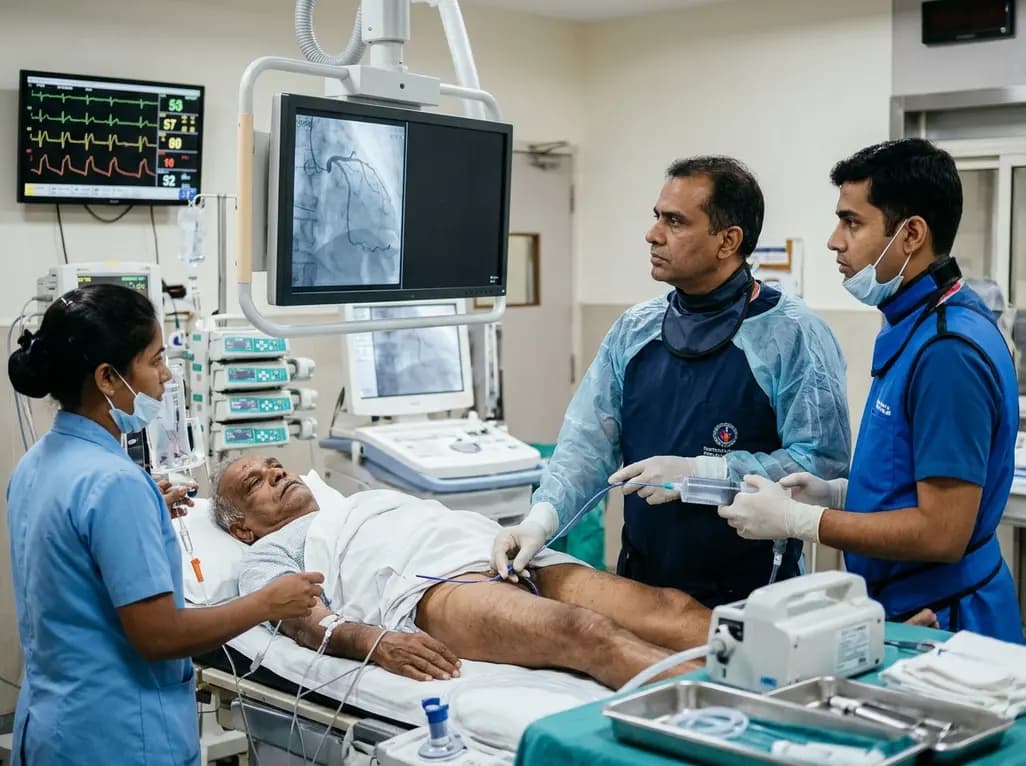
An elderly man with partially repaired Tetralogy of Fallot presented with STEMI caused by coronary embolism rather than atherosclerosis. Successful treatment with sustained mechanical aspiration thrombectomy underscores the vital need for high clinical vigilance in adult congenital heart disease.
Today
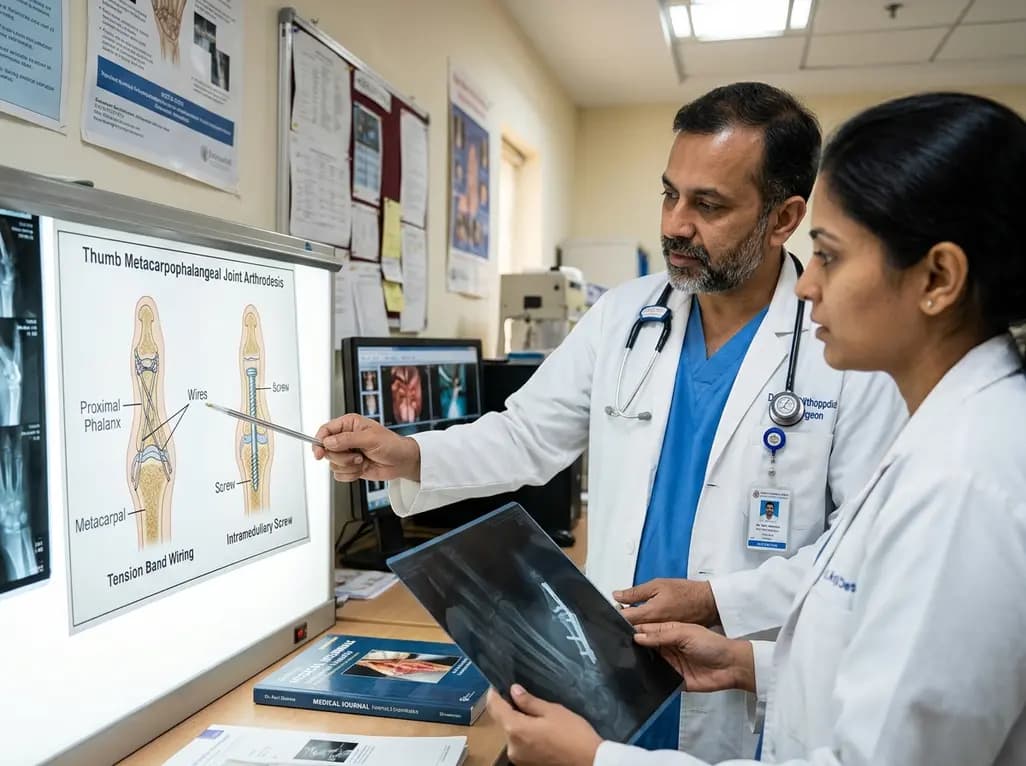
A comparative review of tension band wiring and intramedullary screw fixation in thumb metacarpophalangeal arthrodesis, evaluating union rates, hardware complications, and clinical outcomes.
Today

Following regulatory scrutiny from FSSAI regarding promotional representations and lean muscle preservation claims, Dr. Reddy's Laboratories and Nestlé Health Science are currently reviewing the branding and marketing strategy for their joint nutritional supplement Celevida GLP+.
Today
