.webp&w=384&q=75)

Loading, please wait...
Loading, please wait...

Pune is currently facing a dual challenge of severe water scarcity and an escalating public health crisis. Specifically, healthcare providers are reporting a dramatic surge in waterborne diseases, raising alarms across Maharashtra. The ongoing typhoid outbreak in Pune serves as a stark reminder of the close link between environmental conditions and infectious diseases. Consequently, frontline clinicians warn that the actual burden is substantially higher than registered. Additionally, local hospitals are expanding their capacities to manage the influx of patients. To effectively address this emerging crisis, healthcare professionals must understand the driving factors, clinical presentations, and necessary preventive measures.
Recent epidemiological reports reveal a relentless climb in gastrointestinal infections across the city. According to official data from the Pune Municipal Corporation, enteric fever cases rose gradually from ten in January to thirty-eight by late June. However, infectious disease specialists strongly argue that these figures represent only the tip of the iceberg. Many patients receive a clinical diagnosis and empirical treatment without ever undergoing formal laboratory testing. Consequently, their cases escape inclusion in the official municipal registry. Additionally, many private laboratories do not consistently report confirmed cases to the central authority. Therefore, the actual scale of this public health emergency is likely several times higher than recorded. Clinicians must remain vigilant, as typical enteric patterns are shifting toward more severe presentations this year. Patients frequently require intensive intravenous therapy rather than standard oral regimens. This worrying trend highlights the critical need for comprehensive diagnostic tracking. Moreover, active surveillance must be prioritized to control transmission. By establishing robust communication networks between private clinics and public health bodies, the city can better map the true infection footprint.
The primary catalyst for this sudden health crisis is the severe water shortage currently gripping the region. Because of delayed monsoon rains and declining reservoir levels, authorities implemented an alternate-day water supply schedule. Consequently, many housing societies and suburban areas have become heavily dependent on private tankers and unmonitored borewells. These non-municipal water sources often bypass routine chlorination and safety checks. Therefore, pathogens easily enter the drinking supply, exposing vulnerable populations to severe bacterial contamination. Specifically, doctors are reporting dense clusters of infections in rapidly developing suburban pockets like Wakad, Hinjewadi, and Vishrantwadi. These areas rely extensively on decentralized water storage, which is highly prone to bacterial biofilms. Furthermore, poorly maintained overhead tanks and unchecked water filters fail to remove persistent pathogens like Salmonella enterica serovar Typhi. Clinicians should advise patients to boil all drinking water, even if it has undergone filtration. Ultimately, resolving the systemic water distribution issues remains vital for long-term control. Without immediate municipal intervention and strict water quality monitoring of private tankers, these localized clusters will continue to multiply rapidly.
The clinical profile of patients presenting during this surge reveals unusually severe symptoms. Typically, typhoid presents with high fever, headache, and abdominal pain. However, local physicians are observing a high incidence of persistent vomiting, severe diarrhoea, and acute colitis. Additionally, many patients are arriving at health facilities in a highly dehydrated state, necessitating immediate intravenous fluid resuscitation. Standard diagnostic approaches also present significant hurdles for clinicians. For instance, blood cultures remain the gold standard for confirming enteric fever. Nevertheless, prior antibiotic usage by patients before seeking medical care frequently produces false-negative culture results. Consequently, physicians must rely heavily on clinical suspicion and alternative diagnostic markers to initiate therapy. Delayed diagnosis can lead to severe systemic complications, including intestinal perforation or toxic encephalopathy. Therefore, clinicians must maintain a high index of suspicion for enteric fever in any patient presenting with prolonged undifferentiated fever. Early initiation of appropriate empirical therapy is critical to prevent these adverse outcomes. Furthermore, detailed patient histories should always include questions regarding water sources and recent travel to help narrow down the diagnosis.
Children are bearing a disproportionate burden of the current gastrointestinal disease surge in Pune. Paediatricians in specialized hospitals report seeing an unprecedented rise in acute gastroenteritis and dysentery cases. Specifically, many young patients are presenting with blood in their stools, persistent high fevers, and intense abdominal cramps. Consequently, paediatric wards are facing high daily admission rates, with children requiring intensive monitoring and intravenous antibiotics. This susceptibility is largely driven by developing immune systems and a higher likelihood of consuming contaminated food or water outside. Additionally, school environments can facilitate rapid person-to-person transmission if hygiene protocols are not strictly enforced. Doctors emphasize that parent education is a key pillar in mitigating this pediatric risk. Parents must ensure that children wash their hands thoroughly before eating and avoid raw street food completely. Moreover, school authorities must sanitize their drinking water storage units regularly to prevent localized outbreaks. Early clinical evaluation is vital, as dehydration can progress rapidly in infants and young children. Thus, timely healthcare-seeking behavior can prevent critical complications in this vulnerable demographic.
The prevailing meteorological conditions in Pune have further exacerbated the transmission of waterborne pathogens. Currently, the city is experiencing typical monsoon weather characterized by minimal day-night temperature gaps and persistent cloud cover. Consequently, the relative humidity remains exceptionally high, creating an ideal environment for bacterial and viral survival. Sustained dampness allows pathogens to persist longer on common surfaces, thereby increasing the risk of indirect contact transmission. Additionally, heavy rains can lead to localized flooding, causing sewage to overflow and contaminate local groundwater tables. This environmental synergy of humidity and water contamination poses a major challenge for infectious disease control. Healthcare providers must recognize that seasonal shifts require altered clinical strategies and increased public awareness. Moreover, communities should be educated on the risks of surface contamination and the necessity of maintaining personal hygiene. Ultimately, combining robust environmental management with targeted clinical interventions is the most effective way to curb the spread. By addressing both the ecological triggers and clinical care, Pune can successfully navigate this seasonal surge.
Q1: What are the main drivers of the current surge in Pune?
The sudden surge is primarily driven by acute municipal water shortages, which force local residents to rely on private tankers, wells, and other unmonitored water sources. Consequently, these untreated sources easily carry pathogens into households. Additionally, high monsoon humidity, persistent cloud cover, and increased consumption of unhygienic street food during summer travel have further accelerated the spread of these waterborne infections across Pune.
Q2: Why do official municipal figures underestimate the actual caseload?
Official data largely captures blood-culture-positive cases reported by public facilities. However, many patients seek care from private practitioners who often diagnose cases clinically and prescribe empirical antibiotics before laboratory confirmation. Consequently, these clinically treated patients are never officially recorded. This lack of centralized reporting from private laboratories creates a significant gap between official statistics and the real situation on the ground.
Q3: What preventive measures should citizens adopt during water scarcity?
Citizens should boil all drinking water for at least twenty minutes to eliminate waterborne pathogens, even if they use modern home water purifiers. Furthermore, avoiding street food, raw salads, and ice from unverified sources is critical. Individuals must maintain strict hand hygiene and ensure that building water storage tanks undergo regular professional cleaning and chlorination to prevent bacterial contamination.
Disclaimer: This content is for informational and educational purposes only. It does not constitute medical advice or replace professional judgment. Refer to the latest local and national guidelines for clinical practice.
References

Read summarized clinical updates, watch expert medical content, and earn CME certifications right from your smartphone.
Open your smartphone camera to scan and install.





As Pune experiences severe water scarcity and high humidity, typhoid and gastrointestinal infections are surging. Discover crucial clinical insights, pediatric vulnerabilities, and essential prevention strategies to combat this emerging waterborne health crisis.
3 months ago
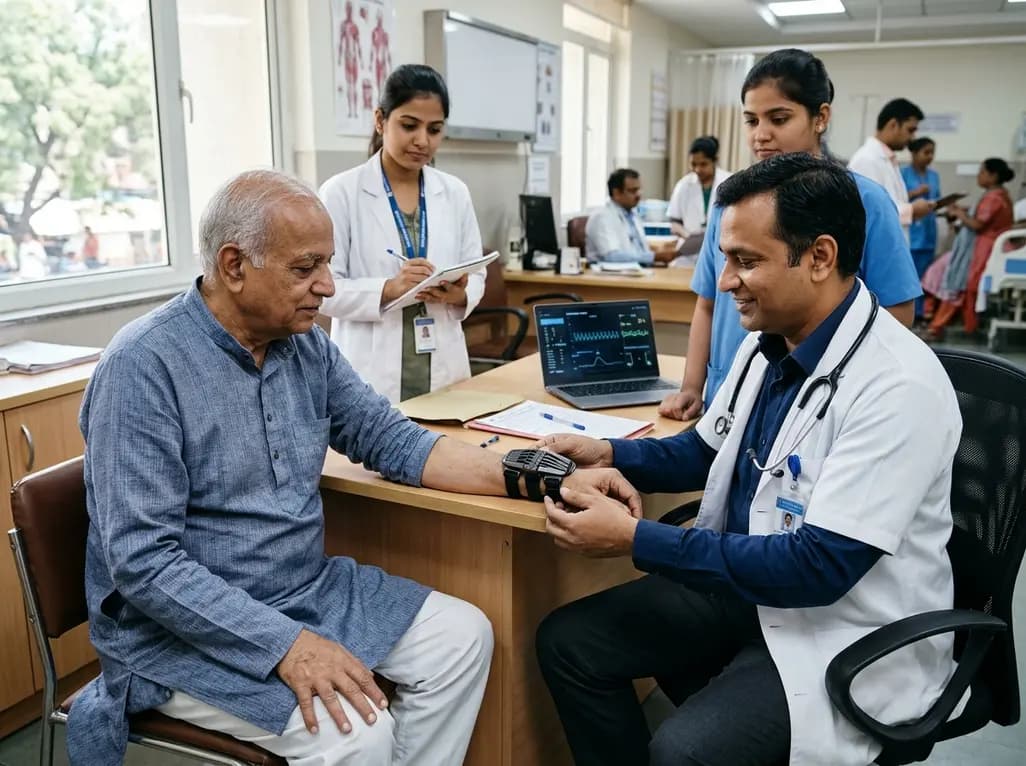
The TREM-AB open-label pilot study evaluated a wearable passive nonlinear vibration absorber for essential tremor. The Nonlinear Energy Sink bracelet reduced clinical Fahn-Tolosa-Marin tremor scores by 32.1% and electrophysiological tremor power by 49.2% with no adverse effects reported.
Today
A population-based study of 20,928 children reveals that small vulnerable newborns face sex-divergent mental capital outcomes at ages 6-7: term SGA girls show higher behavioral difficulties and lower resilience, while preterm non-SGA boys experience increased behavioral problems.
Today
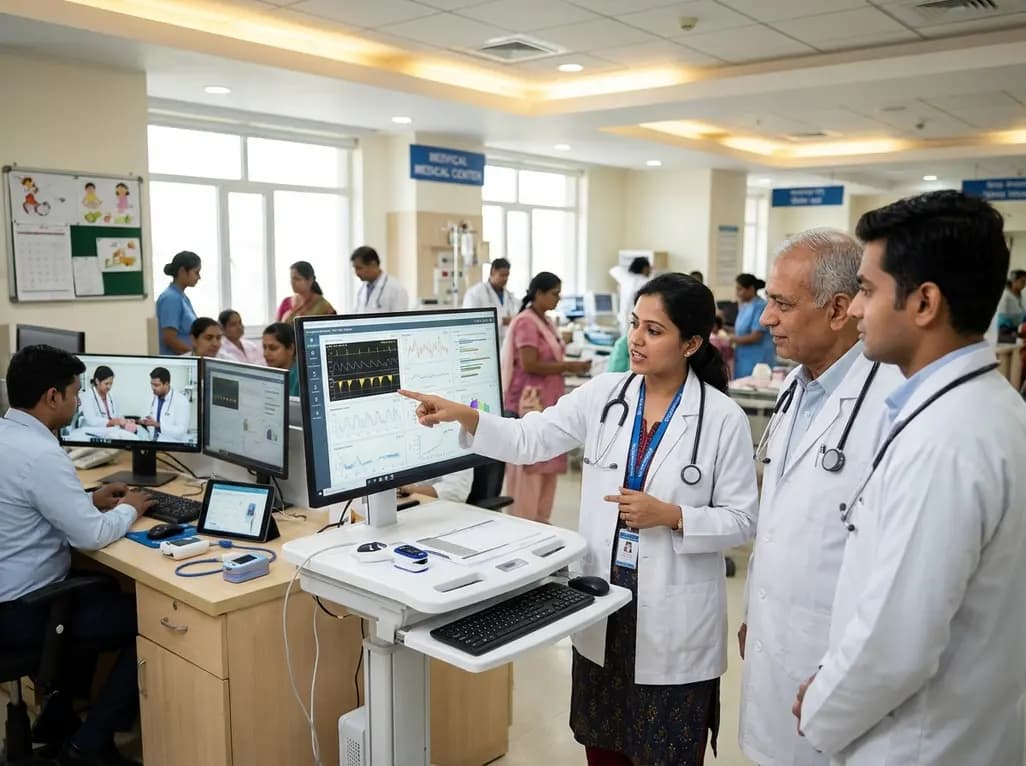
A landmark study details how an enterprise pediatric remote patient management model expanded from a single cardiology pilot to 16 diverse specialty programs by combining centralized digital operations with specialty clinical leadership.
Today

A comparative review of tension band wiring and intramedullary screw fixation in thumb metacarpophalangeal arthrodesis, evaluating union rates, hardware complications, and clinical outcomes.
Today
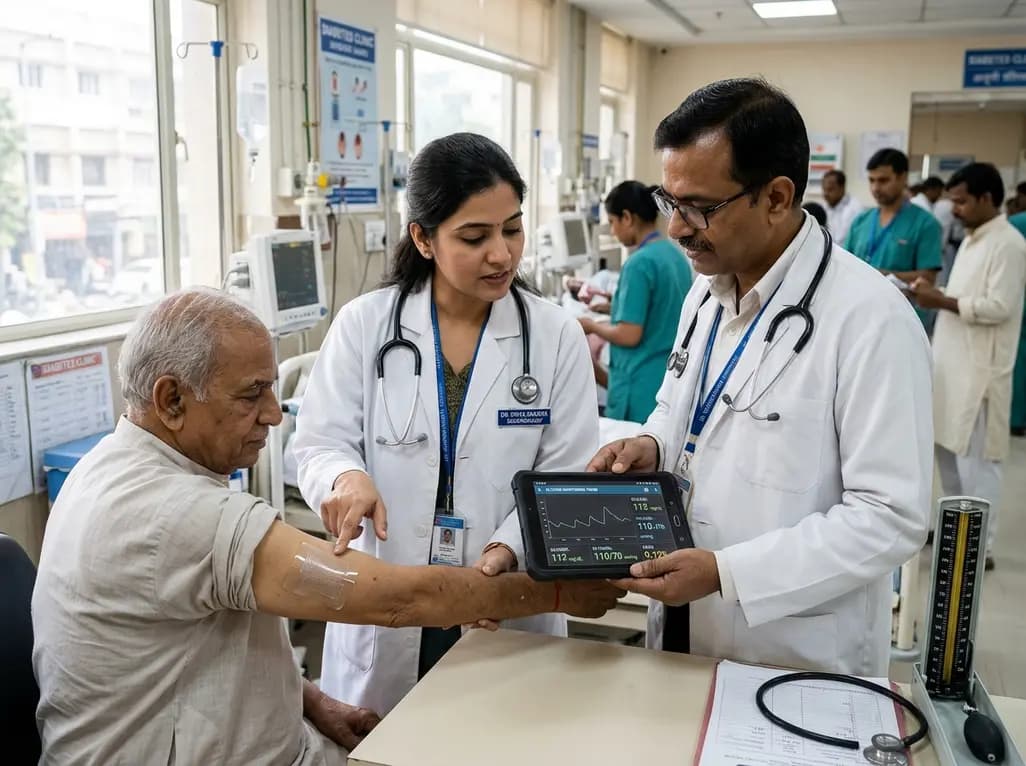
A breakthrough ultrathin multimodal sensor decouples physical hemodynamic monitoring from disposable electrochemical calibration, achieving long-term wearable glucose prediction with 81.36% accuracy and a 9.12% MARD. This offers a robust, drift-free solution for outpatient metabolic surveillance.
Today
