.webp&w=384&q=75)

Loading, please wait...
Loading, please wait...
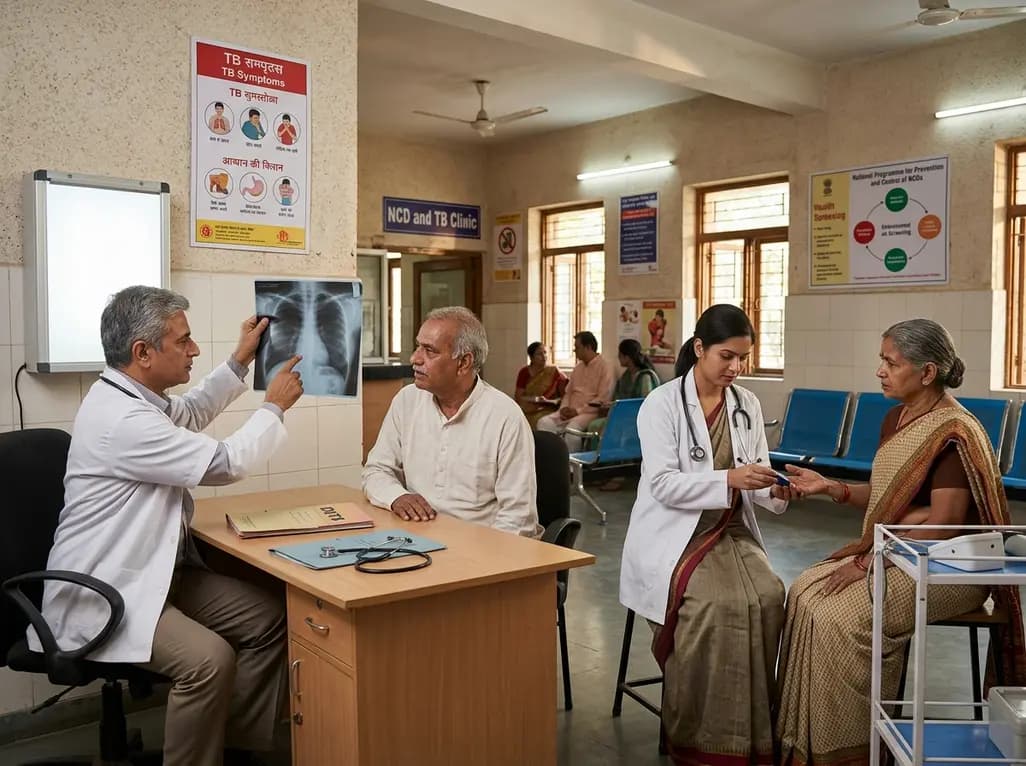
Union Health Minister J P Nadda recently presented crucial updates in the Rajya Sabha regarding public health milestones achieved across the nation. Specifically, tuberculosis control in India has demonstrated measurable success, marked by substantial declines in both disease incidence and patient mortality rates over the past decade. Public health infrastructure and facility management remain state subjects, but the central government provides vital financial and technical assistance under the National Health Mission. Consequently, coordinated efforts between central guidance and state implementation have strengthened diagnostic networks and expanded therapeutic interventions nationwide. In addition to infectious disease management, the central government has scaled up national non-communicable disease control initiatives. Screening programs operating at primary and secondary healthcare levels have identified millions of individuals with chronic conditions. Thus, healthcare systems are better equipped to deliver early interventions, reducing the overall burden on tertiary centers. As a result, clinical management strategies are becoming increasingly integrated and patient-centric. These systemic upgrades reflect a robust strategy designed to tackle both communicable and non-communicable health challenges simultaneously across diverse populations.
According to data cited from the World Health Organization Global TB Report, the tuberculosis incidence rate in India dropped from 237 per lakh population in 2015 to 187 per lakh population in 2024. This notable change represents a 21 percent reduction, which significantly outperforms the global decline rate of 12 percent over the same timeline. Furthermore, the national TB mortality rate decreased by 25 percent, dropping from 28 per lakh population in 2015 down to 21 per lakh in 2024. Treatment coverage also expanded dramatically, rising from 53 percent to 92 percent within the same observation period. Case notifications logged through the central Ni-kshay portal reflect consistent diagnostic output. Official records demonstrate that 25.52 lakh cases were notified in 2023, 26.18 lakh cases in 2024, and 26.37 lakh cases in 2025. Consequently, aggressive notification drives have helped clinicians bridge the gap regarding missing cases across primary care settings. Systematic notification ensures that identified patients receive standardized therapeutic regimens without delay. Moreover, decentralized diagnostic access allows rural health centers to confirm suspected cases earlier. Therefore, these combined achievements illustrate clear operational progress in mitigating the clinical burden of tuberculosis throughout the country.
To accelerate elimination efforts, the Ministry of Health and Family Welfare implemented two phases of the 100-day TB Mukt Bharat Abhiyaan. Launched initially in December 2024 and expanded further in March 2026, this campaign now operates across all administrative districts. The initiative prioritizes systematic screening among high-risk populations to ensure prompt identification of vulnerable individuals. Furthermore, clinicians utilize advanced diagnostic tools, including portable chest X-rays and nucleic acid amplification tests, to detect active disease rapidly. Early diagnosis enables immediate initiation of evidence-based anti-tubercular therapy, thereby limiting community transmission. In addition to medical treatment, the program incorporates comprehensive nutritional support and preventive therapy for close contacts. Consequently, holistic care models address socio-economic determinants alongside active clinical management. Furthermore, local health workers actively engage in active case finding within underserved communities. By combining rapid molecular diagnostics with sustained patient support, public health authorities aim to break transmission chains effectively. As a result, healthcare workers can monitor treatment compliance more effectively, reducing overall drug resistance risks. These structured interventions reinforce long-term epidemiological gains while improving overall clinical outcomes for affected patients across rural and urban centers.
Alongside tuberculosis eradication strategies, the National Programme for Prevention and Control of Non-Communicable Diseases has expanded significantly. Public health centers focus heavily on population-based screening for adults aged 30 years and older. Primary screening for diabetes and common malignancies, including oral, breast, and cervical cancers, takes place at Ayushman Bharat Ayushman Arogya Mandirs. Furthermore, the government has strengthened 770 district-level non-communicable disease clinics and 6,410 community health center clinics. Consequently, individuals diagnosed with chronic illnesses receive localized care without requiring travel to distant medical hubs. Program portal data indicates that between the 2023-24 and 2025-26 fiscal years, over 2.29 crore diabetes cases were reported nationwide. Additionally, clinical screening identified 1.53 lakh oral cancer cases, 24,969 breast cancer cases, and 37,948 cervical cancer cases during the same period. By standardizing primary care screening protocols, clinicians can detect metabolic disorders and early-stage oncological conditions early. Thus, timely clinical interventions prevent severe organ complications and improve overall patient survival rates. Furthermore, strengthened referral pathways ensure that complex cases transition smoothly from community facilities to specialized tertiary institutions for comprehensive treatment planning.
To support specialized clinical services, public health infrastructure has undergone substantial expansion across the nation. The government established 524 functional day care cancer centres to offer decentralized chemotherapy services closer to patient residences. Furthermore, central assistance schemes approved 19 state cancer institutes and 20 tertiary care cancer centres to elevate specialized oncological care standards. In terms of budgetary allocation, combined expenditure under the National TB Elimination Programme and non-communicable disease programs reached 6,763.85 crore rupees in 2025-26. Financial allocations support drug procurement, diagnostic infrastructure maintenance, and workforce training. Beyond direct infrastructure investments, strategic policy decisions have focused on reducing financial burdens for patients facing long-term therapy. The government implemented targeted reductions in customs duties and goods and services tax on high-cost oncology medications. Additionally, public pharmacy networks such as the Pradhan Mantri Bhartiya Janaushadhi Pariyojana and AMRIT outlets provide essential drugs at heavily discounted prices. Consequently, out-of-pocket healthcare expenses for families managing chronic conditions have decreased noticeably. As a result, treatment adherence has improved significantly, ensuring that patients maintain uninterrupted therapeutic courses for better overall clinical management and long-term health outcomes.
The convergence of infectious disease eradication programs and non-communicable disease management reflects a major structural shift in Indian healthcare delivery. By leveraging shared primary care infrastructure, healthcare providers can screen individual patients for multiple conditions simultaneously during routine visits. For instance, individuals presenting for routine tuberculosis evaluations can easily undergo blood glucose testing and cancer screening at Ayushman Arogya Mandirs. This integrated approach optimizes resource utilization and reduces diagnostic delays across rural healthcare networks. Furthermore, digital tracking platforms like Ni-kshay and national NCD portals allow clinicians to monitor treatment continuity seamlessly across primary, secondary, and tertiary care tiers. Consequently, health authorities can analyze real-time patient data to allocate medical supplies and human resources more effectively. Ongoing professional training for frontline workers ensures that clinical protocol updates reach primary healthcare facilities rapidly. Thus, patient care standards remain consistent across state borders despite regional demographic variations. Moving forward, sustained central financial assistance combined with active community engagement will prove essential for maintaining epidemiological progress. Ultimately, these unified public health strategies strengthen national health security, improve life expectancy, and foster resilient clinical ecosystems capable of handling complex dual disease burdens across diverse population groups.
Q1: What progress has India made in reducing tuberculosis incidence and mortality?
Between 2015 and 2024, India achieved a 21 percent reduction in tuberculosis incidence, dropping from 237 to 187 cases per lakh population. This progress significantly outpaced the global average decline of 12 percent. Additionally, TB mortality fell by 25 percent, while treatment coverage expanded from 53 percent to 92 percent. High case notifications recorded via the Ni-kshay portal demonstrate improved diagnostic coverage and reduced missing cases nationwide.
Q2: How is the government expanding screening for non-communicable diseases?
Under the National Programme for Prevention and Control of Non-Communicable Diseases, population-based screening targets individuals aged 30 and above at Ayushman Arogya Mandirs. The initiative focuses on diabetes alongside oral, breast, and cervical cancers. To deliver specialized care, the government strengthened 770 district NCD clinics and 6,410 community health center clinics. Between 2023-24 and 2025-26, over 2.29 crore diabetes cases were reported through these primary health networks.
Q3: What measures are reducing financial burdens for cancer and chronic disease patients?
The government reduced customs duties and GST on high-cost cancer medications to improve affordability. Furthermore, essential drugs are accessible at subsidized rates through Pradhan Mantri Bhartiya Janaushadhi Pariyojana and AMRIT pharmacies, significantly lowering out-of-pocket costs. To decentralize oncology care, 524 day care cancer centres were operationalized for local chemotherapy delivery. Additionally, financial allocations for national TB and NCD programs reached 6,763.85 crore rupees during 2025-26.
Disclaimer: This content is for informational and educational purposes only. It does not constitute medical advice or replace professional judgment. Refer to the latest local and national guidelines for clinical practice.
References

Read summarized clinical updates, watch expert medical content, and earn CME certifications right from your smartphone.
Open your smartphone camera to scan and install.





Union Health Minister J P Nadda reported significant progress in tuberculosis control in India, with incidence dropping by 21% and mortality falling by 25% between 2015 and 2024. Furthermore, national screening initiatives for diabetes and common cancers have expanded clinical access across district-level facilities.
last month

Neurocognitive disorders, including mild cognitive impairment and dementia, frequently complicate heart failure, worsening patient outcomes and treatment adherence. This clinical review explores shared pathophysiology, early screening approaches, and integrated multidisciplinary interventions.
Today

A multicentre RCT in China shows that the PAICS AI system significantly boosts sonographer sensitivity in detecting fetal intracranial malformations by 8.7% without compromising specificity, offering promising diagnostic support for prenatal neurosonography.
Today
Transcatheter edge-to-edge repair offers a safe, minimally invasive alternative for older adults with severe mitral and tricuspid regurgitation. Integrating comprehensive geriatric assessment and delirium prevention aligns procedural success with functional longevity.
Today
A retrospective cohort study demonstrates that patients with anorexia nervosa and bulimia nervosa face significantly higher risks of lower extremity soft tissue injuries, including ACL tears and ligament sprains, along with heightened rates of orthopedic revision surgery, highlighting the need for systemic screening.
Today

A propensity-matched study shows ultrasound-guided pulsed radiofrequency of the lumbar sympathetic ganglion is non-inferior to fluoroscopy for painful diabetic neuropathy, reducing needle passes, procedure time, and radiation exposure while achieving equal pain relief.
Today
