.webp&w=384&q=75)

Loading, please wait...
Loading, please wait...
Modern oncology care is undergoing a profound paradigm shift. For decades, clinical practice focused almost exclusively on the physiological aspects of the patient. However, recent evidence suggests that the family unit serves as the primary support system, significantly influencing patient outcomes. Cancer Family Resilience has therefore emerged as a critical interdisciplinary focus, bridging oncology, nursing, and psychiatry. This concept describes the ability of a family to adapt and thrive despite the monumental stress of a malignancy. Recent bibliometric data indicates a surge in global research, particularly since 2020. This growth reflects an increasing recognition that a patient cannot be treated in isolation. In India, where family involvement in medical decision-making is historically high, understanding these trends is vital. Clinicians must now recognize resilience not just as an individual trait, but as a dynamic familial process. By fostering this resilience, the oncology team can improve treatment adherence and the overall quality of life for all involved.
Researchers recently conducted a comprehensive bibliometric analysis of literature spanning from 2008 to 2025. They identified 944 significant records within the Web of Science Core Collection. Notably, the volume of publications and citations increased rapidly after 2020. This trend suggests that the global healthcare community is prioritizing psychosocial health more than ever before. The United States and China lead the world in research output, contributing over 500 articles combined. Interestingly, while the volume of research is high, the distribution is quite concentrated. Specifically, only 84 journals published on this specific topic, with many publishing only a single landmark study. Furthermore, collaboration patterns reveal that international partnerships are still in their infancy. Most research remains within national borders, potentially limiting the cross-cultural application of support models. For Indian healthcare providers, these global trends offer a roadmap. They highlight the necessity of contributing local data to international databases. Strengthening domestic research can help tailor global resilience models to the unique socio-cultural fabric of South Asian families.
A significant portion of recent research focuses on the tools used to quantify family resilience. The bibliometric synthesis highlights a divergence in international research priorities. For instance, Chinese studies emphasize the measurement of family resilience through structured scales and psychosocial interventions. Conversely, Western work often leans toward theoretical frameworks and longitudinal follow-up. This distinction is crucial because it informs how clinicians assess family needs in the outpatient setting. Measurement tools allow nurses and doctors to identify families at high risk of burnout or dysfunction early in the treatment trajectory. Additionally, these frameworks provide a standardized language for interdisciplinary teams. When a psychiatrist and an oncologist use the same resilience metrics, patient care becomes more cohesive. Nevertheless, many existing tools require cultural adaptation. Scholars are now calling for instruments that account for different family structures and cultural norms regarding illness. For practitioners, the goal is to move beyond simple observation. Instead, they should utilize validated metrics to create personalized support plans that address the specific vulnerabilities of each family unit.
One of the most pressing hotspots in recent literature is the intersection of economic burden and Cancer Family Resilience. Financial toxicity refers to the objective financial burden and the subjective distress caused by the costs of cancer care. High-frequency keywords in bibliometric maps show that this is no longer just an economic issue; it is a clinical one. Families facing significant financial strain often report lower resilience and higher levels of psychological distress. In low- and middle-income countries like India, where out-of-pocket expenses are high, this factor is particularly dominant. Consequently, financial toxicity can lead to treatment abandonment or suboptimal adherence. Resilience acts as a buffer in these scenarios. Families with high resilience levels often employ better coping strategies, such as seeking community support or reorganizing household roles. Moreover, recent studies suggest that early financial counseling can preserve family stability. Clinicians should therefore integrate financial health assessments into routine oncological care. By acknowledging the economic dimensions of illness, the medical team can protect the family unit from the devastating cascading effects of medical debt.
While general family support is important, emerging research highlights the need for targeted interventions. Specifically, vulnerable subgroups such as adolescents, siblings, and financially stressed caregivers require specialized attention. Bibliometric data shows that these groups are often neglected in mainstream oncology research. For example, a parent’s cancer diagnosis can profoundly impact a child’s development and mental health. Siblings of pediatric cancer patients may experience "shadowing," where their needs are secondary to the ill child. Furthermore, caregivers often face their own health challenges due to the chronic stress of providing care. Therefore, future research is expected to focus on these high-risk individuals. Effective strategies include support groups tailored to age and relationship, as well as digital resources that provide easy access to information. In the Indian context, the extended family often plays a role in caregiving. This provides a natural resilience network but also increases the number of people impacted by the diagnosis. Developing specific protocols for these subgroups ensures that no family member is left behind during the long journey of cancer treatment.
The future of family support in oncology is increasingly digital. Bibliometric visualization tools identify artificial intelligence (AI) and digital health as the next major frontiers. These technologies offer scalable ways to provide psychosocial support in resource-limited settings. For instance, AI-driven chatbots can provide immediate emotional support and logistical information to caregivers at any hour. Additionally, tele-health platforms facilitate longitudinal follow-up, which was previously difficult for many families to maintain. Digital tools also allow for better data collection, enabling researchers to track resilience patterns in real-time. This proactive approach helps identify the precise moment a family’s coping mechanisms might fail. Furthermore, international collaboration is expected to strengthen through these digital channels. Sharing data across borders will lead to more robust, universally applicable resilience models. For the modern oncologist, staying updated on these technological trends is essential. Integrating digital support tools into clinical practice can bridge the gap between hospital-based care and the daily reality of the family at home. Ultimately, technology serves to enhance, not replace, the human connection at the heart of resilient cancer care.
Family resilience is the capacity of the family system to withstand and rebound from the stressors associated with a cancer diagnosis. It involves more than just surviving; it is about finding ways to grow and strengthen familial bonds through the experience. Key components include shared belief systems, organizational patterns, and effective communication processes. Researchers use these dimensions to assess how well a family adapts to the demands of long-term care.
Financial toxicity creates a state of chronic stress that drains a family's emotional and physical resources. When a family is overwhelmed by medical costs, they often have less energy to devote to psychological coping and mutual support. This economic strain can lead to conflict, anxiety, and depression within the family unit. Consequently, addressing financial concerns is a clinical necessity, as it directly impacts the family's ability to maintain a resilient and supportive environment.
Artificial intelligence offers personalized, 24/7 support for families navigating the complexities of cancer. AI can analyze patient and caregiver data to predict when stress levels might become critical, allowing for early intervention. Furthermore, AI-driven platforms can provide tailored educational content and symptom management advice. This technology helps bridge the gap in psychosocial care, particularly in regions where access to specialized oncology social workers or psychologists is limited, thereby enhancing overall family resilience.
Disclaimer: This content is for informational and educational purposes only. It is not intended to be a substitute for professional medical advice, diagnosis, or treatment. Always seek the advice of your physician or other qualified health provider with any questions you may have regarding a medical condition. Refer to the latest local and national guidelines for clinical practice.
References
Cheng Y et al. Trends and Hot Spots in Cancer Family Resilience: A Bibliometric and Visualization Study. Oncol Nurs Forum. 2026 Jun 24. doi: 10.1188/26.ONF.e26535327. PMID: 42341336.
Pandey M et al. Psychosocial issues in oncology: Indian perspective. Indian J Med Paediatr Oncol. 2021; 42(3): 215-220.
Joshi S et al. Financial toxicity in cancer palliative care in India: Addressing existence and beyond. ecancermedicalscience. 2024; 18: 1682.

Read summarized clinical updates, watch expert medical content, and earn CME certifications right from your smartphone.
Open your smartphone camera to scan and install.





This bibliometric analysis highlights the global evolution of cancer family resilience research, emphasizing the shift toward digital interventions, the impact of financial toxicity, and the critical need for psychosocial support for vulnerable groups like adolescents and caregivers.
3 months ago

Following regulatory scrutiny from FSSAI regarding promotional representations and lean muscle preservation claims, Dr. Reddy's Laboratories and Nestlé Health Science are currently reviewing the branding and marketing strategy for their joint nutritional supplement Celevida GLP+.
Today
A comprehensive scoping review synthesises evidence linking prenatal maternal mental health to long-term offspring neurodevelopment, evaluating neuroendocrine, inflammatory, and epigenetic pathways while highlighting clinical screening and future research priorities.
Today

The Directorate General of Health Services directs Indian states to halt the hazardous reuse and reprocessing of single-use medical devices. Discover regulatory implications under the Drugs and Cosmetics Act, critical infection risks, legal liabilities, and operational changes required across clinical specialties.
Today
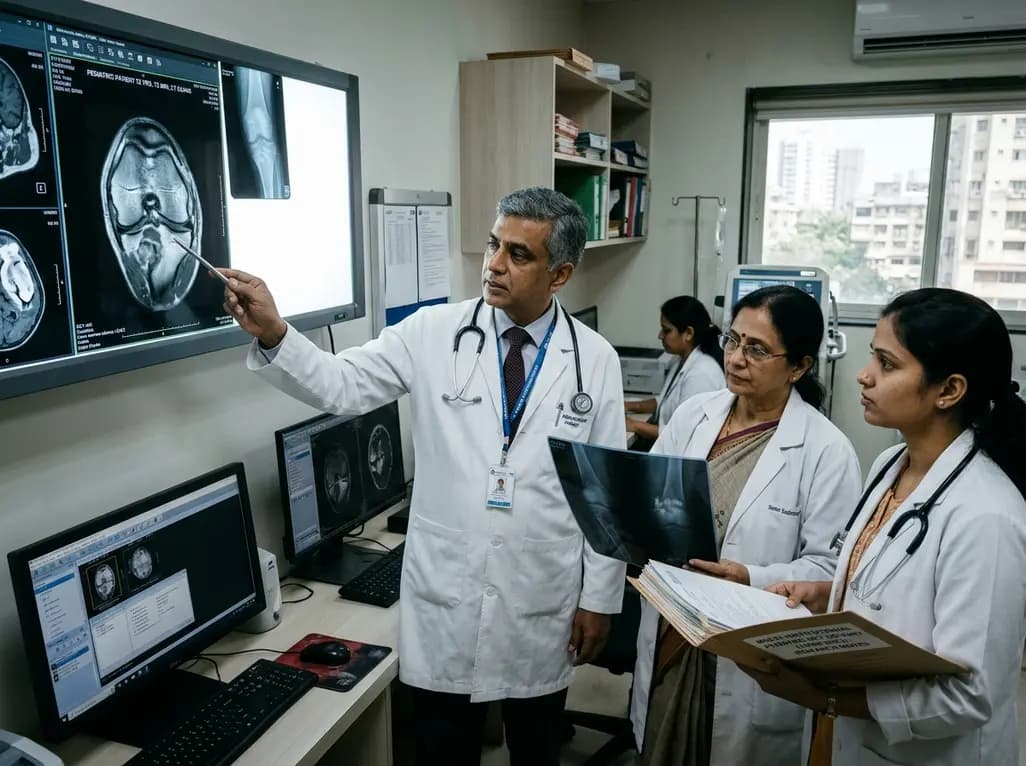
A 25-year multi-institutional cohort reveals high recurrence rates in pediatric giant cell tumor of bone, particularly in patients with open physes and bone marrow edema on preoperative MRI. Early surveillance and careful balance between growth plate preservation and tumor clearance are essential.
Today

India is advancing preventive healthcare by integrating genomics, artificial intelligence, and quantum technologies. With the SANGAM programme sequencing one million Indian genomes, clinicians can unlock personalized therapies, detect cardiometabolic risks early, and curb the burden of diabetes and heart disease.
Today
