.webp&w=384&q=75)

Loading, please wait...
Loading, please wait...

Trauma Adapted Yoga (TAY) is gaining recognition as a vital adjunct therapy in modern psychiatric care. A recent study evaluated the impact of TAY on adolescents during their psychiatric hospitalization. Unlike traditional yoga, this specialized adaptation prioritizes participant autonomy and nervous system regulation. Consequently, the researchers investigated how twice-weekly sessions could influence acute distress and psychiatric symptoms in a vulnerable inpatient population.
Specifically, the study utilized the Youth Outcome Questionnaire (Y-OQ) 2.0 to track patient progress from admission to discharge. Over a 27-week period, 129 adolescents were included, with the majority voluntarily opting for the yoga group. Furthermore, the results were striking. While the control group showed no significant change, participants in the yoga sessions experienced a substantial reduction in overall distress scores. Notably, patients reported immediate improvements in anxiety and emotional pain following each group session.
Most participants presented with Major Depressive Disorder and a documented history of trauma. This underscores the potential for Trauma Adapted Yoga to address the unique needs of trauma-exposed youth. Moreover, by emphasizing safety and body awareness, TAY helps patients manage anxiety effectively. Therefore, integrating such holistic practices into standard inpatient programming could improve therapeutic outcomes significantly. Future research should explore the long-term sustainability of these benefits after hospital discharge.
It is a yoga adaptation specifically designed for trauma-exposed populations. It focuses on autonomy, safety, and nervous system regulation rather than strict physical postures or controlling language.
Research indicates that TAY reduces anxiety, emotional pain, and overall distress scores during hospitalization. It provides a non-pharmacological tool for emotional regulation and improves patient engagement in treatment.
Disclaimer: This content is for informational and educational purposes only and does not constitute medical advice or a professional relationship. Always seek the advice of a qualified healthcare provider for any questions regarding a medical condition. Refer to the latest local and national guidelines for clinical practice.
References
Chung T et al. Trauma Adapted Yoga as an Adjunct to Psychiatric Treatment on an Adolescent Inpatient Unit. Clin Child Psychol Psychiatry. 2026 Feb 23. doi: 10.1177/13591045261424539. PMID: 41725599.
Khoury NM et al. A welcomed invitation: The feasibility of Trauma Adapted Yoga on a psychiatric inpatient adolescent unit. Gen Hosp Psychiatry. 2024 May-Jun;88:81-82. doi: 10.1016/j.genhosppsych.2024.02.005.
Kerekes N. Trauma-adapted Yoga in Child & Adolescent Psychiatry. ClinicalTrials.gov. 2025. NCT06330779.

Read summarized clinical updates, watch expert medical content, and earn CME certifications right from your smartphone.
Open your smartphone camera to scan and install.





A study reveals that Trauma Adapted Yoga (TAY) significantly reduces acute distress in adolescents during psychiatric hospitalization compared to standard c...
7 months ago
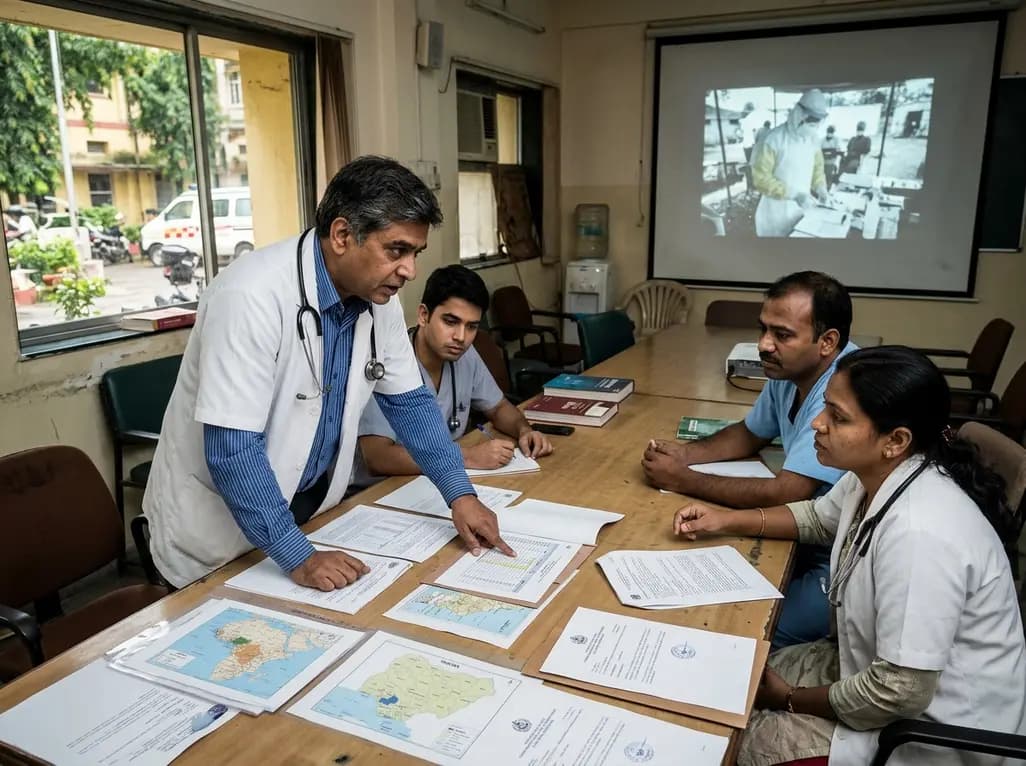
Following Nigeria's first recorded Ebola case linked to regional travel, the Africa CDC has convened an emergency ministerial summit. This alert underscores critical clinical priorities for healthcare professionals, including differentiating early viral infection from malaria, implementing barrier nursing, and triage.
Today

Leucine Rich Bio has introduced South Asia's first comprehensive vaginal microbiome test, BugSpeaks. By profiling microbial dysbiosis, pathogens, and antimicrobial resistance, this next-generation diagnostic platform provides clinicians with deeper insights into recurrent infections, fertility, and reproductive health.
Today

Review how tailored exercise programs benefit frail older patients with heart failure. Explore pathophysiological mechanisms, individualized training prescriptions, and strategies to overcome adherence barriers in clinical practice.
Today

This comparative study evaluates posterior labral tears with and without glenohumeral instability, highlighting distinct demographic patterns, MRI underestimation in stable shoulders, and successful arthroscopic repair outcomes.
Today

A clinical study demonstrates that early intervention with tocilizumab, either as monotherapy or bridged with corticosteroids, achieves significant proptosis reduction and resolves active inflammation in treatment-naive thyroid eye disease.
Today
