.webp&w=384&q=75)

Loading, please wait...
Loading, please wait...

Current clinical research is actively reshaping the landscape of transverse colon cancer surgery through innovative trials like JCOG2304 (TACTICS). Historically, extended right hemicolectomy (EHC) served as the standard surgical intervention for these patients. This procedure involves removing the terminal ileum and the right colon. However, transverse colectomy (TC) is emerging as a potentially effective alternative. This more limited resection preserves approximately 10 cm of bowel on either side of the tumor. Consequently, many experts believe this approach could significantly improve post-operative bowel function for patients.
The JCOG2304 trial specifically evaluates whether TC is non-inferior to EHC regarding relapse-free survival. This multicenter, randomized phase III study focuses on Stage II/III patients. Specifically, it targets cases where the middle colic artery acts as the main feeding vessel. Researchers expect to enroll 510 patients across major Japanese medical centers over five years. Moreover, the trial aims to demonstrate that a less extensive resection does not compromise oncologic safety. Additionally, preserving the ileocecal valve in TC may reduce the frequency of post-operative diarrhea. Notably, this study could establish TC as a new standard of care.
Surgeons often find managing transverse colon tumors challenging due to complex vascular anatomy. While EHC ensures extensive lymphadenectomy, it also removes a significant portion of healthy bowel. Instead, TC targets regional lymph nodes while maintaining anatomical integrity. Recent retrospective data already suggests that segmental resections offer similar survival rates to more radical procedures. Therefore, the TACTICS trial provides the high-level evidence needed for definitive clinical guidelines. Surgeons across the globe are monitoring these results closely to optimize patient quality of life.
Transverse colectomy is a limited resection that removes only 10 cm of bowel on either side of the tumor. In contrast, extended right hemicolectomy involves a much larger excision, including the terminal ileum and the entire right colon.
Patients with Stage II or III transverse colon cancer are eligible, provided their main feeding artery is the middle colic artery and they are being treated at a participating Japanese center.
Extensive bowel removal often leads to chronic diarrhea and reduced quality of life. By preserving more of the colon and the ileocecal valve, surgeons hope to maintain better bowel consistency and frequency for the patient.
Disclaimer: This content is for informational and educational purposes only. It does not constitute medical advice, diagnosis, or treatment. Always seek the advice of your physician or other qualified health provider with any questions you may have regarding a medical condition. Never disregard professional medical advice or delay in seeking it because of something you have read here. Refer to the latest local and national guidelines for clinical practice.
References
Sekita T et al. Protocol digest of a randomized controlled trial comparing transverse colectomy with extended right hemicolectomy for Stage II/III transverse colon cancer: JCOG2304 (TACTICS). Jpn J Clin Oncol. 2026 May 21. doi: undefined. PMID: 42166219.
Milone M et al. Mid-transverse colon cancer and extended versus transverse colectomy: results of the Italian society of surgical oncology colorectal cancer network (SICO CCN) multicenter collaborative study. Eur J Surg Oncol. 2020;46(9):1683-1688.
Leijssen LG et al. A transverse colectomy is as safe as an extended right or left colectomy for mid-transverse colon cancer. World J Surg. 2018;42(10):3381-3389.

Read summarized clinical updates, watch expert medical content, and earn CME certifications right from your smartphone.
Open your smartphone camera to scan and install.





The JCOG2304 TACTICS trial investigates if transverse colectomy is non-inferior to extended right hemicolectomy for Stage II/III colon cancer....
5 months ago
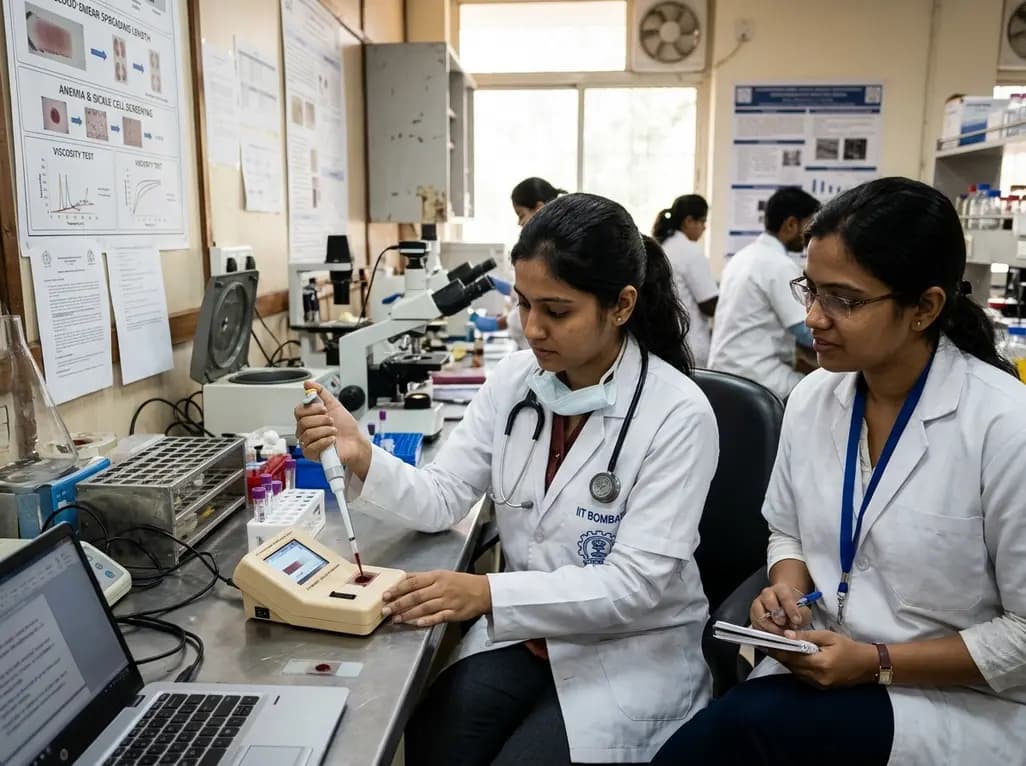
Researchers at IIT Bombay have engineered an automated, cost-effective point-of-care device that diagnoses anaemia and sickle cell disease from a single drop of blood. By measuring blood smear spreading length, this portable tool assesses blood viscosity to offer rapid screening in resource-limited healthcare centers.
Today

A population-based study of 20,928 children reveals that small vulnerable newborns face sex-divergent mental capital outcomes at ages 6-7: term SGA girls show higher behavioral difficulties and lower resilience, while preterm non-SGA boys experience increased behavioral problems.
Today
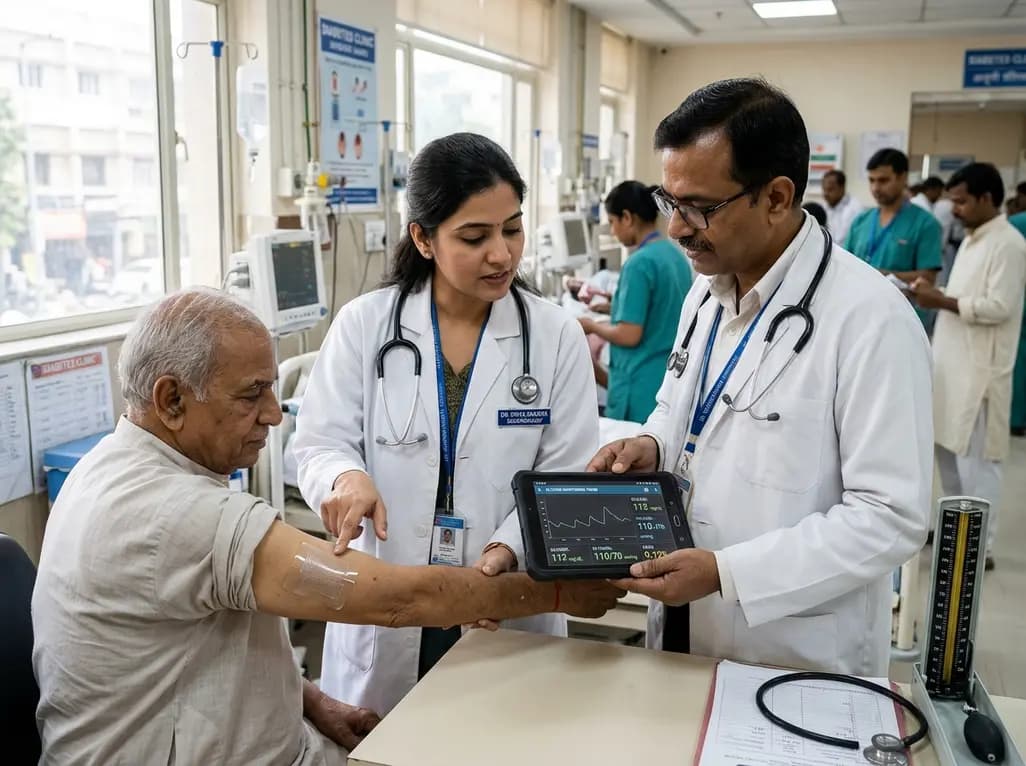
A breakthrough ultrathin multimodal sensor decouples physical hemodynamic monitoring from disposable electrochemical calibration, achieving long-term wearable glucose prediction with 81.36% accuracy and a 9.12% MARD. This offers a robust, drift-free solution for outpatient metabolic surveillance.
Today

A comparative review of tension band wiring and intramedullary screw fixation in thumb metacarpophalangeal arthrodesis, evaluating union rates, hardware complications, and clinical outcomes.
Today
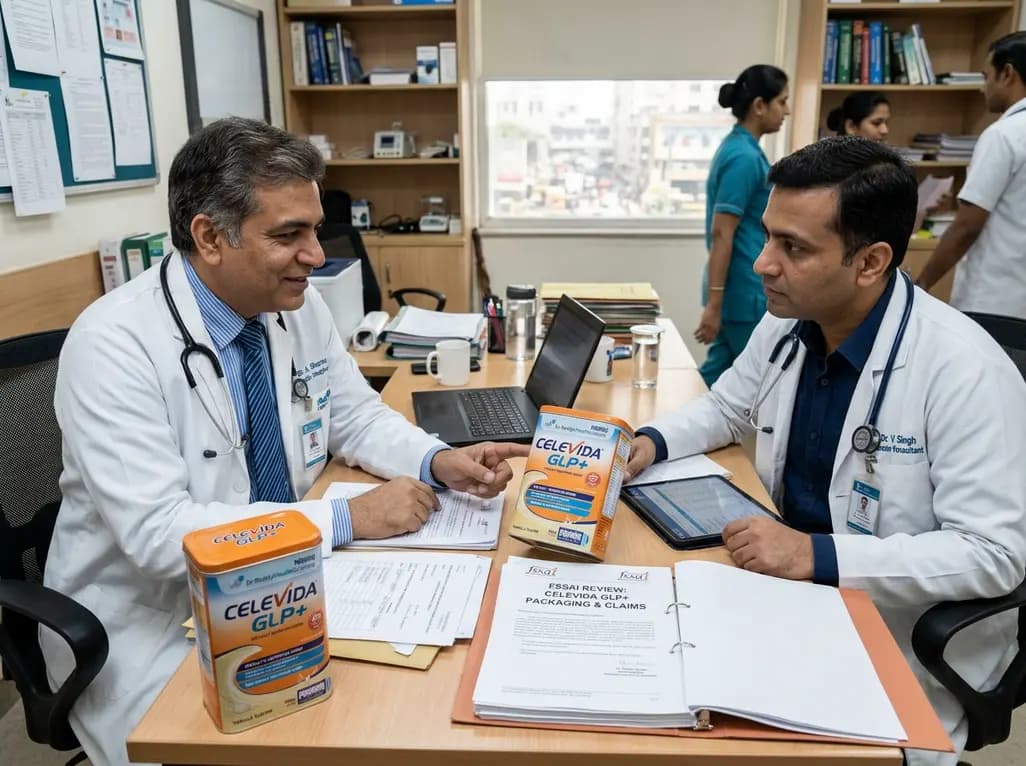
Following regulatory scrutiny from FSSAI regarding promotional representations and lean muscle preservation claims, Dr. Reddy's Laboratories and Nestlé Health Science are currently reviewing the branding and marketing strategy for their joint nutritional supplement Celevida GLP+.
Today
