.webp&w=384&q=75)

Loading, please wait...
Loading, please wait...
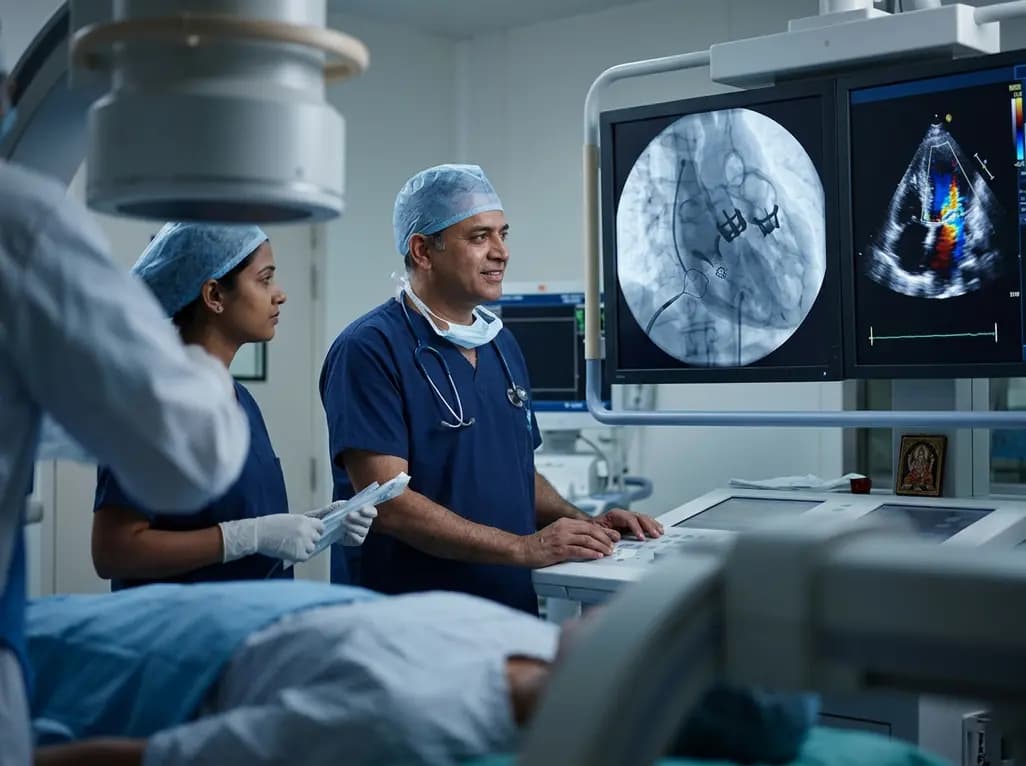
Paravalvular leak (PVL) affects nearly 17% of patients following prosthetic valve replacements, particularly in the mitral position. While surgical revision is the standard of care, it carries significant risks for those with multiple previous sternotomies. Consequently, transcatheter PVL closure has emerged as a preferred, minimally invasive alternative for high-risk individuals. However, clinicians must remain vigilant regarding rare but severe complications such as device migration.
A recent case study involves a 37-year-old woman with mechanical mitral and aortic valves who developed heart failure from a mitral PVL. Initially, doctors achieved success using transcatheter PVL closure with two vascular plugs. Unfortunately, four months later, one plug migrated into the left ventricular outflow tract. This movement obstructed the mechanical aortic valve, leading to acute pulmonary edema. Furthermore, the patient’s clinical status made traditional surgery extremely hazardous.
Due to her prohibitive surgical risk, the medical team opted for a complex percutaneous retrieval. Specifically, they successfully extracted the embolized plug through the mechanical prosthesis. In addition, they performed an immediate re-closure of the PVL during the same session. This innovative approach restored hemodynamic stability and valve performance without requiring open-heart surgery. Therefore, this case underscores the importance of having advanced interventional skills available in specialized cardiac centers.
In conclusion, although device migration is uncommon, it remains a critical risk in transcatheter PVL closure. This report provides the first known instance of a successful percutaneous retrieval through a mechanical valve. Moreover, it demonstrates that advanced bailout strategies are feasible even in the most challenging anatomical settings. Physicians should consider these techniques when managing similar high-risk complications in clinical practice.
Migration typically occurs due to undersizing of the device or the complex, irregular shape of the paravalvular defect. In addition, factors like suture dehiscence or lack of adequate tissue for anchoring can increase the risk of the plug becoming dislodged over time.
While extremely challenging, percutaneous retrieval is possible in expert hands. Specifically, it involves using snares or baskets to capture the device without damaging the mechanical leaflets. This method is generally reserved for patients who cannot survive a traditional surgical re-intervention.
Disclaimer: This content is for informational and educational purposes only and does not constitute medical advice. It is not intended to be a substitute for professional medical advice, diagnosis, or treatment. Always seek the advice of your physician or other qualified health provider with any questions you may have regarding a medical condition. Refer to the latest local and national guidelines for clinical practice.
References

Read summarized clinical updates, watch expert medical content, and earn CME certifications right from your smartphone.
Open your smartphone camera to scan and install.





A 37-year-old patient with mechanical mitral and aortic valves experienced device migration after a mitral PVL closure. This case highlights the first successful percutaneous retrieval of an embolized plug through a mechanical prosthesis, illustrating a vital bailout strategy for high-risk patients.
4 months ago

Review how tailored exercise programs benefit frail older patients with heart failure. Explore pathophysiological mechanisms, individualized training prescriptions, and strategies to overcome adherence barriers in clinical practice.
Today

Leucine Rich Bio has introduced South Asia's first comprehensive vaginal microbiome test, BugSpeaks. By profiling microbial dysbiosis, pathogens, and antimicrobial resistance, this next-generation diagnostic platform provides clinicians with deeper insights into recurrent infections, fertility, and reproductive health.
Today

In high-risk pulmonary embolism complicated by severe anemia and active uterine bleeding, systemic thrombolysis is contraindicated. Large-bore aspiration thrombectomy provides rapid hemodynamic rescue without fibrinolysis, supported by inferior vena cava filter placement and multidisciplinary critical care.
Today

This comparative study evaluates posterior labral tears with and without glenohumeral instability, highlighting distinct demographic patterns, MRI underestimation in stable shoulders, and successful arthroscopic repair outcomes.
Today

A clinical study demonstrates that early intervention with tocilizumab, either as monotherapy or bridged with corticosteroids, achieves significant proptosis reduction and resolves active inflammation in treatment-naive thyroid eye disease.
Today
