.webp&w=384&q=75)

Loading, please wait...
Loading, please wait...

Industrialization has significantly increased environmental pollution worldwide, exposing individuals to substances like cadmium and arsenic on a daily basis. Consequently, recent medical research highlights a strong correlation between these environmental toxins and various toxic metal reproductive cancers. These substances often act as metallohormones, which means they mimic natural hormones and disrupt essential endocrine signaling. Therefore, even low-level chronic exposure over a lifetime poses a severe threat to human health due to the bioaccumulation of these metals in vital tissues.
Research indicates that cadmium and arsenic have the most established links to breast and prostate malignancies. Furthermore, the International Agency for Research on Cancer (IARC) classifies cadmium, arsenic, nickel, and hexavalent chromium as Group 1 carcinogens. Lead is currently categorized as a probable human carcinogen. Because these metals possess exceptionally long biological half-lives, they remain in the body for decades. However, while the data for breast and prostate cancer is robust, clinicians still face knowledge gaps regarding less-studied conditions like ovarian and testicular cancers.
While most studies focus on single-metal toxicity, physicians must increasingly consider the synergistic effects of combined metal exposures. Additionally, measuring metal concentrations directly within tumor tissues may provide more precise insights into disease progression. Since industrial heavy metal contamination is a significant concern in many geographic regions, understanding these risk factors is vital for both preventive oncology and endocrine health management. Future research should prioritize investigating how these metals interact with the human genome to trigger reproductive system disorders.
Metallohormones are a group of metals, such as cadmium and lead, that exhibit hormone-like properties. They can mimic or disrupt natural hormones, contributing to the development of hormone-dependent cancers like breast and prostate cancer.
According to the IARC, the metals classified as proven Group 1 human carcinogens include cadmium (Cd), arsenic (As), nickel (Ni), and chromium (Cr).
Toxic metals accumulate through chronic exposure in food, water, and air. Due to their long biological half-lives, the body cannot easily excrete them, leading to build-up in tissues over several years.
Disclaimer: This content is for informational and educational purposes only and does not constitute medical advice. Always seek the advice of a physician or other qualified health provider with any questions you may have regarding a medical condition. Refer to the latest local and national guidelines for clinical practice.
References
Anđelković M et al. Toxic Metals and Their Emerging Role as Risk Factors in Hormone-Related Reproductive Cancers. Environ Toxicol. 2026 May 20. doi: 10.1002/tox.70125. PMID: 42159048.
International Agency for Research on Cancer (IARC). IARC Monographs on the Identification of Carcinogenic Hazards to Humans.
World Health Organization (WHO). Chemicals of major public health concern: Arsenic, Cadmium, Lead, and Mercury.

Read summarized clinical updates, watch expert medical content, and earn CME certifications right from your smartphone.
Open your smartphone camera to scan and install.





A summary of how environmental exposure to toxic metals like arsenic and cadmium increases the risk of breast, prostate, and other hormone-related cancers....
5 months ago
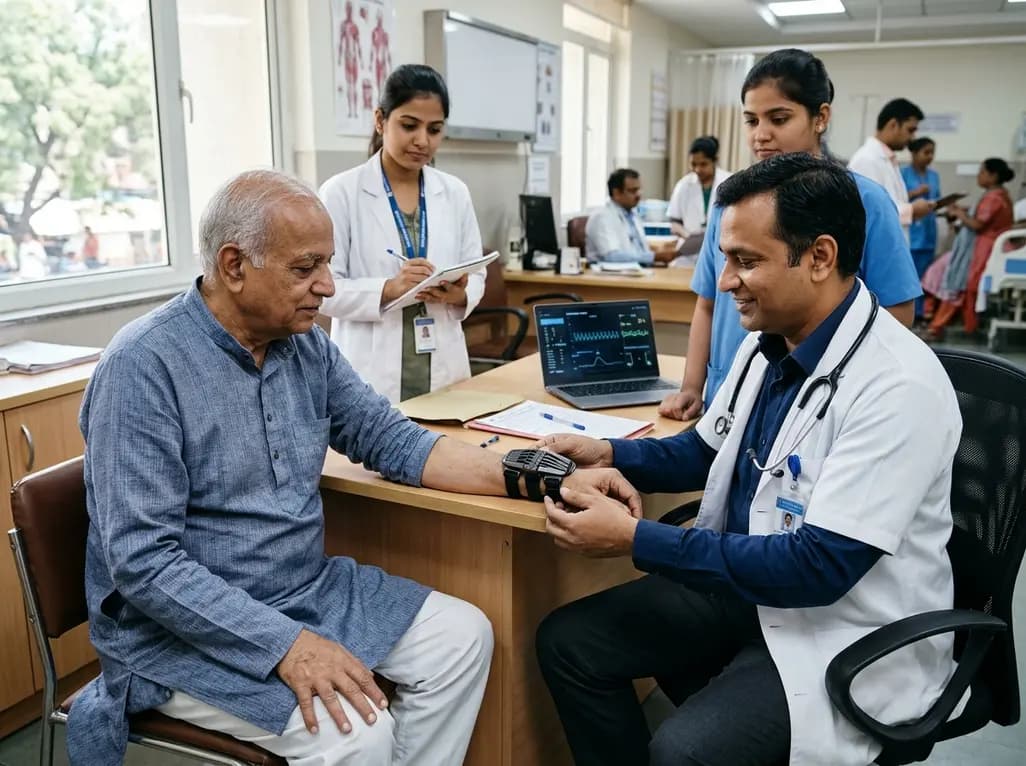
The TREM-AB open-label pilot study evaluated a wearable passive nonlinear vibration absorber for essential tremor. The Nonlinear Energy Sink bracelet reduced clinical Fahn-Tolosa-Marin tremor scores by 32.1% and electrophysiological tremor power by 49.2% with no adverse effects reported.
Today

A population-based study of 20,928 children reveals that small vulnerable newborns face sex-divergent mental capital outcomes at ages 6-7: term SGA girls show higher behavioral difficulties and lower resilience, while preterm non-SGA boys experience increased behavioral problems.
Today
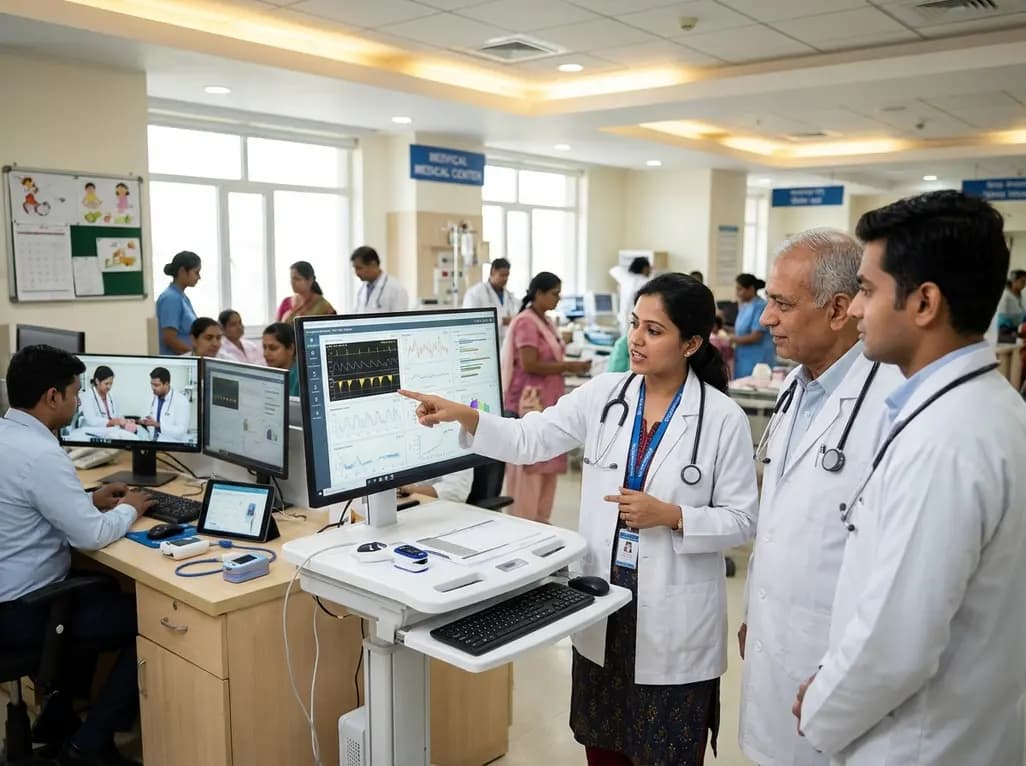
A landmark study details how an enterprise pediatric remote patient management model expanded from a single cardiology pilot to 16 diverse specialty programs by combining centralized digital operations with specialty clinical leadership.
Today

A comparative review of tension band wiring and intramedullary screw fixation in thumb metacarpophalangeal arthrodesis, evaluating union rates, hardware complications, and clinical outcomes.
Today
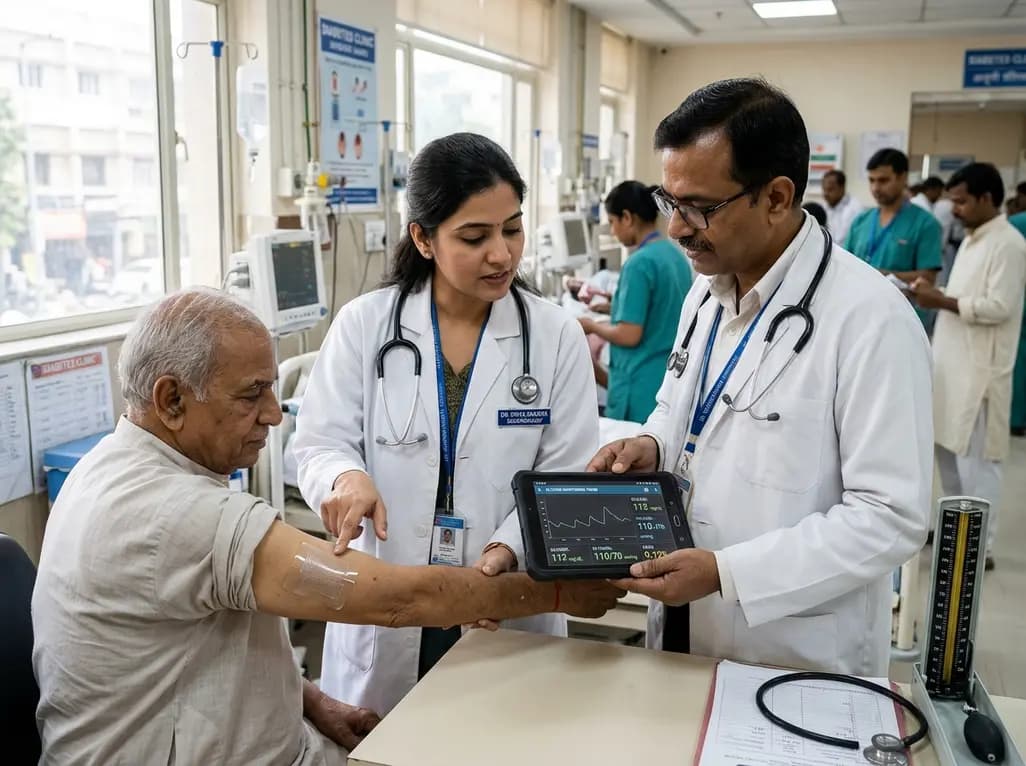
A breakthrough ultrathin multimodal sensor decouples physical hemodynamic monitoring from disposable electrochemical calibration, achieving long-term wearable glucose prediction with 81.36% accuracy and a 9.12% MARD. This offers a robust, drift-free solution for outpatient metabolic surveillance.
Today
