

Loading, please wait...
Loading, please wait...

Managing advanced biliary tract cancer remains one of the most formidable hurdles in gastrointestinal oncology. Indeed, malignancies arising from the intrahepatic ducts, extrahepatic biliary tree, and gallbladder exhibit aggressive biology and late-stage presentation. In countries like India, gallbladder adenocarcinoma represents a severe healthcare crisis with high regional incidence along the northern belt. Most patients initially receive standard first-line gemcitabine and cisplatin regimens paired with immunotherapy. Unfortunately, disease progression occurs rapidly, leaving medical oncologists with scarce second-line alternatives. Historical benchmarks for second-line chemotherapy doublets demonstrate meager objective response rates below ten percent. Furthermore, median overall survival historically stagnates around six months following frontline failure. Although genomic profiling identifies actionable alterations in a minor subset, most patients lack targetable drivers. Consequently, clinicians urgently need novel biological combinations that overcome microenvironmental resistance. Therefore, therapeutic strategies targeting angiogenic signaling and abnormal vascular architecture have emerged as promising approaches to overcome this therapeutic barrier.
Tovecimig is an investigational bispecific antibody engineered to neutralize two cooperative pathways that govern tumor neovascularization. Specifically, the molecule binds vascular endothelial growth factor-A (VEGF-A) and delta-like ligand-4 (DLL4) simultaneously. Angiogenic signaling through VEGF-A initiates endothelial proliferation and vessel sprouting, whereas DLL4-Notch signaling regulates downstream vessel branching. Consequently, inhibiting VEGF-A alone often triggers compensatory Notch pathway upregulation, promoting therapy resistance and immature, leaky vascular beds. By concurrently blocking DLL4 and VEGF-A, tovecimig induces nonproductive endothelial sprouting while disrupting established tumor microcirculation. In addition, preclinical models indicate that dual blockade diminishes chemoresistant cancer stem cells and attenuates immunosuppressive stroma. Combining tovecimig with paclitaxel creates meaningful therapeutic synergy. Specifically, paclitaxel disrupts mitotic microtubule dynamics, while tovecimig-mediated vascular alterations enhance cytotoxic delivery into dense, hypoperfused stroma. Therefore, dual angiogenesis blockade addresses core mechanisms of drug resistance, providing a rational strategy to augment taxane cytotoxicity in refractory gastrointestinal tract malignancies.
The randomized phase 2/3 COMPANION-002 trial systematically evaluated the efficacy and safety of adding tovecimig to paclitaxel in pretreated patients. Investigators conducted this open-label, international multicenter trial across academic oncology hospitals. Specifically, the trial enrolled 168 adult patients diagnosed with unresectable locally advanced, metastatic, or recurrent biliary tract cancers who progressed after one prior systemic chemotherapy regimen. Investigators randomized participants in a 2:1 ratio to receive either tovecimig plus weekly paclitaxel (n=111) or paclitaxel monotherapy (n=57). Patients in the combination cohort received tovecimig at 10 mg/kg intravenously on days 1 and 15, alongside paclitaxel at 80 mg/m² on days 1, 8, and 15 of every 28-day cycle. Conversely, patients in the control group received weekly paclitaxel alone at identical dosages. The primary trial endpoint was the objective response rate assessed by blinded independent central review according to RECIST version 1.1 guidelines. Key secondary endpoints included progression-free survival, overall survival, and disease control rate. Notably, the study protocol permitted crossover to the tovecimig combination for control patients following blinded review confirmation of objective disease progression.
The trial met its primary endpoint by demonstrating a statistically significant and clinically meaningful enhancement in objective response rates. Specifically, blinded central review confirmed an objective response rate of 18.0% in the tovecimig plus paclitaxel cohort, compared with only 5.3% in the paclitaxel monotherapy group (p=0.0228). Furthermore, the experimental arm achieved notable disease stabilization, reducing rapid disease progression rates to 16.2% versus 42.1% in the control arm. Evaluation of the key secondary endpoint demonstrated dramatic progression-free survival gains. Patients receiving tovecimig and paclitaxel achieved a median progression-free survival of 4.7 months, compared to 2.6 months with paclitaxel alone. This finding translated to a remarkable 56% reduction in the risk of disease progression or death (hazard ratio, 0.44; p<0.0001). However, intention-to-treat overall survival analyses revealed comparable outcomes between groups, showing 8.9 months for the combination versus 9.4 months for control. Substantial patient crossover explained this observation, as 54% of control patients crossed over to receive tovecimig. Intriguingly, control patients who crossed over attained a median overall survival of 12.8 months, compared to only 6.1 months for those who never received tovecimig.
The safety profile observed in COMPANION-002 was consistent with the known mechanisms of vascular endothelial disruption and taxane chemotherapy. Overall, treatment-emergent adverse events occurred predictably and remained clinically manageable with standard oncologic supportive care. Hypertension and fatigue represented the most prevalent adverse effects in the experimental cohort. Specifically, all-grade hypertension occurred in 69% of patients receiving tovecimig, with grade 3 or higher events reported in 44%. This vascular event represents a recognized pharmacodynamic effect of combined VEGF-A and DLL4 pathway neutralization. In addition, grade 3 or higher neutropenia occurred in 36% of patients, necessitating routine hematologic surveillance and growth factor support when clinically indicated. Fortunately, prompt blood pressure management and dose modifications allowed most participants to continue therapy safely. For practicing gastrointestinal oncologists, these results provide vital clinical evidence in a refractory disease setting. While regulatory authorities debate overall survival endpoints influenced by crossover designs, the robust prolongation of progression-free survival represents a meaningful therapeutic milestone. Consequently, tovecimig combined with paclitaxel provides an appealing second-line strategy to delay disease progression and preserve functional performance in advanced biliary malignancies.
Tovecimig is a novel bispecific antibody that concurrently inhibits both vascular endothelial growth factor-A and delta-like ligand-4. Unlike conventional anti-VEGF monotherapies, tovecimig blocks compensatory Notch pathway reactivation that typically drives treatment resistance. Consequently, this dual mechanism induces nonproductive angiogenesis, impairs tumor perfusion, destabilizes established microvasculature, and suppresses cancer stem-like cell survival. This multi-targeted strategy substantially enhances cytotoxic sensitivity in refractory tumors.
The intention-to-treat analysis did not demonstrate a statistically significant survival difference primarily due to extensive patient crossover. Specifically, fifty-four percent of patients in the paclitaxel control arm crossed over to receive tovecimig upon centrally documented disease progression. Notably, these crossover patients achieved a prolonged median overall survival of 12.8 months compared to 6.1 months for non-crossover patients, directly confounding the intention-to-treat survival comparison between study arms.
Clinicians managing patients on tovecimig plus paclitaxel must vigilantly monitor blood pressure and hematologic parameters. Because dual VEGF-A and DLL4 blockade alters vascular homeostasis, hypertension occurs frequently, with grade 3 or higher events affecting forty-four percent of patients. Additionally, neutropenia and fatigue represent prominent toxicities requiring close attention. Oncologists should implement prompt antihypertensive management, routine complete blood counts, and timely dose modifications to maintain patient safety.
Disclaimer: This content is for informational and educational purposes only. It does not constitute medical advice and should not replace professional clinical judgment. Refer to the latest local and national guidelines for clinical practice.
References

Read summarized clinical updates, watch expert medical content, and earn CME certifications right from your smartphone.
Open your smartphone camera to scan and install.





The phase 2/3 COMPANION-002 trial evaluated tovecimig, a DLL4/VEGF-A bispecific antibody, plus paclitaxel versus paclitaxel alone in pretreated advanced biliary tract cancer. The combination significantly improved objective response rate (18.0% vs 5.3%) and progression-free survival (4.7 vs 2.6 months).
Today

The TREM-AB open-label pilot study evaluated a wearable passive nonlinear vibration absorber for essential tremor. The Nonlinear Energy Sink bracelet reduced clinical Fahn-Tolosa-Marin tremor scores by 32.1% and electrophysiological tremor power by 49.2% with no adverse effects reported.
Today

A population-based study of 20,928 children reveals that small vulnerable newborns face sex-divergent mental capital outcomes at ages 6-7: term SGA girls show higher behavioral difficulties and lower resilience, while preterm non-SGA boys experience increased behavioral problems.
Today
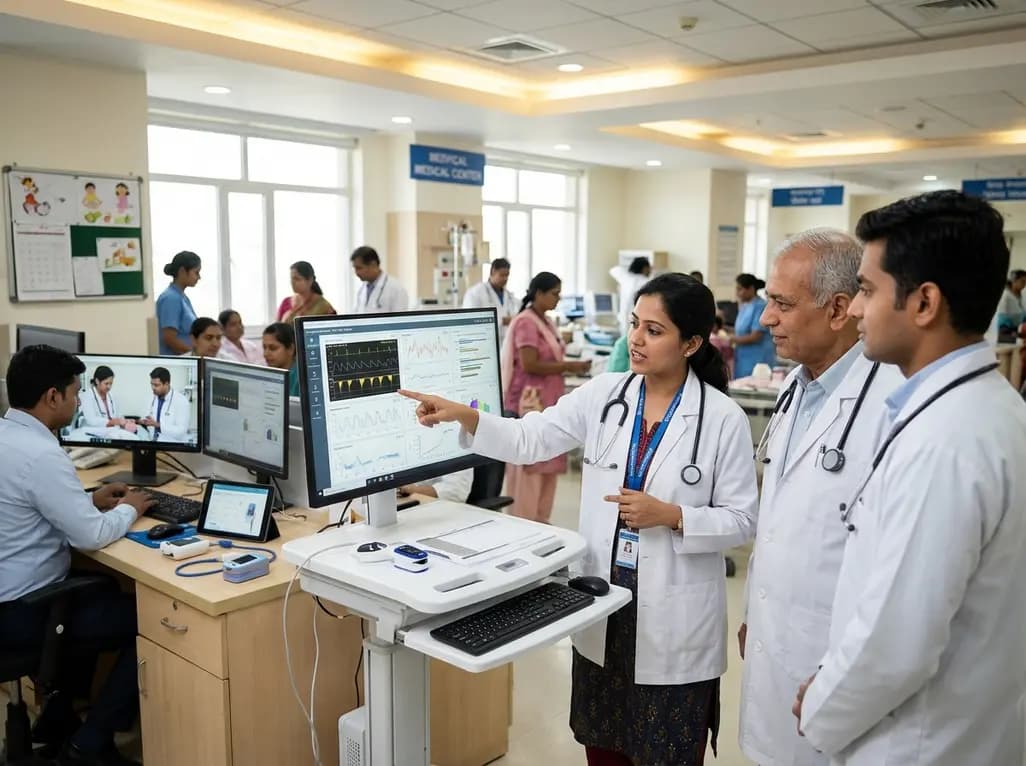
A landmark study details how an enterprise pediatric remote patient management model expanded from a single cardiology pilot to 16 diverse specialty programs by combining centralized digital operations with specialty clinical leadership.
Today

A comparative review of tension band wiring and intramedullary screw fixation in thumb metacarpophalangeal arthrodesis, evaluating union rates, hardware complications, and clinical outcomes.
Today

A breakthrough ultrathin multimodal sensor decouples physical hemodynamic monitoring from disposable electrochemical calibration, achieving long-term wearable glucose prediction with 81.36% accuracy and a 9.12% MARD. This offers a robust, drift-free solution for outpatient metabolic surveillance.
Today
