

Loading, please wait...
Loading, please wait...

Total body irradiation serves as an indispensable conditioning regimen prior to allogeneic hematopoietic stem cell transplantation. Historically, radiation oncologists relied on simplified two-dimensional techniques with extended source-to-surface distances to treat systemic hematologic malignancies. However, modern radiation oncology has rapidly adopted sophisticated image-guided linear accelerators and helical delivery systems. Consequently, contemporary total body irradiation planning has evolved from rudimentary manual calculations into complex, multi-isocenter inverse optimization. Despite shared biological goals, institutions often approach treatment design with divergent clinical philosophies and technical infrastructure. These differences generate significant variations in target dose homogeneity and normal tissue exposure. In response to this lack of uniformity, the German Society of Medical Physics working group launched a rigorous multi-institutional investigation. The study assessed inter-institutional variability under strictly controlled planning conditions across premier radiotherapy centers in Germany and Switzerland. Furthermore, this landmark trial provides an unprecedented window into the dosimetric realities of contemporary conditioning therapy. Understanding these technical discrepancies is vital for radiation oncologists and medical physicists who strive to deliver reproducible, safe, and curative radiation doses.
To eliminate patient-specific anatomical confounders, the investigators distributed a single, standardized dummy patient dataset to 24 radiotherapy departments. Specifically, each participating center received identical high-resolution computed tomography scans acquired in both head-first supine and prone orientations. The study investigators defined the entire human body as the planning target volume and delineated critical organs at risk. Subsequently, participating teams generated plans for two commonly utilized conditioning prescriptions: 8 Gy delivered in 4 fractions and 12 Gy delivered in 6 fractions. The centers employed their respective local protocols and proprietary clinical workflows. In total, the coordinating institution gathered and analyzed 45 distinct treatment plans. These submissions encompassed a wide spectrum of delivery approaches, including volumetric modulated arc therapy, helical tomotherapy, sweeping beams, static long-distance fields, and specialized couch translation methods. Medical physicists centrally evaluated treatment planning system plans to quantify three-dimensional dose-volume histograms, target coverage metrics, and organ-at-risk parameters. Meanwhile, investigators audited conventional table-based plans using aggregated point-of-interest doses. Therefore, this robust methodology established a completely uniform foundation for direct, objective cross-institutional comparisons.
The investigation revealed striking differences in dosimetric outcomes across participating radiotherapy centers. Most notably, conformal intensity-modulated techniques demonstrated exceptional planning consistency compared to legacy modalities. Both volumetric modulated arc therapy and helical tomotherapy yielded uniform dose distributions across the extended target volume. In contrast, non-conformal approaches, such as sweeping beam setups and bilateral fields, generated substantially wider variations in dose conformity. Table-based plans exhibited noticeable fluctuations at overlapping junction regions and peripheral anatomies. Furthermore, the analysis showed that treatment planning systems provided superior control over localized hot spots and underdosed volumes. When centers utilized multi-isocenter arc trajectories, inverse algorithms successfully smoothed dose transitions across complex anatomical contours. However, non-modulated fields struggled to maintain homogeneous dose delivery across variable patient thicknesses. Consequently, patients receiving non-conformal irradiation could experience unexpected peaks or troughs in absorbed marrow dose. These quantitative disparities indicate that the transition to rotational intensity-modulated therapy fundamentally enhances delivery precision. Nevertheless, technical execution still relies heavily on individual institutional optimization priorities and planner expertise.
Organ-at-risk preservation represents the primary clinical rationale for adopting advanced total body irradiation planning. During conditioning therapy, excessive irradiation to sensitive tissues causes severe morbidities, including interstitial pneumonitis, renal dysfunction, and cataractogenesis. The study uncovered dramatic institutional variability regarding critical normal structure doses, especially within the lungs, kidneys, and ocular lenses. For instance, at the myeloablative 12 Gy prescription, mean lung doses varied by more than 3 Gy between different centers. This divergence represented an alarming relative difference of nearly 30% across identical patient anatomy. Similarly, kidney and lens exposures showed marked swings depending on local contouring guidelines and dose-volume constraints. Intriguingly, the study documented an inverse trade-off between organ protection and target conformity. When planning teams aggressively reduced mean lung doses in the 12 Gy cohort, target volume coverage consistently declined compared to the 8 Gy regimens. Therefore, excessive normal tissue shielding frequently compromises planning target volume margins in adjacent thoracic structures. Radiation oncologists must carefully weigh pulmonary toxicity risk against the clinical danger of leukemic recurrence near blocked ribs and mediastinal nodes.
These multicenter findings carry profound implications for transplant physicians, medical physicists, and clinical oncologists worldwide. In conditioning regimens, total body irradiation serves two vital functions: eradicating residual malignant cells and suppressing host immunity to permit donor engraftment. However, wide variations in organ doses complicate clinical trial outcomes and collaborative research. When different transplant facilities administer identical nominal prescriptions, patients actually receive divergent biological effective doses. For example, a patient treated at a center with conservative lung limits might experience less pulmonary toxicity but face a higher risk of disease recurrence. Conversely, excessive pulmonary exposure increases the hazard of idiopathic pneumonia syndrome and non-relapse mortality. In developing healthcare environments, including major academic cancer centers across India, linear accelerator capacity and planning expertise vary substantially. Many tertiary hospitals are replacing older telecobalt or extended-distance setups with modern volumetric arc systems. Clinicians must recognize that transitioning to modulated delivery requires rigorous commissioning and meticulous optimization. Standardizing organ dose constraints is paramount to ensuring equitable clinical outcomes across international transplant registries.
The working group emphasized that their study did not define an absolute clinical standard. Instead, the authors established an essential benchmark that illuminates the urgent need for international harmonization. Moving forward, radiation oncology societies must formulate clear consensus guidelines defining standardized target margins, contouring rules, and mandatory dose-volume constraints. In addition, institutions must adopt standardized end-to-end quality assurance procedures for large-field delivery techniques. While virtual planning studies provide valuable insights, physical delivery introduces unique operational challenges, including patient positioning reproducibility, table sag, and organ motion. Surface-guided radiation therapy and volumetric image guidance offer powerful tools to verify setup accuracy during prolonged delivery sessions. Furthermore, collaborative multicenter phantom audits should validate that planned dose distributions match delivered doses at the treatment machine. By combining advanced treatment planning systems with rigorous dosimetry checks, radiation therapy teams can minimize institutional discrepancy. Ultimately, international consensus and systematic verification will allow clinicians to harness the full potential of advanced total body irradiation while safeguarding patient safety.
Divergent institutional protocols and variable technology cause substantial planning differences. Centers utilize distinct delivery modalities, ranging from traditional extended-distance open fields to sophisticated volumetric modulated arc therapy and helical tomotherapy. Furthermore, individual planning teams apply diverse optimization objectives, organ-at-risk prioritization, and contouring definitions. Without universal standards, one center may aggressively shield organs at risk while another prioritizes uniform planning target volume coverage, producing widely differing three-dimensional dose distributions.
Modern conformal techniques such as volumetric modulated arc therapy deliver substantially more uniform dose distributions than conventional extended distance methods. Linac-based arc therapy uses computer-controlled multi-leaf collimation to shape the beam continuously around the patient. Consequently, planners can precisely sculpt radiation fields to spare critical structures like lungs and kidneys without cumbersome physical lead blocks. In contrast, older extended-distance techniques yield irregular doses and struggle with anatomical contours.
Aggressive lung sparing directly risks underdosing adjacent anatomical targets, including the chest wall, ribs, and circulating blood volume. When planning systems strictly reduce thoracic doses, cold spots frequently develop along the periphery of the lungs. Consequently, persistent residual leukemic cells residing within thoracic marrow spaces may evade lethal irradiation. This underdosage increases the hazard of post-transplant disease recurrence, which clinicians must carefully balance against the risk of fatal radiation pneumonitis.
Disclaimer: This content is for informational and educational purposes only and does not constitute medical advice, diagnosis, or treatment. Always consult qualified healthcare providers with any clinical questions. Refer to the latest local and national guidelines for clinical practice.
References

Read summarized clinical updates, watch expert medical content, and earn CME certifications right from your smartphone.
Open your smartphone camera to scan and install.





A multicenter DGMP study of 24 centers evaluated total body irradiation planning, revealing substantial variations in lung and kidney doses, underscoring the need for standardized protocols across modern conditioning regimens.
Today

A landmark Nature study reveals that only 27% of individuals with obesity have active clinical disease. By incorporating waist circumference and organ dysfunction, this new diagnostic framework moves beyond BMI to prevent widespread misclassification and guide personalized metabolic intervention.
Today

A breakthrough blood test measuring the RNA biomarker Tu-Stroma detects microscopic serous tubal intraepithelial carcinoma (STIC) lesions with remarkable accuracy. This non-invasive diagnostic tool offers crucial biological insight to guide prophylactic surgery decisions for women carrying high-risk genetic mutations.
Today

Thoracic aortic aneurysm lacks etiologic medical therapy. A new study reveals that targeting specific αV integrins with Cilengitide attenuates TGF-β and mechanotransduction pathways, effectively limiting pro-fibrotic remodeling and aortic bulb dilation in both syndromic and sporadic disease models.
Today
A nationwide observational study from Japan examines 10-year trends, regional variations, and mortality outcomes of cemented versus uncemented hemiarthroplasty in 296,841 femoral neck fractures, offering critical insights for orthopaedic practice and geriatric trauma care.
Today
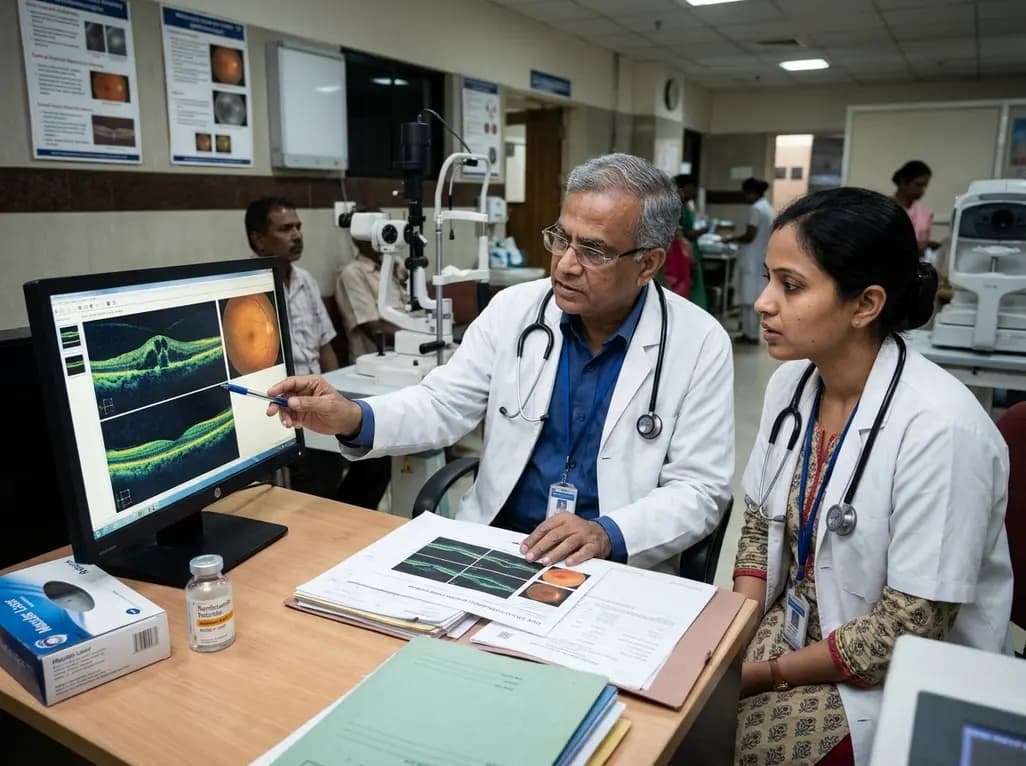
A real-world retrospective study demonstrates that combining intravitreal ranibizumab with focal/grid macular laser significantly improves visual acuity and central macular thickness compared to laser monotherapy in patients with center-involved diabetic macular edema.
Today
