.webp&w=384&q=75)

Loading, please wait...
Loading, please wait...

Tinnitus represents one of the most common and heterogeneous sensory complaints in outpatient medicine. While many patients tolerate ear sounds comfortably, severe tinnitus distress can drastically impair daily quality of life. Clinicians frequently encounter significant psychiatric comorbidity in these presentations, particularly major depressive symptoms. However, disentangling auditory impairment from underlying affective illness remains remarkably difficult because standard questionnaires often measure similar patient experiences. Self-report batteries frequently conflate sensory annoyance with pervasive mental health suffering. Consequently, evaluating how these diagnostic instruments overlap provides crucial insights for refining patient assessment and delivering targeted interdisciplinary interventions.
In daily practice, otolaryngologists, psychiatrists, and family physicians frequently evaluate patients reporting fatigue, sleep disturbances, and emotional irritability alongside persistent phantom sounds. Extensive clinical literature demonstrates robust statistical correlations between subjective auditory symptoms and depression. Nevertheless, clinicians frequently find it difficult to determine whether depressive symptoms emerge as secondary complications of auditory dysfunction or represent a distinct affective disorder. Both clinical conditions rely extensively on patient-reported outcome measures for routine diagnostic screening, staging, and therapeutic monitoring.
Unfortunately, standard questionnaires frequently share overlapping symptom domains. When an individual completes a tinnitus assessment, questions regarding insomnia, concentration deficits, and emotional distress directly mirror items found in psychiatric inventories. Consequently, total questionnaire scores often reflect generalized affective distress rather than pure otological handicap. This measurement redundancy risks artificially inflating perceived otological severity while obscuring primary mood disorders. Therefore, clarifying the construct validity of these psychometric instruments represents an urgent clinical priority. Clinicians must understand what each questionnaire measures to ensure precise diagnostic categorization and prevent misdirected therapeutic efforts.
To address this measurement challenge, researchers utilized the World Health Organization’s International Classification of Functioning, Disability and Health framework. The ICF offers an internationally recognized, standardized taxonomic system that systematically categorizes functional capabilities, bodily impairments, and health-related factors. By mapping questionnaire items directly to standardized ICF categories, investigators can objectively determine the precise functional dimensions each tool evaluates.
In this comprehensive investigation, researchers evaluated six validated tinnitus distress inventories and seven widely utilized depressive symptom scales. The tinnitus batteries included the Tinnitus Handicap Inventory, Tinnitus Questionnaire, Modified Tinnitus Questionnaire, Tinnitus Handicap Questionnaire, Tinnitus Reaction Questionnaire, and Tinnitus Functional Index. The depressive symptom tools comprised the Beck Depression Inventory-II, Hospital Anxiety and Depression Scale, Zung Self-Rating Depression Scale, Patient Health Questionnaire-9, Center for Epidemiologic Studies Depression Scale, Symptom Checklist-90-Revised, and Depression Anxiety Stress Scales-42.
Interestingly, the depressive symptom inventories demonstrated narrower thematic diversity, linking to 14 second-level ICF categories. In contrast, the tinnitus instruments spanned 23 second-level categories, reflecting broader coverage across sensory, physical, and cognitive domains.
The content analysis identified seven second-level ICF categories shared across both tinnitus and depression instruments. These overlapping categories comprise energy and drive functions, sleep functions, attention functions, and emotional functions. Additionally, they include thought functions, interpersonal relationships, and recreation and leisure activities.
Because both diagnostic toolsets capture these seven dimensions, clinical scores inherently reflect shared psychological and neurobiological burdens. For example, questions addressing sleep disruption, mental fatigue, and concentration loss appear consistently across both medical domains. Consequently, a depressed patient without substantial ear pathology might achieve elevated scores on an otological questionnaire. Conversely, a patient suffering from intense auditory phantom sounds may endorse numerous depressive items simply because chronic acoustic intrusion interrupts restful sleep and social interaction. Therefore, clinicians must recognize that elevated scores on psychological subscales do not confirm an independent psychiatric disorder. Instead, these shared items illustrate how severe functional disruptions bridge otological perception and psychological distress.
The content analysis revealed striking differences in content overlap among specific questionnaires, providing vital guidance for instrument selection. Among the tinnitus measures, the Tinnitus Questionnaire demonstrated the lowest overlap with depression instruments, ranging from 11.54% to 26.92% at the second-level ICF category. This low overlap occurs because the Tinnitus Questionnaire emphasizes distinct auditory experiences, direct cognitive appraisals, and somatic complaints.
Conversely, the Tinnitus Reaction Questionnaire exhibited the highest overlap, sharing 61.54% to 73.08% of its second-level categories with depressive symptom scales. This substantial overlap stems from its primary focus on emotional catastrophe, helplessness, and general distress. Among depressive instruments, the Zung Self-Rating Depression Scale showed the least overlap with tinnitus questionnaires, spanning 40% to 60%. In contrast, the DASS-42 depression subscale demonstrated the greatest overlap, sharing 85.71% to 100% of its categories with tinnitus measures. The DASS-42 focuses heavily on generalized dysphoria and negative affect, which closely mirror the psychological anguish experienced by individuals with debilitating tinnitus.
These findings offer significant practical implications for otolaryngologists, audiologists, and mental health professionals. First, medical teams must exercise caution when interpreting concurrent questionnaire scores. When clinicians administer instruments with high conceptual overlap, such as the Tinnitus Reaction Questionnaire and DASS-42, strong positive correlations inevitably emerge from shared question content rather than true disease interaction.
Second, practitioners should select assessment batteries that match specific clinical goals. When clinicians wish to isolate auditory-specific impairment from general psychiatric distress, instruments with lower overlap, like the Tinnitus Questionnaire, provide greater diagnostic clarity. Furthermore, physicians should not rely exclusively on otological inventories to assess mental health status. Instead, multidisciplinary teams should administer distinct, validated screening instruments like the PHQ-9 alongside otological tools. When patients endorse severe emotional distress, prompt referral to psychiatry or clinical psychology ensures targeted psychotherapy and pharmacotherapy. By recognizing psychometric overlap, clinicians can avoid diagnostic confusion and deliver comprehensive, patient-centered care.
Content overlap causes standard tinnitus scores to capture general affective symptoms like fatigue, emotional disruption, and sleep disturbances instead of isolated auditory impact. Consequently, clinicians may inadvertently interpret severe depressive mood changes as worsening otological pathology. This confounding inflates perceived symptom severity and complicates objective treatment tracking across longitudinal consultations.
The Tinnitus Questionnaire demonstrated the lowest overlap with depression instruments in the ICF content analysis. It focuses more extensively on direct cognitive appraisals, specific somatic sensations, and distinct auditory distress. Therefore, otolaryngologists and audiologists can deploy it effectively when they wish to isolate tinnitus burden from comorbid affective psychopathology.
Yes, clinicians should consider independent, validated depression screeners like the PHQ-9 alongside otological tools. Because tinnitus tools frequently measure overlapping psychological constructs, separate mental health instruments clarify whether affective distress requires targeted psychiatric intervention. Multidisciplinary screening ensures clinicians address underlying depressive illness rather than attributing all psychological disability exclusively to phantom sounds.
Disclaimer: This content is for informational and educational purposes only. It is not intended to be a substitute for professional medical advice, diagnosis, or treatment. Always seek the advice of your physician or other qualified health provider with any questions you may have regarding a medical condition. Refer to the latest local and national guidelines for clinical practice.
References

Read summarized clinical updates, watch expert medical content, and earn CME certifications right from your smartphone.
Open your smartphone camera to scan and install.





An ICF-based content analysis demonstrates notable overlap between tinnitus distress and depression questionnaires, underscoring the need for careful diagnostic tool selection in otolaryngology and mental health care.
Today

With dementia cases in India projected to double, clinicians must recognize neurodegenerative decline before irreversible neuron loss occurs. This review explores differential diagnostic strategies for memory loss, the growing disease burden, and the targeted application of newly approved anti-amyloid therapies.
Today

A school-based intervention using the Health Action Process Approach (HAPA) significantly enhanced adolescents' perceived benefits of consulting healthcare providers and promoted proactive menstrual health behaviors, offering key clinical insights for managing adolescent dysmenorrhea and endometriosis.
Today

A multicenter propensity-matched study evaluated DOAC plus single versus dual antiplatelet therapy after carotid artery stenting. Findings revealed comparable intracranial hemorrhage and ischemic stroke rates, supporting DOAC plus SAPT as a viable antithrombotic strategy in high-risk patients.
Today

A cross-sectional study reveals that sarcopenic obesity independently increases functional impairment and severe disc degeneration in patients with degenerative lumbar spinal stenosis, highlighting the need for body composition assessment.
Today
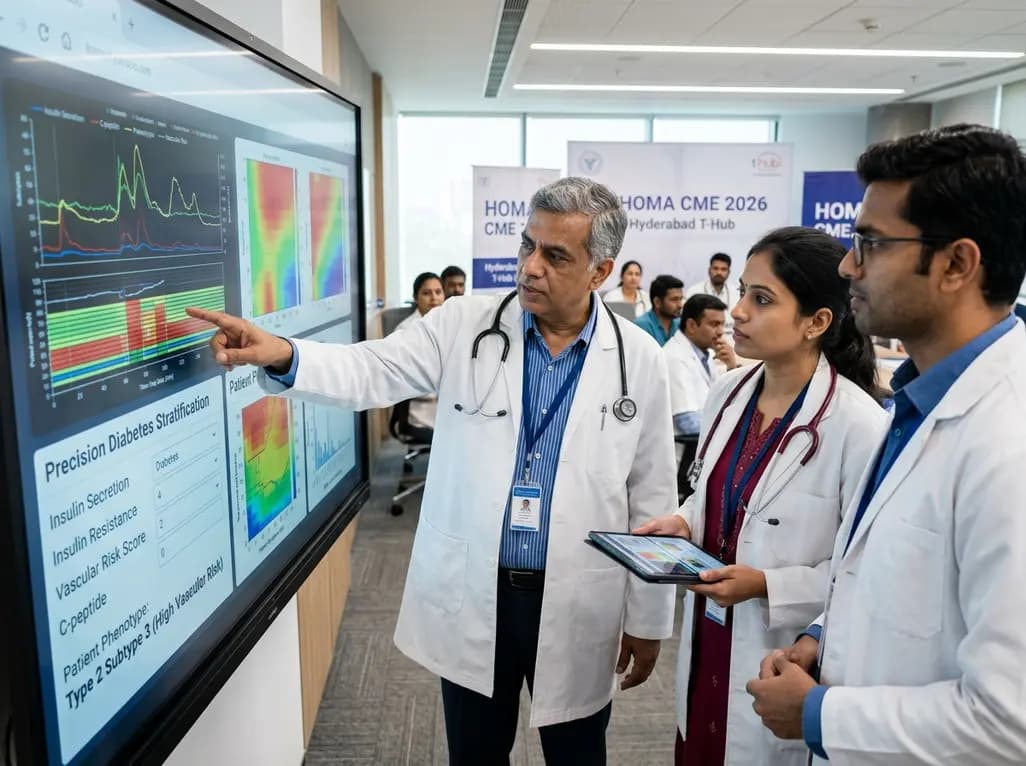
At Homa CME 2026 at Hyderabad's T-Hub, healthcare leaders emphasized moving beyond routine metrics through digital calculators and precision stratification. Discover why characterizing individual insulin secretion, resistance patterns, and vascular risks transforms chronic metabolic care in India.
Yesterday
