.webp&w=384&q=75)

Loading, please wait...
Loading, please wait...
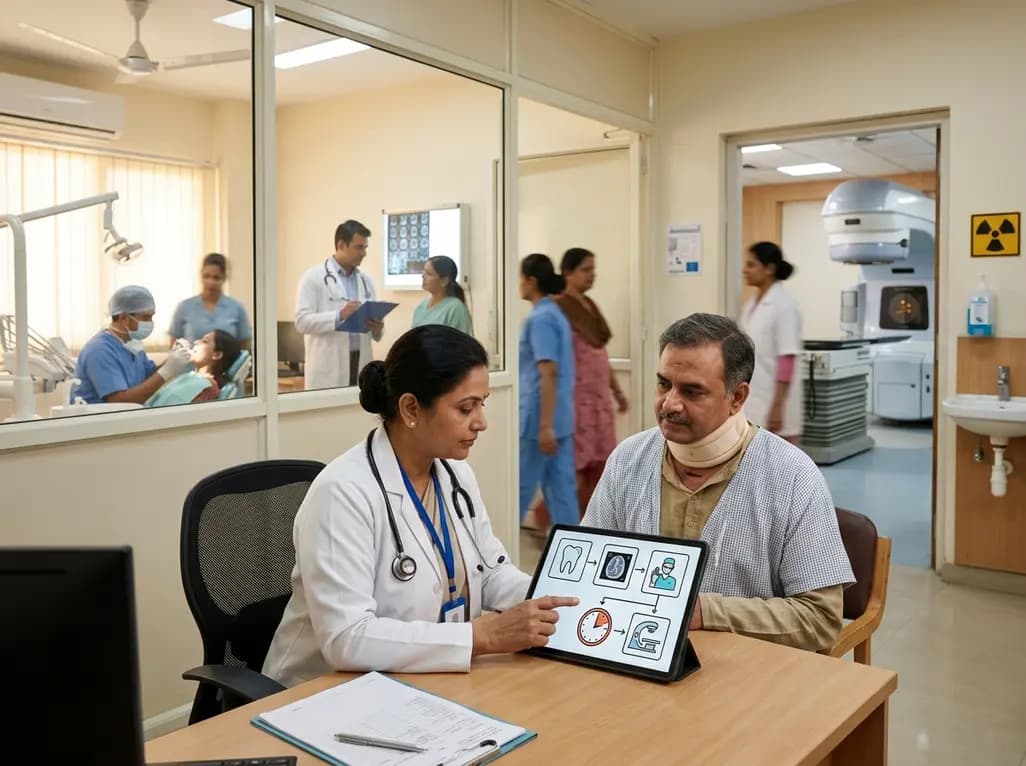
Initiating adjuvant treatment promptly after major surgical resection remains a critical determinant of survival in patients diagnosed with locally advanced head and neck squamous cell carcinoma. National Comprehensive Cancer Network guidelines mandate initiating postoperative radiation therapy within six weeks following surgical resection to prevent accelerated tumor repopulation and locoregional recurrence. However, multi-departmental logistics, scheduling bottlenecks, and patient-level barriers cause treatment delays for more than half of affected patients globally. To solve these systemic breakdowns, researchers evaluated enhanced care navigation strategies designed to streamline transitions across specialties. A secondary analysis of the NDURE randomized clinical trial offers vital mechanistic insights into how structured pathways enable timely postoperative radiation therapy, providing actionable strategies for multidisciplinary oncology care teams.
Head and neck squamous cell carcinoma requires aggressive, highly coordinated multimodal therapeutic management. Surgical resection serves as primary therapy for locally advanced disease, yet high-risk pathologic features necessitate postoperative radiation therapy. Guidelines strongly emphasize initiating radiation within forty-two days of surgery. Unfortunately, clinical care workflows frequently founder due to fragmented communication between surgical, dental, and radiation oncology teams. Consequently, prolonged intervals between surgery and adjuvant therapy severely compromise overall survival and locoregional control rates. Enhanced patient navigation targets these exact points of system failure by proactively coordinating complex appointments, addressing social determinants of health, and removing individual logistical barriers. Understanding which specific interventions drive overall pathway efficiency allows clinical leaders to restructure perioperative workflows effectively and protect vulnerable patients from treatment delays.
The NDURE trial evaluated an enhanced navigation program specifically engineered to target five pivotal milestones within the post-surgical adjuvant pathway. First, navigators facilitated a preoperative radiation oncology consultation to establish baseline patient rapport and outline treatment timelines. Second, the program coordinated a preoperative dental evaluation, arranging indicated extractions to occur concurrently during primary surgical resection. This strategy eliminated separate post-surgical dental healing delays. Third, navigation ensured a timely postoperative radiation oncology evaluation within twenty-one days of surgery. Fourth, the protocol expedited computed tomography simulation planning within seven days of the radiation oncology consultation. Finally, navigation streamlined radiation planning to guarantee therapy initiation within fourteen days of simulation. Systematically addressing each milestone successfully eliminated multi-departmental bottlenecks that historically delayed adjuvant therapy.
The secondary analysis evaluated one hundred forty-five surgical patients who were randomized to receive either enhanced NDURE navigation or usual care navigation. The intervention generated striking, statistically significant improvements across nearly every evaluated clinical milestone. Patients enrolled in enhanced navigation demonstrated nearly fivefold increased odds of completing a preoperative radiation consultation compared to standard care navigation. Furthermore, preoperative dental evaluation and concurrent extraction rates surged dramatically, showing an impressive odds ratio of twenty-seven point six. Enhanced navigation also doubled the likelihood of securing timely postoperative radiation evaluations within twenty-one days and expedited subsequent radiation planning timelines. Consequently, these systematic improvements directly correlated with substantially higher rates of starting radiation therapy within six weeks, proving that structured navigation effectively dismantles complex institutional delays.
Causal mediation analysis revealed the specific care steps responsible for the intervention's success. Securing a timely postoperative radiation oncology evaluation within twenty-one days served as a powerful independent driver, directly mediating twenty-four percent of the total treatment effect. More importantly, completing more than half of the five targeted process steps accounted for fifty-three percent of the intervention's overall efficacy. This key finding demonstrates that clinical timeliness does not rely on a single silver bullet or isolated clinical step. Instead, cumulative pathway optimization generates compound benefits that systematically protect patients from compounding delays. Consequently, clinical redesign efforts must emphasize comprehensive execution across all care steps rather than focusing exclusively on single operational bottlenecks, ensuring consistent guideline-concordant care delivery.
Implementing an enhanced navigation pathway requires dedicated structural coordination between surgical, radiation, and dental specialties. Healthcare institutions should establish automated electronic health record prompts that flag newly diagnosed patients requiring adjuvant therapy. Navigators must be integrated directly into multidisciplinary tumor boards to initiate contact prior to surgery. Additionally, scheduling departments should reserve designated priority time slots for post-surgical radiation consultations and simulation imaging. Regular clinical audits tracking turnaround times between surgery, simulation, and first fraction delivery ensure accountable performance across participating departments. By embedding these operational strategies into routine clinical practice, health systems can systematically eliminate treatment delays, improve patient compliance, and ensure equitable access to timely, life-saving oncologic care.
National Comprehensive Cancer Network guidelines recommend initiating postoperative radiation therapy within six weeks, or forty-two days, following primary surgical resection. Delaying radiation beyond this six-week window allows microscopic residual tumor cells to undergo accelerated repopulation. Consequently, delayed treatment initiation significantly increases the risk of locoregional recurrence, compromises overall survival, and reduces the therapeutic effectiveness of adjuvant radiation therapy in patients with high-risk pathologic disease features.
Securing a timely postoperative radiation oncology evaluation within twenty-one days of surgery demonstrated the largest individual mediating impact, explaining twenty-four percent of the total navigation intervention benefit. Completing this post-surgical evaluation early provides radiation oncologists with sufficient time to order required simulation imaging, perform intricate treatment planning, complete quality assurance steps, and initiate radiation therapy before reaching the critical six-week post-operative deadline.
Untreated dental disease within the planned radiation beam path creates a high risk for developing severe osteoradionecrosis. Performing dental evaluations before surgery enables necessary dental extractions to occur concurrently during the main tumor resection. This coordinated approach allows extraction sites to heal during the initial surgical recovery period, avoiding prolonged treatment delays that inevitably occur when dental evaluations and extractions are deferred until after surgery.
Disclaimer: This content is for informational and educational purposes only, and does not constitute medical advice, diagnosis, or treatment. Always seek the advice of your physician or other qualified health provider with any questions you may have regarding a medical condition. Refer to the latest local and national guidelines for clinical practice.
References

Read summarized clinical updates, watch expert medical content, and earn CME certifications right from your smartphone.
Open your smartphone camera to scan and install.





A secondary analysis of the NDURE randomized trial highlights how enhanced care navigation improves timely postoperative radiation therapy in head and neck cancer patients. Key mediators include preoperative radiation consults, early dental clearance, and timely post-op evaluations within 21 days.
2 months ago
Following Nigeria's first recorded Ebola case linked to regional travel, the Africa CDC has convened an emergency ministerial summit. This alert underscores critical clinical priorities for healthcare professionals, including differentiating early viral infection from malaria, implementing barrier nursing, and triage.
Today

Leucine Rich Bio has introduced South Asia's first comprehensive vaginal microbiome test, BugSpeaks. By profiling microbial dysbiosis, pathogens, and antimicrobial resistance, this next-generation diagnostic platform provides clinicians with deeper insights into recurrent infections, fertility, and reproductive health.
Today

Review how tailored exercise programs benefit frail older patients with heart failure. Explore pathophysiological mechanisms, individualized training prescriptions, and strategies to overcome adherence barriers in clinical practice.
Today

This comparative study evaluates posterior labral tears with and without glenohumeral instability, highlighting distinct demographic patterns, MRI underestimation in stable shoulders, and successful arthroscopic repair outcomes.
Today

A clinical study demonstrates that early intervention with tocilizumab, either as monotherapy or bridged with corticosteroids, achieves significant proptosis reduction and resolves active inflammation in treatment-naive thyroid eye disease.
Today
