.webp&w=384&q=75)

Loading, please wait...
Loading, please wait...

Mandarin-speaking clinicians now have access to robustly validated instruments for evaluating social cognition. A recent study has successfully adapted two primary measures for Theory of Mind assessment in autistic children within Mainland China. Researchers developed the Mandarin versions of the Theory of Mind Inventory-2 (ToMI-2-M) and the Theory of Mind Task Battery (ToMTB-M) through rigorous expert validation and pilot testing.
The study evaluated 94 children with autism and 43 verbal ability-matched non-autistic peers between the ages of 2.5 and 8 years. Both instruments demonstrated excellent internal consistency and test-retest reliability. Furthermore, the expert panel provided strong support for the content validity of these Mandarin adaptations. These findings ensure that the tools are culturally appropriate for the target population.
Psychometric analysis confirmed that both the ToMI-2-M and ToMTB-M possess high concurrent validity. These tools correlated significantly with existing tasks involving visual perspective-taking, inhibitory control, and various autistic characteristics. Additionally, the discriminative validity was clear. Non-autistic children scored significantly higher than their autistic peers on these specialized tasks. This differentiation is vital for clinical diagnosis and developing personalized intervention plans.
Age-related changes in the scores also supported the developmental sensitivity of the instruments. Moreover, the receiver operating characteristic (ROC) curve analysis further validated their diagnostic utility. Consequently, these tools represent a major advancement for pediatricians and psychiatrists working with neurodivergent children in Mandarin-speaking regions. However, clinicians should always interpret results within the broader context of a child\'s developmental history.
The assessment aims to evaluate a child\'s ability to understand mental states, such as beliefs, desires, and intentions, in themselves and others. This ability is often impaired in children with autism, impacting their social interactions.
The ToMI-2-M is a caregiver-report inventory that focuses on a child\'s social performance in real-world settings. In contrast, the ToMTB-M consists of direct behavioral tasks that measure a child\'s social-cognitive capacity in a controlled environment.
Cultural adaptation ensures that the language and scenarios used in the tasks are familiar and relevant to the child. This process prevents cultural or linguistic bias from skewing the results of the psychological evaluation.
Disclaimer: This content is for informational and educational purposes only. It does not constitute medical advice or a professional diagnosis. Always seek the advice of a qualified healthcare provider regarding any medical condition or diagnostic testing. Refer to the latest local and national guidelines for clinical practice.
References
Tian M et al. Mandarin translation and validation of the Theory of Mind Inventory-2 and the Theory of Mind Task Battery for autistic children in Mainland China. Br J Dev Psychol. 2026 Apr 03. doi: 10.1111/bjdp.70043. PMID: 41933434.
Hutchins TL, Prelock PA, Bonazinga LA. Psychometric evaluation of the Theory of Mind Inventory (ToMI): a study of typically developing children and children with autism spectrum disorder. J Autism Dev Disord. 2012 Mar;42(3):327-41.
Jiang DR et al. Psychometric Evaluation of the Chinese Version of the Theory of Mind Inventory for Children With Autism Spectrum Disorder. Am J Occup Ther. 2017;71(4_Supplement_1):7111505165.
"
Read summarized clinical updates, watch expert medical content, and earn CME certifications right from your smartphone.
Open your smartphone camera to scan and install.





Researchers have validated the Mandarin versions of ToMI-2 and ToMTB, providing reliable tools for Theory of Mind assessment in autistic children....
6 months ago

Co-administering antiseizure medications and DOACs frequently causes pharmacokinetic interactions, subtherapeutic drug levels, and thromboembolic failures. This review highlights enzyme induction risks, unpredictable outcomes with levetiracetam, and the vital role of therapeutic drug monitoring.
Today

Demanding exhaustive hormonal profiling can inadvertently discourage clinical studies involving females. Methodological standards must align with the specific scientific question to expand, not restrict, equitable evidence for women.
Today
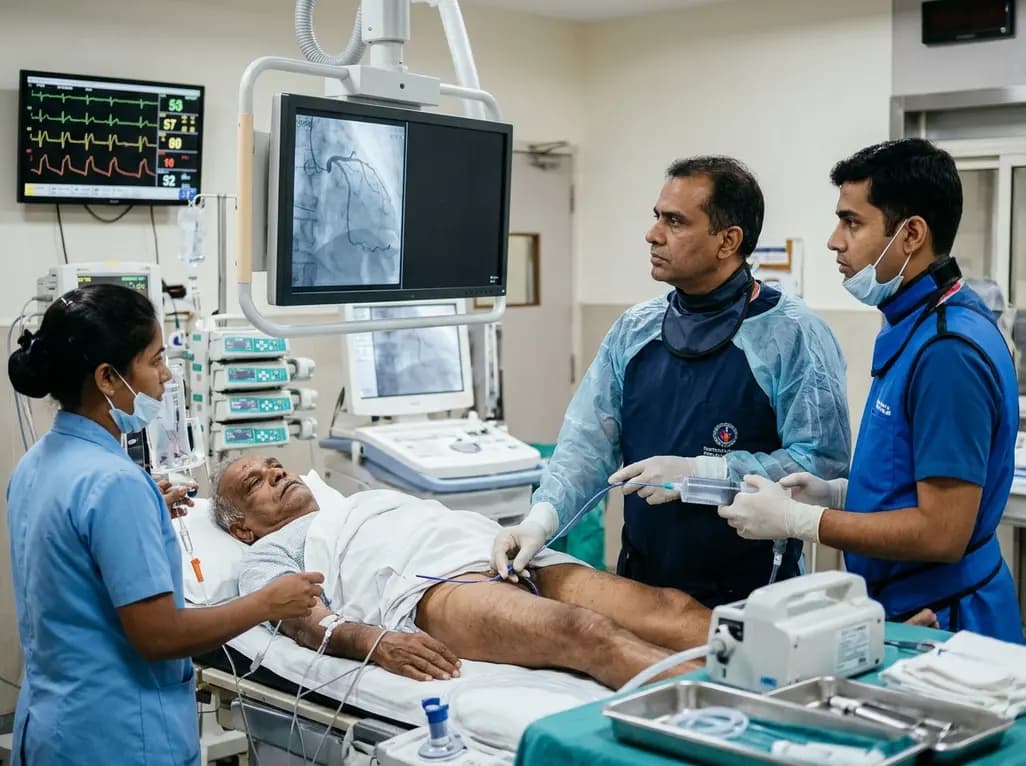
An elderly man with partially repaired Tetralogy of Fallot presented with STEMI caused by coronary embolism rather than atherosclerosis. Successful treatment with sustained mechanical aspiration thrombectomy underscores the vital need for high clinical vigilance in adult congenital heart disease.
Today

A comparative review of tension band wiring and intramedullary screw fixation in thumb metacarpophalangeal arthrodesis, evaluating union rates, hardware complications, and clinical outcomes.
Today

Following regulatory scrutiny from FSSAI regarding promotional representations and lean muscle preservation claims, Dr. Reddy's Laboratories and Nestlé Health Science are currently reviewing the branding and marketing strategy for their joint nutritional supplement Celevida GLP+.
Today
