

Loading, please wait...
Loading, please wait...

Early childhood caries remains an aggressive and widespread public health challenge that compromises child development, nutritional intake, and overall quality of life. Although primary prevention strategies exist, clinicians routinely encounter difficulties when attempting to sustain parental engagement outside dental operatory environments. The World Health Organization emphasizes mobile health technologies as scalable, accessible mechanisms to reinforce beneficial habits. Consequently, digital health solutions offer a viable bridge between clinical encounters and home environments. The SmilesUp randomized controlled trial investigated whether an automated text messaging curriculum could bolster parental management of early childhood caries compared to conventional clinical treatment alone.
Preventing early childhood caries requires consistent daily behavioral reinforcement, yet standard outpatient care often provides minimal support between appointments. Parents must navigate dietary restrictions, administer fluoride toothpaste appropriately, and establish disciplined evening routines. However, social stressors and fragmented health literacy frequently hinder long-term compliance. Because mobile phones are ubiquitous across diverse socioeconomic strata, automated text messaging provides an ideal platform for delivering non-intrusive behavioral nudges. By presenting practical dental advice directly to caregivers, mHealth platforms bridge critical care gaps.
Furthermore, behavioral scientists have demonstrated that co-designed digital interventions maximize user relevance and engagement. When developers design automated messages alongside caregivers and pediatric dentists, the resulting prompts directly address real-world barriers. Therefore, the SmilesUp study sought to harness these theoretical frameworks to translate clinical guidance into habitual domestic routines. By prioritizing user-centered language and manageable goals, investigators hypothesized that sustained mobile communication would improve key preventive oral habits and strengthen parental self-efficacy across socioeconomic settings.
Researchers structured the investigation as a multisite, assessor-blinded, parallel-design randomized controlled trial across six public dental facilities in metropolitan, regional, and rural New South Wales. The trial recruited 154 caregivers of children aged zero to six years presenting with clinically confirmed early childhood caries. Investigators randomly allocated caregivers into an intervention cohort receiving automated SMS messages or a control cohort receiving standard dental therapy alone.
Moreover, both cohorts continued to receive routine clinical care to maintain ethical standards. The intervention group received the SmilesUp program, which transmitted three automated, theory-informed SMS text messages every week across a twelve-week duration. These messages targeted three core pillars: twice-daily brushing with age-appropriate fluoride toothpaste, structured bedtime routines without sugar exposure, and reduced dietary sucrose intake. Additionally, the investigators measured parental self-efficacy across six domains mapped to validated behavioral theory frameworks. Independent evaluators collected follow-up data at twelve weeks to measure parental compliance and oral health literacy gains accurately.
The primary clinical goal evaluated whether the intervention increased the proportion of parents who completed twice-daily toothbrushing with fluoride toothpaste. Following twelve weeks of automated nudges, 73.8% of intervention participants achieved this benchmark compared to 66.7% of control caregivers. Although the adjusted odds ratio favored the text messaging group at 2.45, the difference did not achieve formal statistical significance.
Nevertheless, this upward trajectory illustrates promising behavioral momentum within a historically challenging clinical demographic. Toothbrushing in toddlers frequently triggers behavioral resistance, which easily discourages busy parents during hectic morning schedules. Consequently, digital prompts serve as valuable reminders that validate parental efforts and reinforce consistent technique. While the study was not sufficiently powered to detect marginal differences in daily brushing, the observed compliance rate of nearly 74% reflects meaningful engagement. Clinicians recognize that regular mechanical plaque removal combined with topical fluoride represents the foundation of caries arrestment, underscoring the value of complementary digital encouragement.
While daytime habits proved moderately resistant to immediate statistical separation, the SmilesUp trial demonstrated remarkable success across secondary endpoints. Specifically, caregivers receiving automated text messages established superior bedtime oral health routines. An impressive 88.5% of intervention caregivers maintained healthy bedtime protocols compared to 71.4% of control participants, representing a statistically significant threefold improvement.
Similarly, the intervention generated profound advancements in caregiver oral health knowledge. Approximately 92% of caregivers in the intervention arm demonstrated accurate understanding of proper toothbrushing standards compared to 78.8% in the control cohort. Nighttime oral hygiene remains particularly critical because nocturnal salivary flow declines dramatically, leaving vulnerable primary enamel unprotected against acid-producing cariogenic bacteria. Preventing late-night snacking and eliminating nighttime bottle feeding with sugary liquids are essential preventive milestones. Thus, by successfully reshaping evening habits and dismantling common misconceptions, the automated program established robust home protections during the most hazardous hours for dental decay.
In contrast to hygiene improvements, dietary patterns remained stubborn throughout the trial. Specifically, the study revealed no statistically significant differences in the consumption of sugar-sweetened foods or sweetened beverages between cohorts. At the twelve-week follow-up, 41% of children in the intervention group and 42.9% in the control group continued to consume sugary drinks regularly.
Consequently, these dietary findings highlight the formidable difficulty of altering entrenched feeding habits through informational text messaging alone. Dietary intake reflects pervasive structural factors, including retail food availability, commercial marketing, family food traditions, and household budgets. Therefore, brief digital messages may lack the potency required to overcome broader environmental determinants of sugar consumption. Pediatric clinicians must acknowledge that while mobile messaging effectively optimizes mechanical oral hygiene, tackling cariogenic nutrition demands multifaceted public health measures. Successful dietary transformation requires comprehensive community interventions, fiscal policies, and persistent nutritional counseling alongside primary pediatric care.
The high retention and program adherence observed in the SmilesUp trial—with over 96% of intervention caregivers completing the protocol—demonstrates strong consumer acceptance. For pediatricians, pedodontists, and primary healthcare practitioners, digital behavioral interventions offer an inexpensive, easily scalable adjunct to routine clinical care. Incorporating automated communication into primary health clinics enables continuous preventive support without placing additional burdens on busy clinical staff.
However, clinicians must view mobile messaging as a supportive element rather than a stand-alone therapy. Future research initiatives must evaluate objective clinical outcomes, such as longitudinal cavitated lesion progression and repeat restorative interventions under general anesthesia. Furthermore, researchers should explore how artificial intelligence and adaptive algorithmic messaging can personalize advice based on real-time parental feedback. Integrating automated text platforms into existing primary healthcare frameworks may ultimately lower clinical disparities, prevent dental morbidity, and protect vulnerable pediatric populations worldwide.
Salivary flow decreases significantly during sleep, which drastically reduces the oral cavity's natural buffering capacity and antibacterial clearance. When children consume sugary foods or milk immediately before bed without brushing, cariogenic bacteria ferment these carbohydrates into enamel-demineralizing acids undisturbed for hours. Establishing a consistent nighttime routine that eliminates bedtime sugar exposure and incorporates fluoride toothpaste provides sustained protection against nocturnal decay.
Modifying daily oral hygiene techniques primarily requires procedural knowledge, scheduled reminders, and parental motivation, all of which respond well to mobile behavioral nudges. In contrast, dietary patterns are deeply influenced by household income, cultural habits, aggressive commercial marketing, and emotional soothing practices. Consequently, brief text messages provide insufficient leverage to overcome these systemic environmental and socioeconomic drivers without broader community support.
Pediatric clinics and dental practices can implement automated messaging systems during routine immunization visits, well-child checkups, or emergency dental appointments. Healthcare teams can enroll families via simple clinic intake forms to deliver automated, stage-based educational prompts matched to the child's developmental age. This automated approach reinforces preventive oral hygiene recommendations between clinical visits without demanding extensive provider time.
Disclaimer: This content is for informational and educational purposes only... Refer to the latest local and national guidelines for clinical practice.
References
Chen R et al. Co-Designed Text Messaging Intervention for Parents of Children With Early Childhood Caries: Randomized Controlled Trial. JMIR Mhealth Uhealth. 2026 Nov 03. doi: 10.2196/91720. PMID: 42976338.
Borrelli B, Endrighi R, Heeren T, et al. Parent-Targeted Oral Health Text Messaging for Underserved Children Attending Pediatric Clinics: A Randomized Clinical Trial. JAMA Netw Open. 2025;8(1):e2452780. doi:10.1001/jamanetworkopen.2024.52780.
World Health Organization. Ending early childhood dental caries: WHO implementation manual. Geneva: World Health Organization; 2019.

Read summarized clinical updates, watch expert medical content, and earn CME certifications right from your smartphone.
Open your smartphone camera to scan and install.





The SmilesUp randomized controlled trial evaluates a co-designed 12-week automated text messaging program for parents of children with early childhood caries, demonstrating significant improvements in bedtime routines and oral health knowledge.
Today
A retrospective study of 6,113 adults shows that combining GLP-1 receptor agonists with digital health apps nearly doubles the odds of achieving significant weight loss. Frequent progress logging serves as a primary behavioral driver of long-term metabolic success.
Today

Sexual dysfunction affects a high proportion of reproductive-age females with multiple sclerosis. This comprehensive review highlights multi-tier etiologies, proactive clinical screening tools, preconception counseling considerations, and integrated therapeutic options across multidisciplinary care pathways.
Today
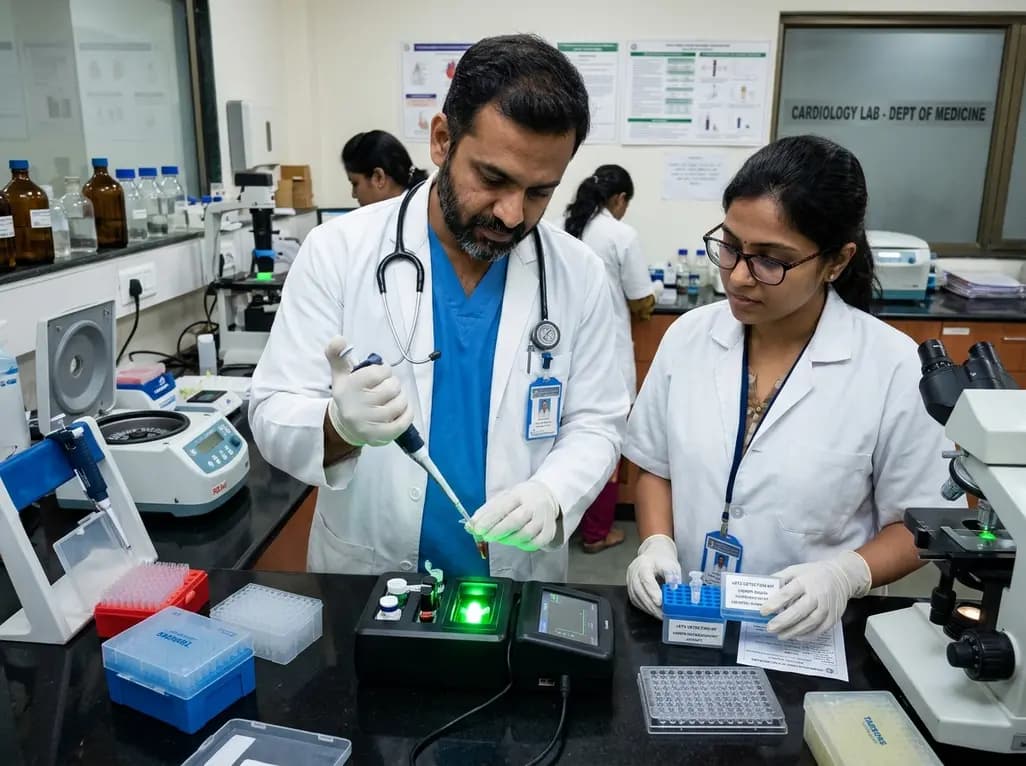
Researchers have engineered an innovative CRISPR-Cas12a fluorescent diagnostic kit for clinical sST2 detection. By combining nanotechnology with enzymatic trans-cleavage, this platform enables rapid, ultrasensitive heart failure diagnosis and risk stratification, outperforming conventional laboratory ELISA methods.
Today

Non-union fractures occur in 2-5% of cases, causing significant disability and cost. Conservative modalities such as LIPUS, PEMF, and focused ESWT offer non-surgical healing options for defects up to 5-10 mm when adequate mechanical stability exists without infection.
Today

India is poised to transform chronic disease management through wearable health technology. Discover how continuous remote monitoring and predictive algorithms empower clinicians to detect early cardiovascular signals, personalize metabolic interventions, and deliver equitable preventive care across populations.
Yesterday
