.webp&w=384&q=75)

Loading, please wait...
Loading, please wait...

Managing symptomatic hypogonadism in men with localized prostate cancer has historically posed a significant clinical challenge. For decades, clinicians feared that exogenous androgen administration would accelerate tumor kinetics and worsen oncologic outcomes. However, modern scientific evidence is transforming this traditional view. Emerging clinical data demonstrate that testosterone therapy active surveillance strategies can safely co-exist without increasing the risk of histological progression or necessitating early definitive intervention.
Historically, the androgen hypothesis suggested that higher circulating testosterone directly fueled prostate cancer growth. Consequently, guidelines strictly prohibited hormonal replacement in any patient with a history of prostatic malignancy. However, contemporary physiological models, particularly the androgen receptor saturation model, challenge this longstanding dogma. Under this paradigm, prostatic androgen receptors become fully saturated at relatively low serum testosterone concentrations. Therefore, elevating circulating levels within a physiologic range does not stimulate additional cellular proliferation.
In addition, symptomatic hypogonadism markedly impairs quality of life in aging men. Low testosterone levels contribute to fatigue, erectile dysfunction, sarcopenia, metabolic syndrome, and bone mineral loss. When clinicians withhold hormonal replacement, patients endure persistent morbidity. Fortunately, recent real-world evaluations provide reassurance. Researchers now show that carefully selected men with low-risk malignancies can safely receive hormone restoration. As a result, urologists and oncologists are progressively revisiting clinical care protocols to balance oncologic safety with functional vitality.
A comprehensive cohort study evaluated 3,324 men with Grade Group 1 and Grade Group 2 prostate cancer enrolled in active surveillance programs. Among this large cohort, 79 patients received concurrent testosterone replacement therapy. Investigators established time to disease progression, defined strictly as an upgrading of Grade Group on subsequent surveillance biopsy, as the primary endpoint. Additionally, the researchers evaluated transition to definitive therapy as a secondary outcome measure.
Over the surveillance period, 1,256 total participants demonstrated histological progression on protocol biopsies. However, rigorous multivariable analysis revealed that testosterone supplementation did not increase the hazard of disease upgrading. Specifically, the adjusted hazard ratio for biopsy progression among treated individuals was 0.99 with a 95% confidence interval of 0.67 to 1.48. Furthermore, survival analyses failed to demonstrate any statistically meaningful differences between groups. Consequently, these findings provide compelling evidence that hormonal replacement does not accelerate pathological grade advancement in monitored low-risk populations.
Beyond biopsy upgrading, clinicians must evaluate whether hormonal therapy triggers premature cessation of surveillance. Transitioning to radical prostatectomy, external beam radiation, or androgen deprivation therapy significantly alters patient lifestyle and health outcomes. Therefore, assessing definitive treatment rates remains an essential oncologic benchmark during watchful management programs.
Notably, the investigated cohort demonstrated consistent stability regarding intervention rates. Multivariable analysis showed that testosterone replacement therapy did not increase progression to definitive treatment, yielding a hazard ratio of 0.94 with a 95% confidence interval of 0.64 to 1.38. Thus, patients receiving hormonal supplementation remained on watchful surveillance at rates comparable to untreated peers. Moreover, serum prostate-specific antigen kinetics remained predictable across the treatment cohort. These stable outcomes indicate that physicians can address hypogonadal symptoms effectively without precipitating unnecessary radical interventions or compromising cancer control.
Although the data provide significant reassurance, maintaining structured monitoring protocols remains paramount for all patients. In the benchmark study, standard active surveillance pathways incorporated clinical examinations and serum laboratory tests every 6 months. Furthermore, participants underwent multiparametric magnetic resonance imaging every 18 months and serial protocol biopsies every 36 months to verify stability.
For individuals initiating hormone replacement, physicians implemented additional safety checkpoints. Specifically, clinicians measured total testosterone and prostate-specific antigen levels within 2 to 4 weeks following treatment initiation. Once patients achieved stable hormonal dosing, monitoring continued at regular 6-month intervals. This vigilant approach ensures prompt identification of any biochemical spikes or morphological changes. Therefore, clinicians practicing in multidisciplinary settings should replicate these systematic intervals. Rigorous follow-up preserves patient safety while delivering symptomatic relief through optimized hormonal levels.
Integrating androgen restoration into active surveillance requires thoughtful risk stratification and comprehensive patient counseling. Clinicians must first confirm genuine biochemical hypogonadism alongside symptomatic presentation before initiating therapy. Furthermore, practitioners should reserve this strategy primarily for men with low-volume, favorable-risk disease who fully commit to scheduled monitoring protocols.
During clinical consultations, doctors should engage patients in structured shared decision-making. Physicians must explain both the therapeutic benefits regarding metabolic health and sexual function and the imperative need for continuous oncologic surveillance. Moreover, urologists and endocrinologists should collaborate closely to ensure tailored dosing regimens. By combining prudent candidate selection with transparent communication, clinicians can optimize metabolic wellness while safeguarding cancer-specific outcomes across diverse healthcare environments.
The paradigm surrounding hormone restoration in localized malignancies continues to advance rapidly. Recent population-based registries and systematic reviews mirror these observational findings, documenting zero disease-specific mortality spikes among hypogonadal men receiving supervised treatment. Nevertheless, researchers emphasize the necessity for larger prospective randomized controlled trials with extended follow-up to solidify practice recommendations.
Additionally, modern diagnostic innovations, such as genomic biomarker testing and advanced micro-ultrasound imaging, will further refine risk stratification. These tools enable clinicians to distinguish indolent lesions from aggressive biology with high precision. Consequently, practitioners can make therapeutic choices with greater confidence. As long-term datasets mature, professional guidelines will likely provide more detailed, standardized frameworks for concurrent hormonal management in active surveillance cohorts.
Current clinical research demonstrates that testosterone replacement therapy does not significantly increase the risk of histological upgrading. In multivariable analyses of large surveillance cohorts, patients receiving testosterone experienced biopsy progression rates comparable to untreated controls, demonstrating an adjusted hazard ratio of 0.99.
Physicians should monitor total testosterone and prostate-specific antigen levels 2 to 4 weeks after initiating therapy, followed by evaluations every 6 months once stable. In addition, patients must maintain standard surveillance schedules, including regular multiparametric MRI scans and protocol biopsies.
Evidence indicates that testosterone replacement therapy does not increase conversion rates to definitive treatment such as surgery or radiation. Clinical data show an adjusted hazard ratio of 0.94 for treatment progression, confirming that treated men remain on surveillance successfully without premature intervention.
Disclaimer: This content is for informational and educational purposes only and does not constitute formal medical advice or endorsement. Healthcare professionals should exercise independent clinical judgment and refer to the latest local and national guidelines for clinical practice.
References
Flores JM et al. TESTOSTERONE THERAPY IN MEN ON ACTIVE SURVEILLANCE FOR PROSTATE CANCER IS NOT ASSOCIATED WITH INCREASED RISK OF DISEASE PROGRESSION. J Urol. 2026 Aug 24. doi: 10.1097/JU.0000000000005276. PMID: 42636428.
Morgentaler A, Schulte-Baukloh H, Bushman W. Testosterone therapy and prostate cancer: a historical perspective and review of modern evidence. Eur Urol. 2006;50(5):935-939.
Khera M, Telis L, Bernie HL. Testosterone Replacement Therapy in Men With Prostate Cancer on Active Surveillance: A Systematic Review of Oncological Safety. J Urol. 2026;215(2):180-189.

Read summarized clinical updates, watch expert medical content, and earn CME certifications right from your smartphone.
Open your smartphone camera to scan and install.





A major multi-institutional cohort study confirms that testosterone therapy does not increase disease progression or radical treatment rates in hypogonadal men undergoing active surveillance for low-risk prostate cancer, challenging decades of historical medical dogma.
last month

Following 37,899 reported cases and 9 deaths, Odisha has scaled up active case detection, rapid diagnostic testing, and vector control across high-burden districts. Here is a comprehensive clinical breakdown of the state's aggressive containment protocols, diagnostic pathways, and targeted field management.
Today

Endometriosis affects millions of women across India, yet diagnostic delays frequently exceed five years. Recent multi-centre genomic research has identified 21 novel genetic regions, notably on chromosome 13, establishing crucial population-specific insights to transform clinical screening and therapeutic strategies.
Today
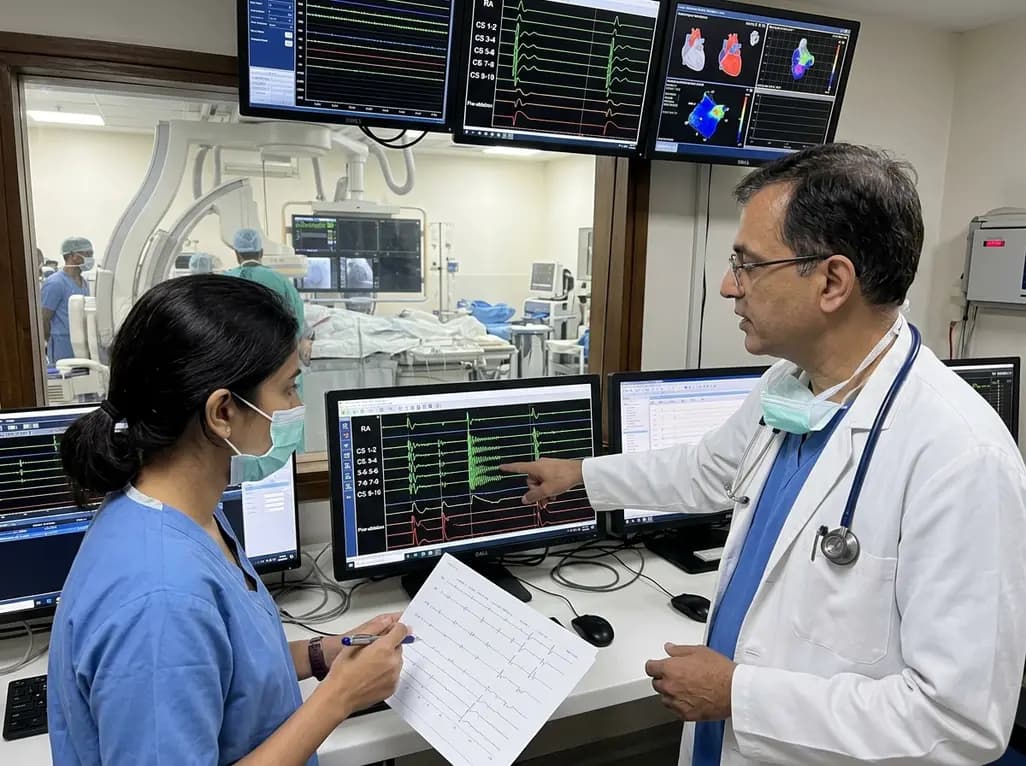
Radiofrequency catheter ablation of the cavotricuspid isthmus successfully terminates typical atrial flutter. This article reviews the mechanisms driving coronary sinus electrogram changes, wavefront activation pathways, and clinical criteria to verify bidirectional block during electrophysiology studies.
Today

A study comparing four knee flexion strength tests after ACL reconstruction using hamstring tendon autografts reveals marked variability in limb symmetry indices. Clinicians must recognize that different strength testing modalities yield divergent return-to-sport clearance rates.
Today

Discover how to identify superimposed entrapment neuropathy in diabetic patients. This review details clinical evaluation, surgical decompression evidence, and a structured algorithm for primary care referrals to prevent ulcers and preserve limb function.
Yesterday
