

Loading, please wait...
Loading, please wait...

Understanding the continuum of unusual beliefs remains a vital priority in modern psychiatric practice. Delusional ideation represents a dimensional construct spanning from benign, subclinical beliefs to frank clinical psychopathology. These cognitive phenomena involve firmly held convictions that deviate from shared reality and persist despite conflicting evidence. When subclinical delusional ideation worsens, it significantly increases the prospective risk of transition to full psychosis. Consequently, identifying persistent psychobiological traits that predispose individuals to unusual beliefs provides crucial opportunities for targeted early intervention.
Historically, clinicians viewed delusions as categorical, all-or-nothing phenomena confined to severe psychotic illnesses. However, contemporary psychiatric research demonstrates that delusional beliefs exist along a continuous spectrum across the general population. Many community-dwelling individuals endorse unusual experiences, including mild suspiciousness, somatic preoccupations, or ideas of reference. Importantly, these subclinical expressions share underlying cognitive mechanisms with clinical delusions. Researchers frequently assess this construct across three distinct dimensions: paranoia, grandiosity, and magical thinking. Paranoia involves persecutory threat perceptions, whereas grandiosity features exaggerated notions of personal significance. In contrast, magical thinking encompasses superstitious causality and beliefs in telepathy or esoteric phenomena. Because persistent subclinical persecutory thoughts frequently precede psychotic disorders, clinicians must understand the enduring traits driving these vulnerabilities. Recent investigations have focused on temperament as an innate foundation that shapes how individuals process stress and interpret interpersonal interactions.
Temperament reflects constitutionally based individual differences in emotional reactivity and behavioral self-regulation. These traits appear early in development, remain relatively stable across decades, and influence susceptibility to emotional disorders. Researchers evaluate adult temperament using validated dimensional instruments such as the Adult Temperament Questionnaire. This comprehensive framework assesses four principal factors: Negative Affect, Effortful Control, Extraversion/Surgency, and Orienting Sensitivity. Specifically, Negative Affect captures an individual's vulnerability to fear, sadness, discomfort, and frustration. Effortful Control measures executive attentional regulation and inhibitory control over automatic behaviors. Meanwhile, Extraversion/Surgency reflects high positive anticipation, sociability, and reward sensitivity. Finally, Orienting Sensitivity evaluates sensory threshold awareness and perceptual responsiveness to environmental cues. By measuring these underlying temperamental domains simultaneously, clinicians can clarify how biologically rooted dispositions interact with environmental stressors to produce specific cognitive vulnerabilities.
A recent prospective investigation assessed community adults across one year to map temperamental determinants of delusional beliefs. At baseline, path models demonstrated significant relationships between distinct temperamental profiles and specific cognitive dimensions. Most prominently, Negative Affect exhibited the strongest overall association across the spectrum of unusual beliefs. Adults with elevated baseline Negative Affect showed markedly higher rates of paranoid ideation and, to a modest extent, magical thinking. This finding aligns with established cognitive models where hypervigilance and anxiety generate anticipatory threat appraisals. Conversely, researchers observed that higher Extraversion/Surgency correlated significantly with heightened grandiosity rather than paranoia. Sociable, reward-seeking temperaments appear to amplify expansive self-perceptions, leading to overinflated confidence and grandiose attributions. Therefore, cross-sectional evidence underscores that delusional ideation is not a monolithic construct. Instead, distinct emotional and behavioral temperaments uniquely drive different sub-dimensions of unusual beliefs.
While cross-sectional associations illustrate immediate symptom overlap, longitudinal analyses clarify true predictive causality. Over a one-year follow-up period, baseline temperamental factors exerted divergent impacts on belief persistence. Notably, only Negative Affect remained a robust, statistically significant longitudinal predictor of persistent persecutory ideation. Other temperamental dimensions, including Effortful Control and Orienting Sensitivity, failed to predict change in belief severity over time. Furthermore, the baseline association between Extraversion/Surgency and grandiosity attenuated in longitudinal models. These prospective results establish that high Negative Affect constitutes an enduring, core vulnerability specifically for paranoid thinking. When vulnerable individuals experience pervasive neurotic distress, their cognitive systems routinely prioritize danger detection over balanced context appraisals. Consequently, chronic emotional reactivity fosters an interpretive loop where ambiguous social signals become interpreted as deliberate hostility or persecution.
These empirical insights carry meaningful implications for primary care clinicians, general practitioners, and mental health specialists. Because worsening persecutory thinking increases psychotic conversion risks, identifying at-risk individuals early is essential. Clinicians should routinely screen for high trait anxiety, emotional instability, and chronic interpersonal distress during clinical evaluations. When evaluating patients with pronounced negative emotionality, practitioners should explore whether subtle persecutory ideas exist. Targeted psychological interventions can modify the maladaptive cognitive biases linked to elevated negative affect. Specifically, cognitive behavioral therapy and metacognitive training help patients identify automatic threat assumptions. Furthermore, mindfulness-based approaches enhance attentional flexibility and weaken the emotional distress feeding paranoid ideation. By addressing affective vulnerability before entrenched delusions crystalize, clinicians can interrupt the pathological progression from subclinical suspiciousness to disabling clinical illness.
Negative affect promotes hypervigilance, emotional distress, and selective attention toward perceived external threats. Over time, these chronic distress states lead individuals to misinterpret ambiguous social interactions as deliberately hostile, establishing self-reinforcing cognitive loops that sustain and amplify paranoid thinking across longitudinal trajectories.
Temperament assessments provide valuable risk stratification rather than absolute diagnostic predictions. In primary care, identifying severe trait negative affect, coupled with emerging interpersonal suspiciousness, allows clinicians to recognize vulnerable patients early, facilitating prompt psychiatric referral and targeted psychosocial interventions before clinical illness unfolds.
Grandiosity associates primarily with high extraversion and surgency, where elevated reward responsiveness and behavioral approach amplify expansive self-beliefs. Conversely, magical thinking and paranoia stem primarily from heightened negative affect and perceptual sensitivity, which distort causal reasoning during stressful or threatening situations.
Disclaimer: This content is for informational and educational purposes only and does not constitute medical advice, diagnosis, or treatment. Healthcare professionals must exercise independent clinical judgment. Patients should consult a qualified physician regarding any medical condition. The author and publisher assume no liability for actions taken based on this information. Refer to the latest local and national guidelines for clinical practice.
References
Luo J et al. Cross-sectional and longitudinal associations between temperament and delusional ideation. Schizophr Res. 2026 Nov. doi: 10.1016/j.schres.2026.09.026. PMID: 42810154.
Fowler D, Freeman D, Dunn G, Garety P. Current paranoid thinking in patients with delusions: The presence of cognitive-affective biases. Schizophr Bull. 2012;38(6):1171-1178.
Freeman D, Garety PA. Connecting neurosis and psychosis: the direct influence of emotion on delusions and hallucinations. Behav Res Ther. 2003;41(8):923-947.

Read summarized clinical updates, watch expert medical content, and earn CME certifications right from your smartphone.
Open your smartphone camera to scan and install.





Delusional ideation exists on a dimensional continuum from subclinical beliefs to clinical psychosis. New longitudinal research reveals that negative affect serves as a core temperamental vulnerability factor driving paranoia over time, providing valuable opportunities for early psychiatric and primary care intervention.
Today

Ambient digital scribes promise effortless medical documentation, but a critical sociotechnical commentary reveals that AI alters rather than eliminates charting work. Discover how shifting cognitive burdens, oversight risks, and workflow redesign impact clinical safety and healthcare practice.
Today

A new comparative study demonstrates that intraoperative imprint cytology achieves 96.6% diagnostic accuracy in ovarian tumours, outperforming frozen section in sensitivity for borderline lesions and offering an accessible, rapid alternative for resource-constrained surgical centres.
Today

Thoracic aortic aneurysm lacks etiologic medical therapy. A new study reveals that targeting specific αV integrins with Cilengitide attenuates TGF-β and mechanotransduction pathways, effectively limiting pro-fibrotic remodeling and aortic bulb dilation in both syndromic and sporadic disease models.
Today
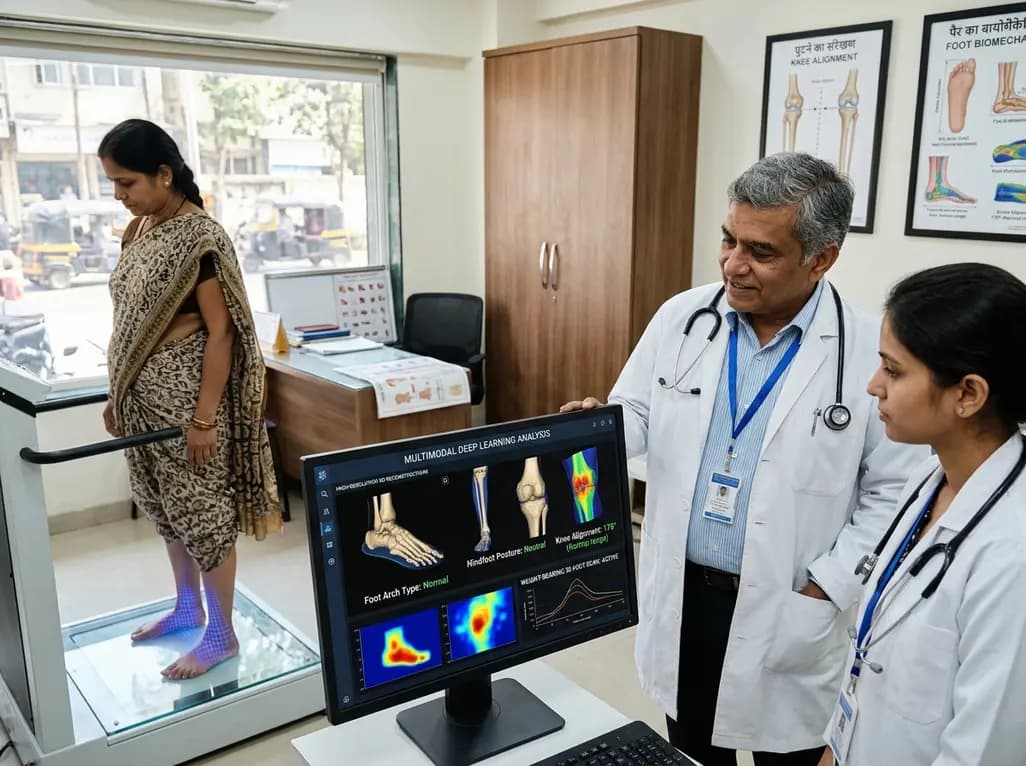
A multimodal deep learning framework utilizing weight-bearing 3D foot scans accurately screens lower-limb alignment, including arch type, hindfoot posture, and knee alignment, offering an accessible, radiation-free alternative to radiography for early biomechanical triage.
Today

A real-world retrospective study demonstrates that combining intravitreal ranibizumab with focal/grid macular laser significantly improves visual acuity and central macular thickness compared to laser monotherapy in patients with center-involved diabetic macular edema.
Today
