.webp&w=384&q=75)

Loading, please wait...
Loading, please wait...

Rapid technological transformation reshaped surgical practices during the global health crisis. In particular, telemedicine in spine care transitioned from an experimental convenience into a crucial clinical necessity. Clinicians adopted virtual platforms to ensure continuous patient surveillance, triage acute symptoms, and conduct longitudinal consultations. However, evaluating provider perceptions alongside patient experiences remains essential for creating lasting digital health frameworks. A landmark investigation examined these exact dynamics by analyzing retrospective cohort feedback alongside global literature. Consequently, this comprehensive analysis offers vital insights for modern surgical and multidisciplinary spine practices worldwide.
During the height of the COVID-19 pandemic, outpatient spine clinics faced unprecedented operational restrictions. Therefore, clinical teams rapidly adopted video teleconsultations to maintain essential patient relationships and treatment continuity. The retrospective investigation evaluated 407 spine patients receiving care at a multidisciplinary tertiary academic spine center between June and December 2021. In addition, the investigators conducted a PRISMA-compliant systematic review across major medical databases, including PubMed, Web of Science, and Embase. This dual approach allowed the authors to synthesize subjective patient ratings with international surgeon perspectives. Interestingly, the cohort revealed high virtual adoption among older demographics, with 82.8% of participants aged 55 years or older. Furthermore, female patients represented nearly two-thirds of all virtual attendees. Most encounters represented routine follow-up assessments, postoperative evaluations, or non-operative interventional injection tracking. New patient consults also constituted over a quarter of all virtual interactions. Consequently, the transition revealed that virtual clinics could safely handle diverse patient presentations without compromising baseline continuity. Surgeons successfully assessed symptom progression, reviewed diagnostic neuroimaging, and established clear medical roadmaps. Thus, the rapid pandemic shift provided a compelling proof of concept for digital surgical care.
Understanding demographic nuances is critical when implementing scalable telehealth solutions across diverse patient populations. In the retrospective study cohort, 81.6% of patients held at least a bachelor's degree, while 86.2% identified as White. These metrics suggest that digital health access during the pandemic frequently favored individuals with greater socioeconomic resources and health literacy. However, distance traveled remained one of the strongest primary motivations for selecting virtual care. Nearly 36% of participants cited avoiding long-distance travel as their chief reason for scheduling a remote consultation. Additionally, 23.3% of patients prioritized the convenience and schedule flexibility inherent to home-based digital encounters. Interestingly, only 4.4% of surveyed patients cited infectious disease avoidance as their main reason for choosing telehealth. This finding demonstrates that convenience and logistical ease rapidly superseded infection fears as primary care drivers. Moreover, consultations were distributed evenly across multidisciplinary professionals, including spine surgeons, physiatrists, and advanced practice providers. This interprofessional distribution illustrates that digital workflows can effectively support all members of an integrated surgical spine team. Therefore, virtual visits expand access far beyond single-provider surgical consultations.
Overall satisfaction with virtual spine care proved remarkably high across the entire study population. Specifically, 96.8% of patients reported feeling satisfied or very satisfied with their virtual appointments. Furthermore, 93.6% expressed willingness to recommend telemedicine services to family members and peers. Multivariate analyses demonstrated that clinical communication quality served as the definitive driver of positive patient experience. In particular, comprehensive explanations delivered by the physician at the conclusion of the visit showed a powerful statistical correlation with high satisfaction scores. When providers clearly explained diagnosis, treatment plans, and red-flag symptoms, patients reported superior confidence in their virtual care. Similarly, allocating adequate consultation time significantly reinforced positive ratings. In contrast, technical difficulties, such as audio disconnects or poor video feeds, significantly degraded patient satisfaction. However, fewer than ten percent of respondents experienced persistent technological impediments. Providers who proactively validated patient concerns and delivered clear post-visit guidance completely bridged the physical gap created by digital screens. Consequently, empathetic communication and transparent clinical counseling remain the bedrock of successful virtual spine evaluations.
Although patients universally praised digital convenience, spine surgeons voiced notable reservations regarding clinical efficacy. The comparative systematic review demonstrated that surgeons frequently experienced apprehension regarding the remote physical examination. Specifically, the inability to perform hands-on neurological evaluations, palpate paraspinal musculature, and elicit subtle reflex abnormalities represented the primary provider concern. In international surveys, approximately 38.6% of spine specialists identified diminished physical examination capability as a substantial barrier. Additionally, surgeons expressed concerns regarding potential medicolegal vulnerabilities and inadequate reimbursement structures for telemedicine services. In contrast to patient perspectives, surgeons were divided regarding whether virtual visits consistently delivered equivalent clinical depth. Nonetheless, more than 60% of international surgeons acknowledged that video consultations significantly enhanced access for rural and geographically isolated patients. Clinicians also recognized that virtual platforms offered excellent utility for reviewing magnetic resonance images and discussing conservative management strategies. Thus, provider acceptance hinges heavily on establishing standardized virtual neurological exam protocols to restore clinical confidence.
The study findings highlight an urgent need to eliminate digital divides within orthopedics and neurosurgery. Because the studied cohort was predominantly educated and affluent, healthcare systems must actively design equitable telehealth workflows. Underserved communities, rural populations, and economically disadvantaged groups often face restricted broadband access and lower digital literacy. Therefore, healthcare administrators should develop intuitive, multilingual smartphone platforms that do not require high-end computational infrastructure. Furthermore, health systems must not view telemedicine as an absolute replacement for conventional in-person evaluations. Instead, multidisciplinary centers must establish seamless hybrid care delivery frameworks. For example, clinicians can utilize remote consultations for preliminary triage, imaging reviews, and routine postoperative wound checks. Conversely, complex biomechanical assessments, suspected myelopathy, progressive neurological deficits, and pre-procedural planning must retain in-person appointments. By stratifying clinical scenarios based on neurological urgency and procedural complexity, spine teams can maximize efficiency while preserving diagnostic precision. Consequently, structured hybrid pathways optimize healthcare resource utilization across both urban tertiary centers and peripheral regional clinics.
Surgical specialists must integrate lessons from the pandemic to build resilient, patient-centered digital practices. First, surgical practices must invest in robust telecommunication software that minimizes connection failures and preserves high-definition imaging feeds. Second, healthcare staff should conduct brief pre-visit technical orientations to assist older patients with virtual platform connectivity. Third, spine surgeons must refine scripted virtual examination techniques, guiding patients to perform validated self-tests for motor strength and radicular tension. Moreover, regulatory bodies and healthcare policymakers must provide permanent reimbursement parity and cross-state licensing flexibility to support continuous care delivery. In developing nations like India, following national statutory guidelines ensures ethical and legally protected remote consultations. As digital health technologies expand, incorporating artificial intelligence triage and wearable motion sensors will further strengthen remote biomechanical assessments. Ultimately, telemedicine represents a powerful complementary tool that elevates patient satisfaction, reduces geographic barriers, and streamlines spine care workflows when deployed with clinical discernment.
Patients seeking routine postoperative follow-ups, diagnostic imaging reviews, and non-operative conservative management benefit the most from virtual visits. Furthermore, individuals living in distant rural regions or those experiencing severe mobility limitations avoid painful, costly commutes. However, patients presenting with progressive motor weakness, bowel disturbances, or severe trauma require immediate in-person neurological evaluation.
Surgeons overcome virtual examination barriers by guiding patients through active range of motion maneuvers, visual gait evaluations, and self-performed sensory checks. Additionally, providers direct family members to assist with basic motor testing or straight leg raise maneuvers. When virtual assessments reveal equivocal or deteriorating neurological findings, clinicians immediately transition the patient to an urgent in-person physical assessment.
Stable video streaming, clear audio connections, and intuitive digital interfaces most strongly influence patient satisfaction during telemedicine encounters. In contrast, recurring technical interruptions cause patient frustration and undermine clinical communication. Providing brief pre-appointment connectivity checks and simple portal instructions substantially mitigates technical hurdles, ensuring seamless and reassuring clinical interactions between providers and patients.
Disclaimer: This content is for informational and educational purposes only and does not constitute medical advice or establish a doctor-patient relationship. Healthcare providers should make clinical decisions based on their independent professional judgment and patient-specific factors. Refer to the latest local and national guidelines for clinical practice.
References

Read summarized clinical updates, watch expert medical content, and earn CME certifications right from your smartphone.
Open your smartphone camera to scan and install.





A retrospective study and systematic review evaluate patient and provider experiences with telemedicine in spine care, highlighting high satisfaction, key communication drivers, physical examination challenges, and strategies for sustainable hybrid care models.
Today

Bacteroides thetaiotaomicron utilizes an intricate multiprotein extracellular relay and outer membrane vesicles for cobamide scavenging in the human gut. This review examines its transport mechanics, riboswitch regulation, and potential clinical implications for host-microbe vitamin competition and nutrient absorption.
Today

Novel preclinical research demonstrates that antisense oligonucleotides targeting essential genes such as DARS1, DYNC1I2, and EIF2S3 selectively induce apoptosis in ovarian and lung cancer cells. Conditional biomarker activation provides a viable strategy to spare normal tissue while overcoming therapy resistance.
Today
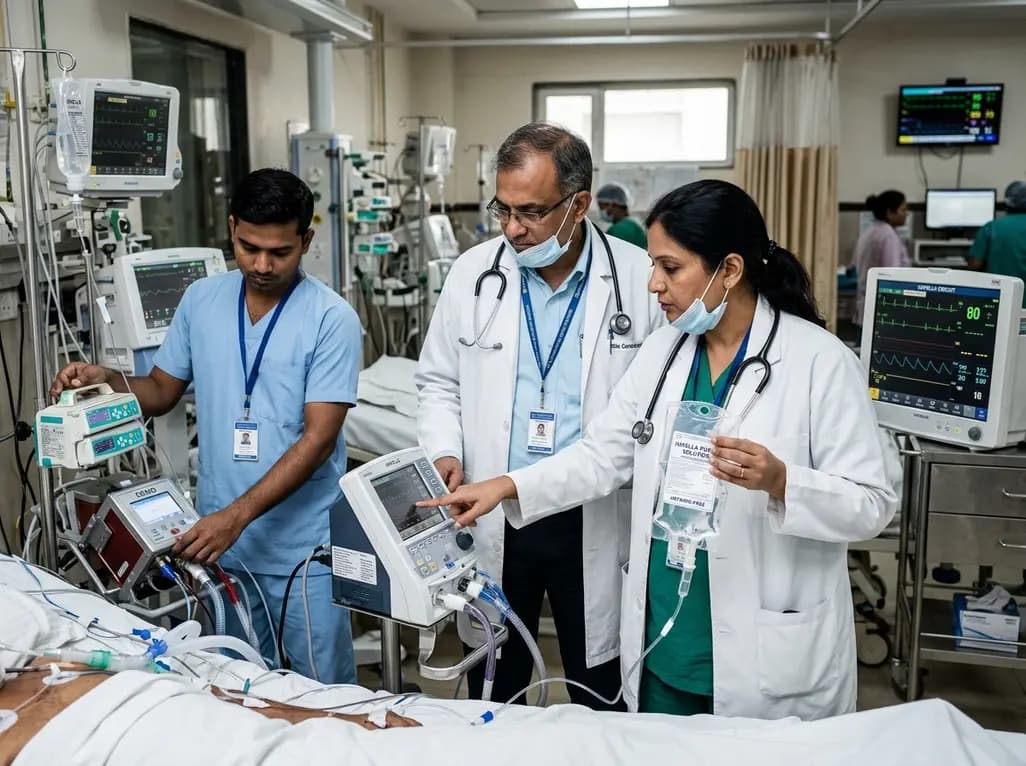
This clinical analysis examines heparin-free versus heparin-containing Impella purge solutions in patients receiving concomitant ECMO support (ECPELLA). Evidence suggests anticoagulant-free purges maintain device patency while reducing bleeding risks, offering a viable strategy alongside systemic anticoagulation.
Today
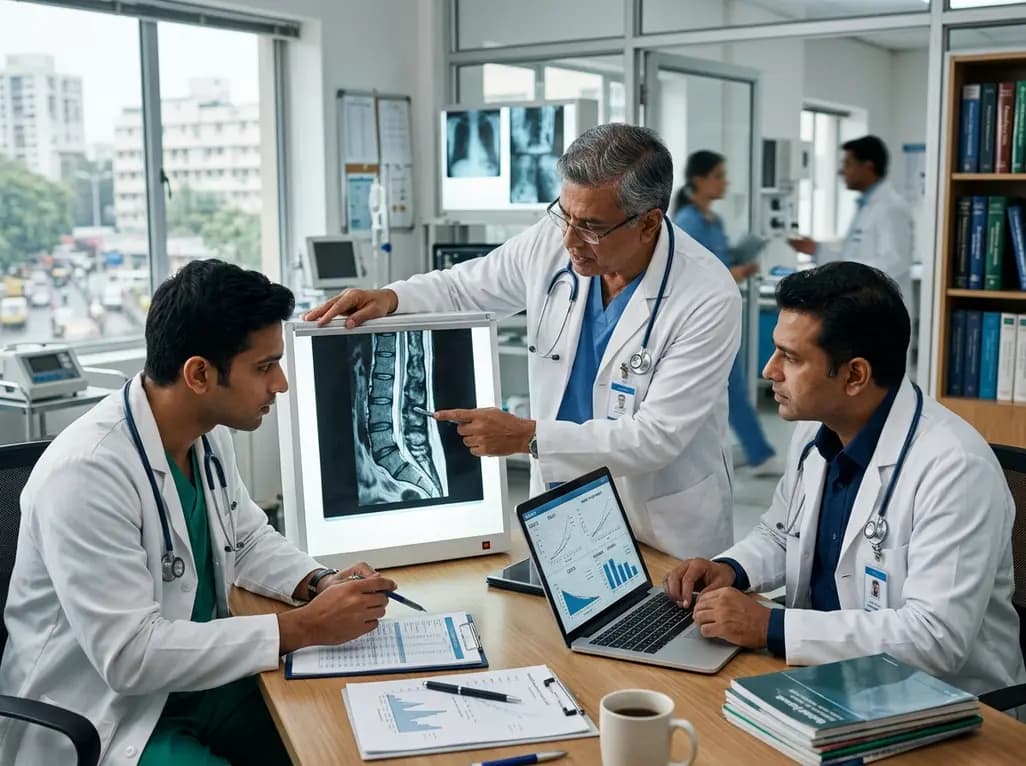
A 10-year Markov state-transition model shows minimally invasive tubular decompression dominates open laminectomy for pure lumbar spinal stenosis, yielding 5.95 vs 5.91 QALYs and saving $4,167 per patient through reduced complications and lower index costs.
Today

A preclinical study demonstrates that naringin-loaded phytosomes significantly enhance oral bioavailability and provide neuroprotective efficacy in diabetic neuropathy by dampening inflammation, reducing oxidative stress, and relieving neuropathic pain.
Today
