.webp&w=384&q=75)

Loading, please wait...
Loading, please wait...
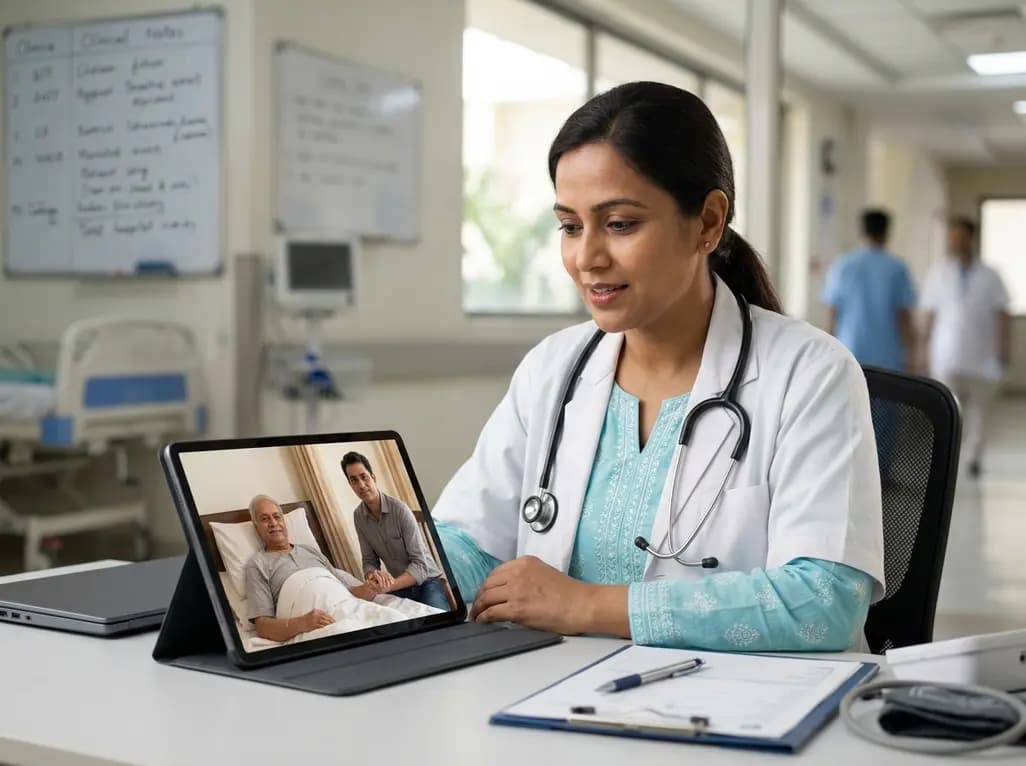
Telehome-based palliative care represents a significant paradigm shift in how we approach the management of life-limiting illnesses. Historically, palliative services relied heavily on inpatient hospice care or frequent home visits by mobile teams. However, the rising global burden of chronic diseases and the aging population have necessitated more scalable solutions. Modern nursing practice now increasingly integrates digital technologies to bridge the geographical gap between specialists and patients. This model does not merely replace face-to-face interaction but rather extends the reach of the clinical team into the patient's daily environment. Specifically, telehealth provides a continuous safety net for patients who choose to spend their final days at home. By leveraging video consultations, remote monitoring, and secure messaging, healthcare providers can offer timely interventions that were previously impossible. Furthermore, this approach aligns with patient preferences for home-based care while optimizing limited healthcare resources. Consequently, understanding the nuances of this delivery model is essential for contemporary nursing leaders and clinicians.
One of the primary advantages of telehome-based palliative care is its ability to democratize access to specialist expertise. In many regions, particularly in rural or underserved areas, patients struggle to find palliative specialists who can manage complex pain or psychological distress. Digital platforms allow these specialists to offer consultations regardless of the physical distance. Patients no longer need to endure exhausting travel to clinics, which often exacerbates their physical symptoms. Instead, they can receive expert guidance from the comfort of their living rooms. This continuity of care is vital for maintaining the quality of life during the terminal phase of an illness. Moreover, telehealth tools facilitate better communication between different layers of the healthcare system. Primary care physicians, community nurses, and hospital-based consultants can share real-time data and updates. This collaborative environment ensures that the patient's care plan remains consistent across all settings. Significantly, the literature suggests that this improved access leads to higher patient satisfaction and a reduced sense of isolation for both the patient and their family. Nurses play a pivotal role here, acting as the digital navigators who coordinate these multidisciplinary interactions.
Telehome-based palliative care enables a more proactive approach to symptom management compared to traditional reactive models. Through remote patient monitoring tools, nurses can track vital signs and patient-reported outcomes on a daily basis. If a patient reports a sudden spike in pain or an increase in respiratory distress, the clinical team can intervene immediately. This rapid response prevents small issues from escalating into full-blown crises that require emergency room visits. Research indicates that proactive monitoring significantly reduces unscheduled hospitalizations, which is a key goal in palliative care. Patients benefit from having their symptoms addressed in real-time, leading to better physical comfort and emotional stability. Additionally, digital tools allow for better medication reconciliation and adherence monitoring. Nurses can use video calls to observe how medications are being administered and provide instant education to caregivers. This high-touch, low-travel model ensures that the clinical team stays informed about the patient's condition without the logistical delays of physical travel. Ultimately, the ability to manage symptoms remotely strengthens the patient's confidence in staying at home until the very end.
A critical finding in recent research is that telehome-based palliative care is not just a digital intervention; it is a complex socio-technical and relational model. Successful implementation depends heavily on the quality of the relationship between the nurse, the patient, and the technology. It is not enough to simply provide the hardware and software. Nurses must integrate these tools into their existing workflows while maintaining the human touch that defines palliative care. This requires a shift in mindset, where the digital interface becomes a medium for empathy and support rather than a barrier. Furthermore, organizational readiness plays a massive role in whether these programs succeed. Institutions must provide the necessary infrastructure, including secure platforms and technical support. Without proper administrative backing, even the most skilled nurses will struggle to maintain a telehealth service. The transition to digital care also involves navigating ethical and legal frameworks, such as data privacy and informed consent. Consequently, nursing education must evolve to include digital competence as a core skill. By viewing telehealth as a relational tool, nursing leaders can design services that feel personal and supportive, even when delivered through a screen.
The success of telehome-based palliative care hinges significantly on the involvement and capacity of family caregivers. In a home setting, the caregiver often becomes the primary operator of the technology and the first point of contact for the clinical team. However, this creates a new set of challenges, particularly regarding digital literacy and caregiver burden. Many caregivers, especially older spouses, may feel overwhelmed by complex apps or monitoring devices. Language barriers can further complicate these interactions, making it difficult for the team to provide accurate instructions. To address these issues, telehealth designs must be inclusive and user-friendly. Designers should prioritize simplicity and offer support in multiple languages to ensure equity. Additionally, clinicians must assess the caregiver's capability and psychological readiness before initiating a telehealth-based plan. Providing adequate training and ongoing technical support can mitigate the stress associated with using new tools. Moreover, nurses must remain vigilant about the potential for 'caregiver burnout' when digital monitoring increases the perceived responsibility of the family. By focusing on caregiver-inclusive design, we can ensure that telehealth serves as a support system rather than an added burden.
Implementing telehome-based palliative care requires a strategic approach that prioritizes interdisciplinary coordination and workforce development. Nursing leaders should take the lead in designing workflows that integrate telehealth seamlessly into daily practice. This involves defining clear roles for each team member and ensuring that communication channels remain open. For instance, the coordination between the home-care nurse and the hospital-based specialist must be flawless to ensure that changes in the care plan are executed immediately. Furthermore, organizations should invest in regular training sessions to enhance the digital competence of their staff. This training should cover not only the technical aspects of the platforms but also communication strategies for virtual environments. Specifically, learning how to convey empathy and read non-verbal cues through a screen is essential for palliative nurses. Additionally, financial sustainability must be addressed through proper reimbursement models and policy advocacy. When telehealth is recognized as a standard component of palliative care, it becomes easier to secure the necessary resources for long-term operation. By aligning service structures with the specific needs of the patient-caregiver dyad, healthcare systems can create sustainable and effective tele-palliative programs.
Telehome-based palliative care removes physical barriers by allowing patients to consult with specialists via video and secure messaging from their own homes. This is especially beneficial for those in rural areas or those with limited mobility. By eliminating the need for travel, patients can receive expert advice on symptom management and psychological support more frequently, ensuring that their care remains continuous and highly specialized throughout the illness.
The main barriers include limited digital literacy among patients and caregivers, technical infrastructure issues like poor internet connectivity, and a lack of organizational readiness. Additionally, language differences and the potential for increased caregiver burden can hinder engagement. To overcome these, systems must provide user-friendly technology, comprehensive training for all users, and robust technical support to ensure that the digital tools enhance rather than complicate the care process.
Nursing leaders can ensure competence by integrating digital health training into standard nursing curricula and professional development programs. This training should focus on mastering telehealth platforms, understanding data privacy, and developing 'web-side manners' to maintain empathetic communication. Regular workshops and hands-on practice sessions help nurses feel confident using these tools, allowing them to lead the coordination of interdisciplinary care effectively in a modern, technology-driven environment.
Disclaimer: This content is for informational and educational purposes only. It is not intended to be a substitute for professional medical advice, diagnosis, or treatment. Always seek the advice of your physician or other qualified health provider with any questions you may have regarding a medical condition. Refer to the latest local and national guidelines for clinical practice.
References
Xu X et al. Telehome-Based Palliative Care in Nursing Practice: An Integrative Review of Care Delivery, Caregiver Involvement and Service Coordination. J Clin Nurs. 2026 Jul 12. doi: 10.1111/jocn.70429. PMID: 42437457.
Greer JA, et al. Effectiveness of Early Palliative Care Delivered via Video vs In-Person for Advanced Lung Cancer. JAMA. 2024;331(18):1534-1542. doi:10.1001/jama.2024.5160.
Kirby A, et al. Telehealth adoption in palliative care: a systematic review of patient barriers and facilitators. BMC Palliat Care. 2025;24:52. doi:10.1186/s12904-025-01698-2.

Read summarized clinical updates, watch expert medical content, and earn CME certifications right from your smartphone.
Open your smartphone camera to scan and install.





A comprehensive review of telehome-based palliative care, highlighting how telehealth improves specialist access and symptom management while addressing the socio-technical challenges of caregiver involvement and organizational readiness in modern nursing practice.
3 months ago

Review how tailored exercise programs benefit frail older patients with heart failure. Explore pathophysiological mechanisms, individualized training prescriptions, and strategies to overcome adherence barriers in clinical practice.
Today

Leucine Rich Bio has introduced South Asia's first comprehensive vaginal microbiome test, BugSpeaks. By profiling microbial dysbiosis, pathogens, and antimicrobial resistance, this next-generation diagnostic platform provides clinicians with deeper insights into recurrent infections, fertility, and reproductive health.
Today

In high-risk pulmonary embolism complicated by severe anemia and active uterine bleeding, systemic thrombolysis is contraindicated. Large-bore aspiration thrombectomy provides rapid hemodynamic rescue without fibrinolysis, supported by inferior vena cava filter placement and multidisciplinary critical care.
Today

This comparative study evaluates posterior labral tears with and without glenohumeral instability, highlighting distinct demographic patterns, MRI underestimation in stable shoulders, and successful arthroscopic repair outcomes.
Today

A clinical study demonstrates that early intervention with tocilizumab, either as monotherapy or bridged with corticosteroids, achieves significant proptosis reduction and resolves active inflammation in treatment-naive thyroid eye disease.
Today
