

Loading, please wait...
Loading, please wait...

Chronic obstructive pulmonary disease remains a leading cause of global respiratory mortality, posing a massive clinical challenge across healthcare systems. While persistent airflow obstruction and chronic bronchitis define the condition, metabolic alterations within the respiratory tract govern tissue destruction. Recent translational investigations highlight the critical role of the kynurenine pathway in COPD pathogenesis. Exposure to cigarette smoke triggers significant metabolic reprogramming in human airway epithelial cells. Consequently, normal cellular metabolism shifts toward harmful biochemical cascades that accelerate pulmonary deterioration. Airway epithelial cells provide the primary barrier against inhaled toxicants. However, prolonged cigarette smoke exposure compromises their structural integrity and bioenergetic stability. Researchers now recognize transaldolase 1, known as TALDO1, as a central metabolic mediator of this deleterious process. TALDO1 acts as a rate-limiting enzyme in the non-oxidative branch of the pentose phosphate pathway. In response to toxic smoke constituents, airway cells upregulate TALDO1 expression dramatically. This enzymatic elevation redirects critical metabolic intermediates and alters nutrient utilization. Ultimately, this reprogramming stimulates catastrophic pulmonary inflammation and progressive tissue remodeling in vulnerable lung parenchyma.
The upregulation of TALDO1 represents an essential mechanistic event in smoke-induced epithelial injury. Under baseline physiological states, TALDO1 coordinates the balance between carbohydrate metabolism and nucleotide precursor synthesis. However, sustained exposure to cigarette smoke profoundly alters this homeostatic equilibrium. Elevated TALDO1 expression shifts intracellular flux away from protective antioxidant pathways. Instead, this shift redirects essential amino acid utilization toward pathogenic routes. In experimental airway models, excessive TALDO1 levels correlate directly with heightened inflammatory cytokine release and loss of epithelial tight junctions. Furthermore, genetic knockdown of TALDO1 substantially reverses these destructive phenotypic changes. When scientists silence TALDO1, epithelial cells exhibit markedly preserved viability and attenuated inflammatory signaling despite continued smoke challenge. In addition, experimental models show that reducing TALDO1 activity prevents alveolar septal destruction and preserves overall respiratory mechanics. These findings establish that TALDO1 does not simply serve as an incidental biomarker of smoke injury. Rather, it operates as an active driver of pulmonary parenchymal destruction. Therefore, targeting TALDO1-regulated metabolic pathways provides an unprecedented approach to halt COPD progression at the cellular level.
Metabolic tracing reveals that TALDO1 activation systematically reroutes tryptophan catabolism into the kynurenine enzymatic cascade. As a direct consequence, airway epithelial cells rapidly accumulate toxic concentrations of L-kynurenine. This metabolite accumulation exerts profound pathological actions on respiratory cellular machinery. Specifically, excessive L-kynurenine severely damages mitochondrial architecture and impairs the electron transport chain. Healthy mitochondria maintain cellular energy production and regulate apoptotic checkpoints. Conversely, kynurenine-mediated mitochondrial dysfunction triggers loss of membrane potential, elevated reactive oxygen species production, and defective bioenergetic output. When investigators expose intact lung cells to exogenous L-kynurenine, mitochondrial collapse accelerates even in the absence of smoke toxins. This biochemical toxicity illustrates that L-kynurenine acts as an autonomous mediator of cellular damage. In contrast, both genetic and pharmacological disruption of kynurenine synthesis protects mitochondrial integrity. Preserving mitochondrial respiration reduces the cascade of pro-inflammatory mediators that typically drive alveolar capillary membrane destruction. Consequently, interrupting this metabolic axis safeguards the respiratory barrier against accelerated senescence and apoptotic cell death.
Because kynurenine accumulation directly precipitates mitochondrial decay, inhibiting the rate-limiting enzyme indoleamine 2,3-dioxygenase represents an attractive clinical strategy. Indoleamine 2,3-dioxygenase, or IDO, initiates the conversion of tryptophan to kynurenine in response to pro-inflammatory stimuli. Recent preclinical investigations evaluated Epacadostat, a potent and selective oral IDO inhibitor originally developed for oncology indications. In vivo models of smoke-induced COPD demonstrated that systemic administration of Epacadostat significantly reduced kynurenine production in pulmonary tissues. Furthermore, Epacadostat treatment mitigated smoke-induced decline in dynamic lung compliance and forced expiratory volume. Histological analyses confirmed that IDO inhibition markedly reduced neutrophil infiltration, macrophage aggregation, and airway wall thickening. The drug effectively severed the pathogenic link between TALDO1 upregulation and downstream organ damage. In addition, animals treated with Epacadostat displayed restored mitochondrial ultrastructure within bronchial epithelial linings. Because Epacadostat has already completed extensive human clinical safety trials in other medical disciplines, its translational repurposing for severe pulmonary conditions presents an exciting therapeutic avenue that bypasses early safety hurdles.
For treating physicians, recognizing the metabolic dimensions of COPD opens promising frontiers beyond traditional bronchodilator therapy. Current management paradigms rely heavily on inhaled corticosteroids and long-acting bronchodilators to optimize airway caliber and minimize exacerbation frequency. However, these therapies largely fail to reverse progressive lung function loss or address underlying cellular senescence. Highlighting the TALDO1-kynurenine-mitochondrial injury axis underscores the necessity for disease-modifying metabolic interventions. Future therapeutic protocols may combine bronchodilators with metabolic modulators that arrest structural lung destruction. Furthermore, measuring circulating and sputum kynurenine levels could provide valuable clinical biomarkers to stratify disease severity and monitor disease activity. In regions facing immense environmental burdens from smoking and severe ambient particulate matter, metabolic protection of airway epithelia becomes extraordinarily urgent. Clinicians must follow emerging clinical trials testing IDO inhibitors and related metabolic compounds closely. Integrating metabolic profiling into routine clinical assessments will undoubtedly refine personalized treatment protocols for patients suffering from refractory inflammatory airway diseases.
Cigarette smoke exposure markedly upregulates TALDO1 in airway epithelial cells. This enzymatic increase alters baseline cellular metabolism and diverts tryptophan catabolism directly into the kynurenine pathway. Elevated TALDO1 accelerates intracellular L-kynurenine accumulation, which directly degrades mitochondrial membrane potential and impairs bioenergetic respiration. Consequently, damaged epithelial cells release persistent inflammatory cytokines, disrupt the pulmonary barrier, and promote progressive alveolar remodeling and airflow limitation.
Oncology drugs that target the kynurenine pathway, particularly IDO inhibitors like Epacadostat, demonstrate notable efficacy in preclinical models of COPD. By inhibiting the rate-limiting enzyme responsible for producing L-kynurenine, these agents prevent downstream mitochondrial toxicity and pulmonary inflammation. Because compounds like Epacadostat already possess established human pharmacokinetic and safety profiles, their potential repositioning into respiratory medicine could substantially accelerate development timelines.
Airway epithelial mitochondria maintain the energy required for cellular repair, barrier integrity, and ciliary motion. When toxic metabolites such as L-kynurenine accumulate, mitochondrial membranes depolarize and generate excessive reactive oxygen species. This oxidative stress damages structural proteins and triggers cell death. Preserving mitochondrial respiration prevents chronic inflammation, cellular senescence, and parenchymal tissue destruction characteristic of severe progressive obstructive pulmonary disease.
Disclaimer: This content is for informational and educational purposes only... Refer to the latest local and national guidelines for clinical practice.
References
Wang W et al. Targeting Kynurenine Synthesis Attenuated Cigarette Smoke-Induced COPD-Like Lung Injury Driven by TALDO1-Mediated Metabolic Reprogramming. Adv Sci (Weinh). 2026 Nov 11. doi: undefined. PMID: 43012862.
Poulain-Godefroy O, et al. Kynurenine pathway as a modulator of inflammation in COPD and its exacerbations. Cells. 2024;13(4):315.
Zinellu A, et al. Increased kynurenine plasma concentrations and kynurenine/tryptophan ratio in chronic obstructive pulmonary disease patients. Respir Res. 2018;19(1):153.
Cloonan SM, Choi AM. Mitochondria in lung disease. J Clin Invest. 2016;126(3):809-820.

Read summarized clinical updates, watch expert medical content, and earn CME certifications right from your smartphone.
Open your smartphone camera to scan and install.





Emerging translational research reveals that cigarette smoke drives COPD via TALDO1 upregulation, triggering aberrant kynurenine accumulation and mitochondrial damage in airway epithelial cells. Pharmacological inhibition of IDO with Epacadostat restores lung function, pointing toward novel metabolic therapies.
Today
A retrospective cohort study reveals that lower Geriatric Nutritional Risk Index scores and higher C-reactive protein levels at hemodialysis initiation are independently and jointly associated with prolonged hospital stays of 30 days or more, underscoring the vital need for early nutritional and anti-inflammatory care.
Today
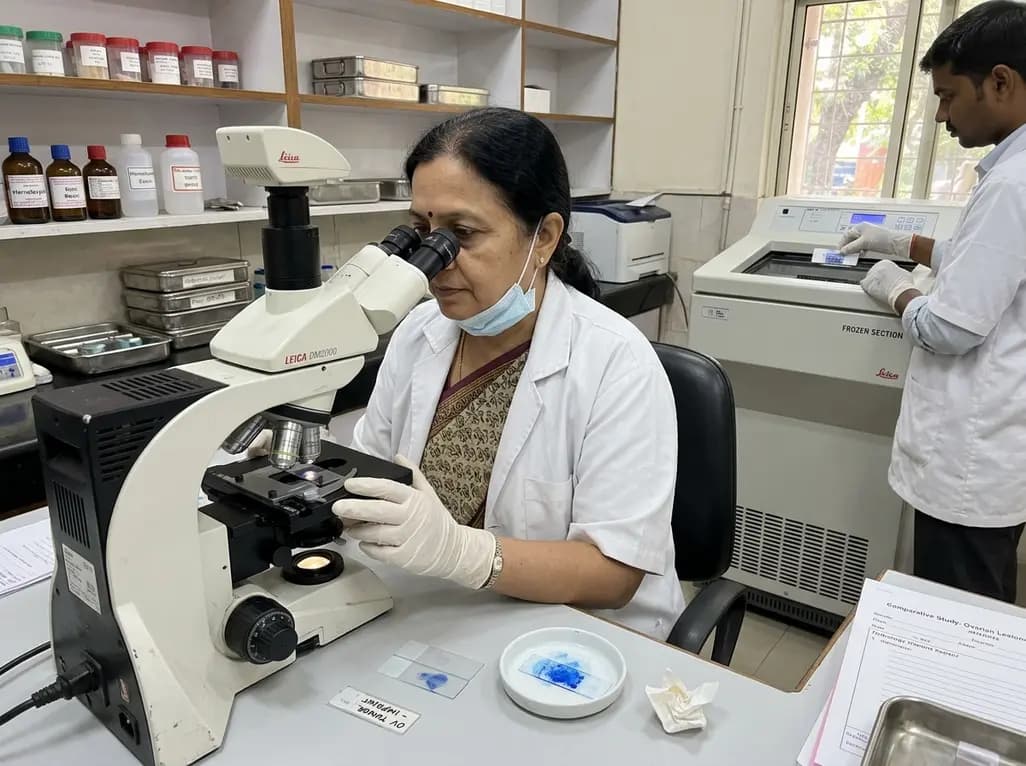
A new comparative study demonstrates that intraoperative imprint cytology achieves 96.6% diagnostic accuracy in ovarian tumours, outperforming frozen section in sensitivity for borderline lesions and offering an accessible, rapid alternative for resource-constrained surgical centres.
Today
Even older heart failure patients with high SPPB scores (≥10) exhibit high 1-year mortality and readmission rates. Adding sarcopenia assessments—grip strength, chair stand test, and calf circumference—reveals critical residual risks, enabling targeted post-discharge interventions.
Today
A validated 10-item survey measures preoperative expectations for posterior spinal fusion in adolescent idiopathic scoliosis. While parents and teens agree on avoiding future surgery, their priorities diverge on appearance and sports, underscoring the critical need for separate preoperative evaluations.
Today

A systematic review evaluates psychological interventions for smoking cessation in diabetes, showing short-term success but highlighting challenges in long-term abstinence.
Yesterday
