

Loading, please wait...
Loading, please wait...

Starting renal replacement therapy represents a precarious transition for patients with end-stage kidney disease. Consequently, inpatient hemodialysis initiation frequently coincides with acute medical decompensation, metabolic disarray, and uremic toxicity. Clinicians recognize that unplanned starts often lead to extended hospitalizations, which strain critical healthcare infrastructure. Furthermore, patients admitted for emergent dialysis carry substantial comorbidity burdens, including severe cardiovascular disorders and uncontrolled diabetes mellitus. Because kidney failure directly impairs metabolic homeostasis, protein-energy wasting rapidly develops before hospital admission. Therefore, identifying vulnerable individuals at the moment of renal replacement therapy is essential for timely care planning. Traditional assessment methods often miss subclinical wasting and latent systemic stress. In contrast, integrating objective bedside biomarkers can help clinicians anticipate post-initiation trajectories more effectively. Recent clinical research underscores the pressing need to clarify how baseline nutritional status and inflammatory activity dictate inpatient recovery. When clinicians evaluate these physiological parameters simultaneously, they can better anticipate prolonged hospital stays. Thus, proactive risk stratification at hospital presentation provides a valuable window to optimize acute outcomes, prevent complications, and streamline discharge pathways for high-risk nephrology patients.
To assess nutritional vulnerability accurately, nephrologists increasingly rely on the Geriatric Nutritional Risk Index. This objective scoring system combines baseline serum albumin concentrations with ideal body weight ratios. Consequently, the index eliminates the subjectivity commonly associated with traditional dietary recall interviews. In patients undergoing hemodialysis, protein-energy wasting represents a widespread condition that severely impairs immune defenses and tissue repair. Furthermore, hypoalbuminemia reflects not merely poor protein intake, but also ongoing catabolism and capillary leak syndromes. Therefore, a low index score signals profound physiological exhaustion long before overt physical cachexia appears. Clinical investigations confirm that baseline nutritional depletion directly correlates with prolonged hospital admissions and adverse short-term outcomes. When clinicians calculate this index during initial nephrology workups, they identify covert frailty quickly. In addition, the metric requires only routine laboratory values and basic anthropometric measurements, making it exceptionally feasible in busy public hospitals. By identifying malnourishment early, hospital teams can initiate aggressive caloric and protein supplementation promptly. Thus, the index serves as a practical, validated metric to detect physiological vulnerability during acute renal replacement therapy.
Nutritional decline in advanced kidney disease rarely occurs in isolation from immune dysregulation. Instead, persistent systemic inflammation drives profound protein catabolism and muscle wasting in uremic patients. Specifically, elevated circulating C-reactive protein levels signify severe immune activation, vascular endothelial damage, and cytokine release. Furthermore, sustained inflammatory signaling suppresses hepatic synthesis of albumin while simultaneously accelerating muscle proteolysis. Consequently, this vicious cycle produces the well-documented malnutrition-inflammation complex syndrome in dialysis candidates. When acute infections or vascular access complications supervene, this inflammatory cascade intensifies dramatically. Therefore, elevated inflammatory markers at baseline indicate that a patient possesses minimal physiological resilience against inpatient complications. Moreover, systemic inflammation impairs erythropoiesis, worsens fluid retention, and delays wound healing across all organ systems. Clinicians who overlook high inflammatory biomarkers risk underestimating the likelihood of nosocomial events and delayed recovery. By analyzing acute-phase reactants alongside nutritional indices, healthcare providers capture a comprehensive portrait of internal biological stress. Thus, acknowledging this pathological crosstalk between inflammation and malnutrition is vital for anticipating complex inpatient courses.
A recent landmark retrospective cohort study examined 517 hospitalized individuals transitioning to maintenance dialysis across two decades. Notably, multivariable logistic regression evaluated 501 patients after adjusting for critical confounders, including age, vascular access status, and preexisting cardiovascular disease. The investigators defined the primary outcome as a post-initiation hospital stay lasting 30 days or longer. Remarkably, nearly one-third of the cohort experienced prolonged inpatient admission following therapy start. The data revealed that higher nutritional index scores independently lowered the odds of prolonged hospital stay by approximately five percent per unit increase. Conversely, elevated log-transformed C-reactive protein significantly heightened the odds of extended hospitalization. Most strikingly, patients displaying both a low nutritional index and elevated inflammation faced a more than threefold increase in prolonged hospital stay odds. However, statistical testing confirmed no multiplicative interaction, indicating that both biological abnormalities exert independent and additive damage. Consequently, these robust observations highlight how concurrent wasting and systemic inflammation exponentially augment clinical vulnerability. Healthcare teams must therefore view the combination of these markers as a clear red flag for protracted recovery.
Translating these clinical observations into daily nephrology practice demands multidisciplinary coordination and early intervention. First, inpatient teams should systematically calculate nutritional indices and measure baseline inflammatory markers during admission. When clinicians identify high-risk biochemical profiles, they must initiate targeted medical and dietary countermeasures without hesitation. Specifically, clinical dietitians should formulate individualized nutrition plans that deliver adequate caloric intake and specialized renal nutritional formulations. Furthermore, treating teams must actively search for occult sources of systemic inflammation, such as catheter infections, vascular thromboses, or chronic occult fluid overload. Minimizing indwelling central venous catheter exposure through timely arteriovenous access planning also reduces bacteremia risks substantially. In addition, physical therapists can introduce gentle bedside mobilization protocols to mitigate catabolic muscle atrophy during acute illness. Regular nephrology reviews ensure that dialysis dose delivery and ultrafiltration rates do not induce recurrent hemodynamic instability. Consequently, structured discharge planning should begin early, integrating home support networks and outpatient dialysis facility transfers. Through these collaborative, proactive efforts, hospitals can shorten admissions and improve long-term rehabilitative success.
Prolonged hospitalization frequently occurs because patients initiating hemodialysis often present with acute metabolic complications, severe fluid overload, and unmanaged uremic symptoms. Furthermore, many individuals lack mature permanent vascular access, necessitating temporary catheter insertion that increases bloodstream infection risks. In addition, concurrent cardiovascular comorbidities and protein-energy wasting impair physiological recovery. Consequently, stabilizing biochemical parameters, managing intercurrent infections, and establishing a safe outpatient maintenance dialysis regimen require extended inpatient monitoring and specialized multidisciplinary care.
The Geriatric Nutritional Risk Index predicts clinical outcomes by combining serum albumin levels with body weight metrics to gauge systemic protein stores. Consequently, lower scores indicate severe protein-energy wasting, suppressed immune function, and diminished physiological reserves. Clinicians recognize that malnourished patients suffer impaired wound healing, higher nosocomial infection rates, and protracted recovery phases. Therefore, calculating this objective index at admission enables healthcare teams to forecast complication risks and implement aggressive nutritional rehabilitation early.
Reducing systemic inflammation can potentially shorten hospital stays by curbing hypercatabolism, improving cardiovascular stability, and preventing secondary infectious complications. When clinical teams aggressively identify and eradicate occult infections, remove malfunctioning catheters, and treat fluid overload, circulating inflammatory markers decline substantially. Furthermore, addressing persistent inflammatory cascades preserves skeletal muscle mass and accelerates physical rehabilitation. Therefore, combining anti-inflammatory medical management with prompt clinical stabilization facilitates safer discharge planning and reduces overall hospitalization duration for newly dialyzed individuals.
Disclaimer: This content is for informational and educational purposes only... Refer to the latest local and national guidelines for clinical practice.
References
Uematsu H et al. Nutritional risk, inflammation, and hospitalization after hemodialysis initiation. Ren Fail. 2026 Dec undefined. doi: 10.1080/0886022X.2026.2757931. PMID: 43012867.
Gemente DV, Bacci MR. Time to initiation of dialysis and length of stay in hospitalized patients with kidney damage: a cross-sectional study. Sao Paulo Med J. 2024 Dec 20;143(1):e2023365. doi: 10.1590/1516-3180.2023.0365.R1.03072024.
Yamada S, et al. Geriatric Nutritional Risk Index and mortality in patients undergoing hemodialysis: a systematic review and meta-analysis. Clin Kidney J. 2022;15(4):768-777. doi: 10.1093/ckj/sfab219.

Read summarized clinical updates, watch expert medical content, and earn CME certifications right from your smartphone.
Open your smartphone camera to scan and install.





A retrospective cohort study reveals that lower Geriatric Nutritional Risk Index scores and higher C-reactive protein levels at hemodialysis initiation are independently and jointly associated with prolonged hospital stays of 30 days or more, underscoring the vital need for early nutritional and anti-inflammatory care.
Today
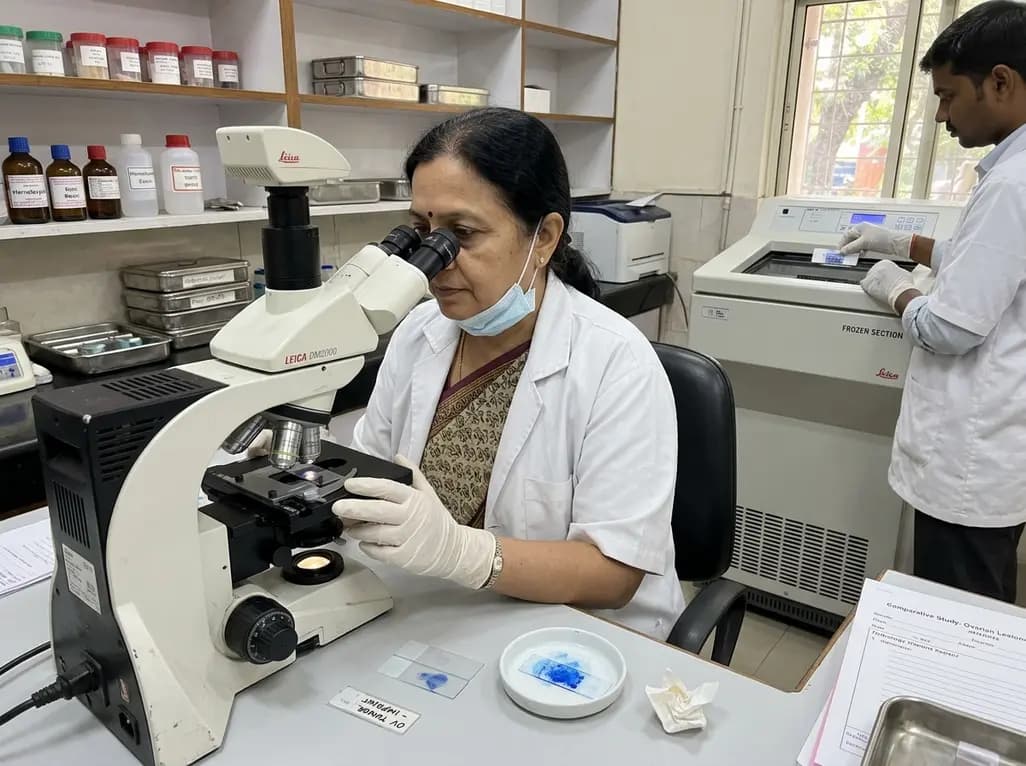
A new comparative study demonstrates that intraoperative imprint cytology achieves 96.6% diagnostic accuracy in ovarian tumours, outperforming frozen section in sensitivity for borderline lesions and offering an accessible, rapid alternative for resource-constrained surgical centres.
Today
Even older heart failure patients with high SPPB scores (≥10) exhibit high 1-year mortality and readmission rates. Adding sarcopenia assessments—grip strength, chair stand test, and calf circumference—reveals critical residual risks, enabling targeted post-discharge interventions.
Today
A validated 10-item survey measures preoperative expectations for posterior spinal fusion in adolescent idiopathic scoliosis. While parents and teens agree on avoiding future surgery, their priorities diverge on appearance and sports, underscoring the critical need for separate preoperative evaluations.
Today

A systematic review evaluates psychological interventions for smoking cessation in diabetes, showing short-term success but highlighting challenges in long-term abstinence.
Yesterday
