

Loading, please wait...
Loading, please wait...

Older patients with cardiovascular disease often display subtle functional deficits that standard bedside measures can easily overlook. Clinicians frequently use the Short Physical Performance Battery (SPPB) to assess mobility, balance, and post-discharge vulnerability. However, the manifestation of sarcopenia in heart failure creates a persistent clinical paradox. Many older individuals achieve scores of 10 to 12, which traditional paradigms categorize as preserved functional capacity. Consequently, clinicians assume these individuals carry minimal post-discharge risk. Nevertheless, real-world registry evidence reveals that high performers still suffer substantial adverse events. Specifically, systemic neurohormonal activation and persistent subclinical congestion produce metabolic changes that degrade skeletal muscle quality before overt balance loss occurs. Therefore, relying exclusively on mobility metrics creates a deceptive sense of security. Clinicians must recognize that functional tests do not comprehensively capture skeletal muscle wasting or isolated strength depletion. In addition, acute decompensation accelerates catabolic muscle breakdown during inpatient stays. As a result, older individuals with apparently preserved gross mobility still harbor significant physiological vulnerability. Addressing this critical diagnostic blind spot requires incorporating targeted sarcopenia assessments before hospital discharge.
A landmark retrospective cohort study from the J-Proof HF registry investigated this clinical issue among 3,044 hospitalized patients aged 65 years and older. Every enrolled participant attained a discharge SPPB score of 10 or greater, suggesting preserved functional ability. Remarkably, 25.0% of these seemingly robust patients experienced all-cause death or heart failure rehospitalization within one year. To understand this residual risk, investigators evaluated three sarcopenia-related indices defined by the Asian Working Group for Sarcopenia (AWGS) 2019 guidelines. Specifically, they analyzed handgrip strength, the five-times chair stand test, and calf circumference. The researchers aggregated these variables into an unweighted physical function score ranging from 0 to 3. The primary composite outcome increased in a clear stepwise manner with each additional impaired functional domain. Multivariable Cox proportional hazards regression confirmed an adjusted hazard ratio of 1.245 per 1-point increase in the score. Furthermore, each domain independently predicted adverse events with comparable magnitude. Consequently, patients with all three impairments faced more than double the hazard of death or readmission compared to unimpaired peers. These findings demonstrate that multidimensional impairment drives post-discharge cardiovascular outcomes.
The study examined three practical bedside domains that capture distinct physiological aspects of muscular health. First, handgrip strength reflects systemic upper-limb muscle power and general neuromuscular vigor. More than half of the study cohort exhibited weak grip strength despite maintaining normal walking cadence. Second, the five-times chair stand test quantifies dynamic lower-extremity power, proximal muscle integrity, and core pelvic stability. Prolonged chair rise times reveal early motor unit exhaustion during antigravity effort. Third, calf circumference serves as an accessible surrogate marker for peripheral skeletal muscle mass. In older patients, low calf circumference indicates true muscle wasting rather than simple fat redistribution. Interestingly, over 70% of the cohort showed reduced calf circumference at discharge. While acute peripheral edema might artificially inflate lower-leg girth, careful clinical assessment during compensated euvolemia unmasks significant sarcopenia. Moreover, combining these three metrics uncovers physiological deficits that standard walking tests fail to identify. Because each domain contributes uniquely to overall physical resilience, simultaneous evaluation provides a complete functional profile. Therefore, evaluating strength, power, and muscle mass simultaneously optimizes risk stratification in routine care.
The biological intersection of heart failure and progressive myopathy involves multiple compounding pathophysiological pathways. Chronic hemodynamic congestion induces microvascular hypoperfusion throughout peripheral skeletal muscle beds. Consequently, skeletal myocytes experience chronic mitochondrial dysfunction, abnormal calcium handling, and accelerated oxidative stress. In addition, heart failure sustains chronic systemic inflammation marked by elevated interleukin-6 and tumor necrosis factor-alpha. These circulating pro-inflammatory cytokines stimulate ubiquitin-proteasome pathways, leading to active skeletal muscle proteolysis. Furthermore, neurohormonal overactivation of the renin-angiotensin-aldosterone system promotes muscle protein degradation and hinders regenerative satellite cell activity. Patients frequently experience appetite blunting, gut mucosal edema, and malabsorption, which further exacerbate nutritional failure. Even when ambulatory patients walk well during short hospital hallway evaluations, their muscle endurance remains profoundly compromised. This underlying metabolic vulnerability renders the myocardium and peripheral musculature fragile during post-discharge physiological stressors. Thus, minor intercurrent infections or mild volume shifts can rapidly precipitate decompensation. Recognizing these cellular derangements explains why muscular depletion strongly dictates prognosis regardless of gross functional performance.
Implementing these research insights into daily cardiovascular practice does not demand expensive imaging or complicated laboratory equipment. In hospital wards and outpatient clinics, healthcare teams can administer grip dynamometry and chair rise testing in minutes. Similarly, clinicians can measure non-edematous calf circumference with a standard measuring tape before finalizing discharge plans. When an older patient with heart failure demonstrates impairments across these domains, clinicians must immediately adapt their transitional care protocol. For instance, teams should schedule earlier outpatient follow-up visits within seven to ten days of discharge. Furthermore, multidisciplinary heart failure programs should prescribe progressive resistance exercise alongside aerobic cardiac rehabilitation. Physical therapists can tailor training regimens to restore proximal lower-limb strength and rebuild neuromuscular coordination. In parallel, clinical dietitians must optimize daily protein intake, targeting at least 1.2 to 1.5 grams per kilogram of body weight. Correcting micronutrient deficiencies, particularly vitamin D and iron, further supports skeletal muscle recovery. Ultimately, shifting from unidimensional functional screening to comprehensive sarcopenia profiling allows clinicians to mitigate post-discharge vulnerability effectively.
Although an SPPB score of 10 or higher indicates preserved gait, it fails to assess muscle mass and upper-limb strength. In heart failure, localized power depletion and sarcopenic muscle wasting develop before ambulatory speed declines. Consequently, patients who appear robust during basic mobility tests often harbor marked metabolic frailty. This hidden vulnerability significantly increases their risk of post-discharge decompensation, unplanned rehospitalization, and one-year mortality.
Clinicians should measure calf circumference using an inelastic tape at the maximal girth while the patient sits. However, clinicians must perform this assessment only after achieving clinical euvolemia. Because peripheral edema artificially inflates lower-leg diameter, fluid retention easily masks true skeletal muscle wasting. Therefore, evaluating calf circumference at hospital discharge, once congestion resolves, provides an accurate surrogate for muscle mass. This practical bedside measurement identifies patients requiring enhanced post-discharge supervision.
Management requires an integrated multidisciplinary strategy combining progressive physical rehabilitation with targeted nutritional therapy. First, physical therapists should implement individualized resistance training to rebuild skeletal muscle power alongside standard aerobic exercises. In addition, clinical dietitians must ensure adequate daily protein intake while correcting vitamin D and iron deficiencies. Finally, cardiology teams must optimize medical therapy and arrange early outpatient surveillance within ten days of hospital discharge.
Disclaimer: This content is for informational and educational purposes only... Refer to the latest local and national guidelines for clinical practice.
References

Read summarized clinical updates, watch expert medical content, and earn CME certifications right from your smartphone.
Open your smartphone camera to scan and install.





Even older heart failure patients with high SPPB scores (≥10) exhibit high 1-year mortality and readmission rates. Adding sarcopenia assessments—grip strength, chair stand test, and calf circumference—reveals critical residual risks, enabling targeted post-discharge interventions.
Today

A new comparative study demonstrates that intraoperative imprint cytology achieves 96.6% diagnostic accuracy in ovarian tumours, outperforming frozen section in sensitivity for borderline lesions and offering an accessible, rapid alternative for resource-constrained surgical centres.
Today
A nationwide Japanese registry study of 10,535 patients reveals an overall in-hospital mortality rate of 1.4% following cardiovascular surgery in adult congenital heart disease. Predictors of adverse outcomes include severe lesion complexity, renal disease, and advanced pulmonary hypertension.
Today
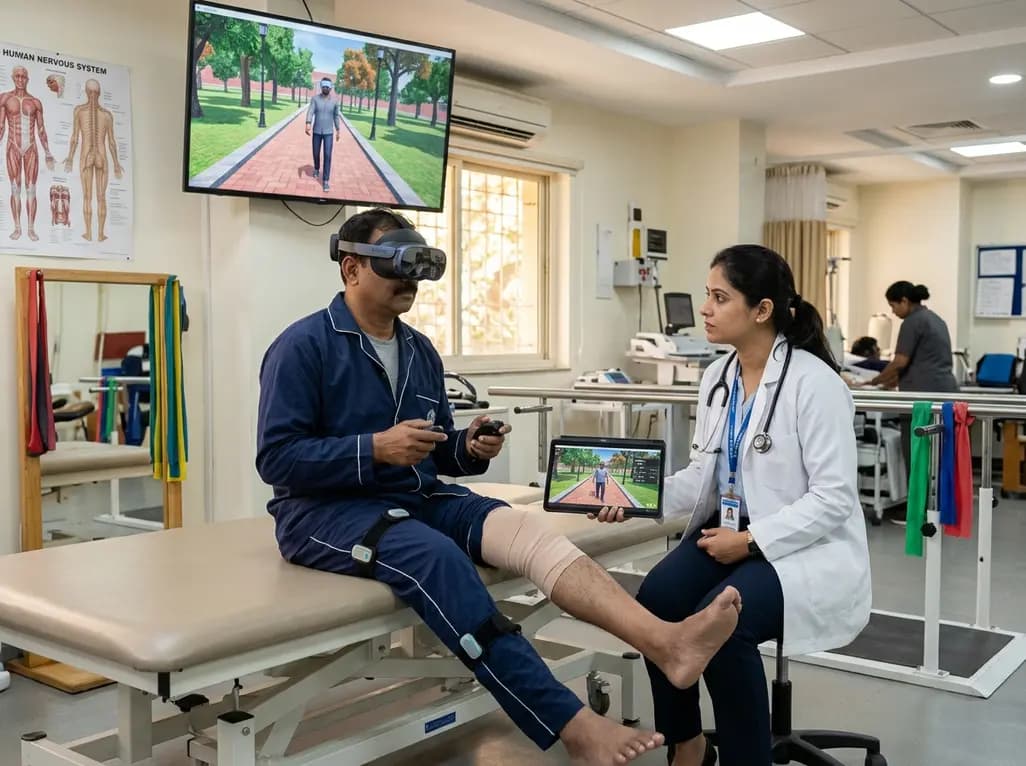
Discover how extended reality (XR) serious games transform post-amputation rehabilitation. This review highlights significant phantom limb pain reduction, motor cortex restoration, enhanced gait and balance, and superior myoelectric prosthetic adoption through immersive, sensorimotor training.
Today

A systematic review evaluates psychological interventions for smoking cessation in diabetes, showing short-term success but highlighting challenges in long-term abstinence.
Yesterday
