.webp&w=384&q=75)

Loading, please wait...
Loading, please wait...

Evaluating SVEAT score performance is becoming essential for emergency departments lacking catheterization labs. Chest pain remains a high-volume presentation that often triggers unnecessary transfers to tertiary centers. Consequently, risk stratification tools are necessary to identify low-risk patients safely. A recent study compared the SVEAT and HEART scores to determine which better predicts 30-day major adverse cardiac events (MACE).
The prospective study included 230 adult patients with non-traumatic chest pain. These patients were referred from secondary-level EDs without percutaneous coronary intervention (PCI) capability. Specifically, the SVEAT score demonstrated a higher area under the ROC curve at 0.969 compared to 0.948 for the HEART score. Furthermore, the SVEAT score showed significantly higher specificity at 98.1%. Although the HEART score had a higher sensitivity of 88.9%, SVEAT's positive predictive value was superior at 95.1%. Therefore, the SVEAT score offers a more precise tool for avoiding unnecessary coronary referrals.
Using highly specific scores helps clinicians make more individualized referral decisions. In India, where many secondary care centers lack immediate cath lab access, this accuracy is crucial. Moreover, the SVEAT score includes symptoms, vascular history, ECG, age, and troponin levels. This structured framework, when combined with clinical judgment, effectively identifies patients who do not require urgent transfer. Consequently, this reduces the burden on tertiary care facilities and optimizes resource allocation.
The SVEAT score includes five key clinical variables: Symptoms, history of Vascular disease, Electrocardiography, Age, and Troponin levels. These factors help clinicians stratify the risk of major adverse cardiac events.
While both scores use similar variables, SVEAT places different weights on symptoms and vascular history. In recent studies, SVEAT has shown higher specificity and overall diagnostic accuracy than the HEART score.
Disclaimer: This content is for informational and educational purposes only. It does not constitute medical advice or a substitute for professional healthcare consultation. Refer to the latest local and national guidelines for clinical practice.
References
Zaman S et al. SVEAT vs. HEART scores for avoiding unnecessary coronary referrals in ED chest pain patients without cath labs. Heart Lung. 2026 May 12. doi: undefined. PMID: 42119270.
Roongsritong C et al. SVEAT score: a new clinical prediction score for 30-day major adverse cardiovascular events in patients with chest pain. Am J Emerg Med. 2020 Oct;38(10):2153-2158.
Antwi-Amoabeng D et al. SVEAT score for early risk stratification of acute chest pain: a multicenter study. Heart & Lung. 2024. doi:10.1016/j.hrtlng.2024.01.002.

Read summarized clinical updates, watch expert medical content, and earn CME certifications right from your smartphone.
Open your smartphone camera to scan and install.





A study finds that the SVEAT score offers higher specificity and accuracy than the HEART score for predicting MACE in non-PCI emergency departments....
5 months ago

Co-administering antiseizure medications and DOACs frequently causes pharmacokinetic interactions, subtherapeutic drug levels, and thromboembolic failures. This review highlights enzyme induction risks, unpredictable outcomes with levetiracetam, and the vital role of therapeutic drug monitoring.
Today

Demanding exhaustive hormonal profiling can inadvertently discourage clinical studies involving females. Methodological standards must align with the specific scientific question to expand, not restrict, equitable evidence for women.
Today
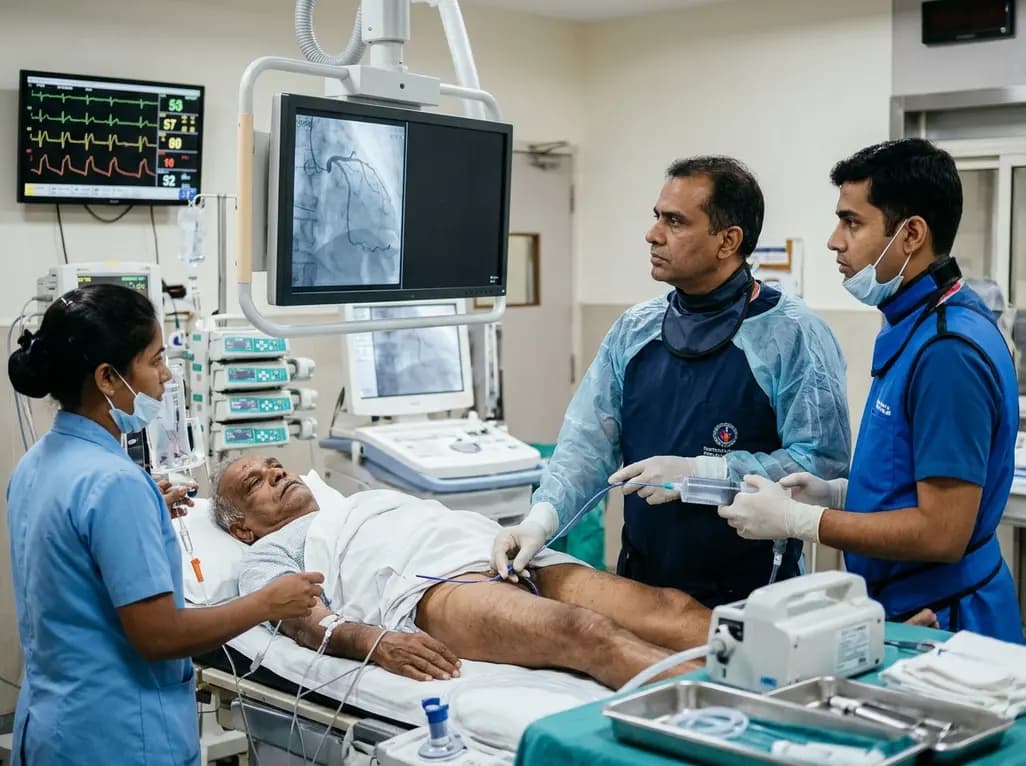
An elderly man with partially repaired Tetralogy of Fallot presented with STEMI caused by coronary embolism rather than atherosclerosis. Successful treatment with sustained mechanical aspiration thrombectomy underscores the vital need for high clinical vigilance in adult congenital heart disease.
Today

A comparative review of tension band wiring and intramedullary screw fixation in thumb metacarpophalangeal arthrodesis, evaluating union rates, hardware complications, and clinical outcomes.
Today

Following regulatory scrutiny from FSSAI regarding promotional representations and lean muscle preservation claims, Dr. Reddy's Laboratories and Nestlé Health Science are currently reviewing the branding and marketing strategy for their joint nutritional supplement Celevida GLP+.
Today
