.webp&w=384&q=75)

Loading, please wait...
Loading, please wait...
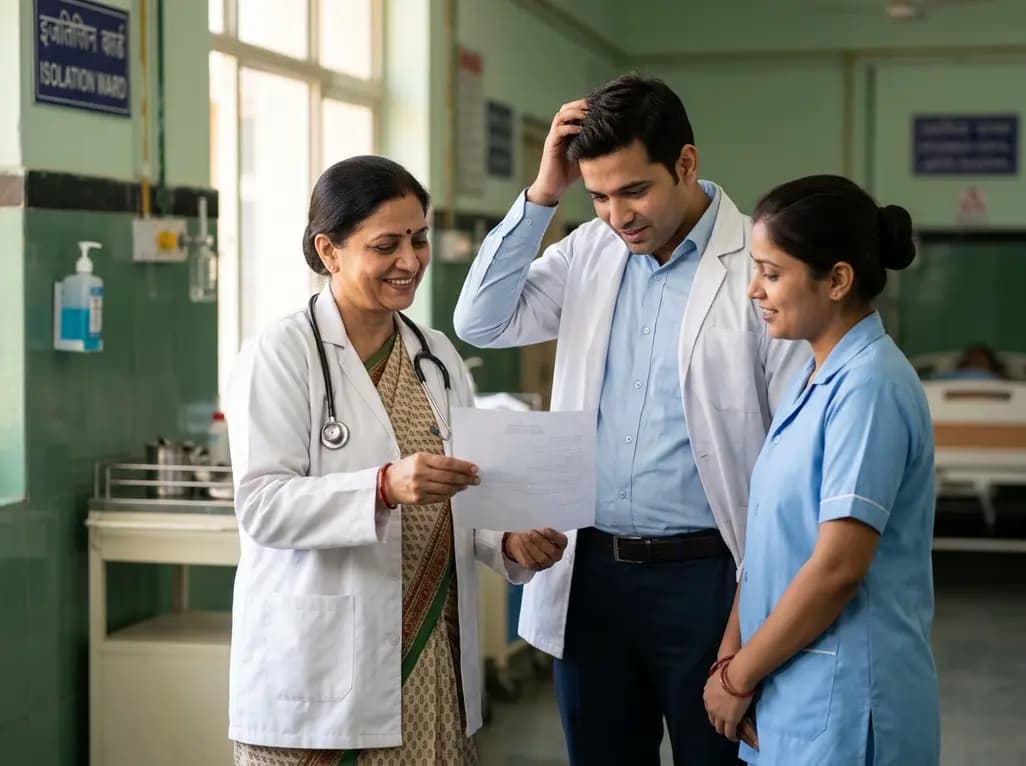
In a recent public health development, medical authorities responded to a case of suspected Ebola in Jaipur after an international traveller displayed viral hemorrhagic fever symptoms. Consequently, health officials immediately isolated the patient to prevent any potential local transmission. However, subsequent laboratory reports have fortunately ruled out the infection.
The patient, a nineteen-year-old female tourist from Uganda, arrived in Rajasthan from Sharjah. During routine airport screening, medical teams flagged her due to high fever and other symptoms. Consequently, authorities quickly transferred her to the Rajasthan University of Health Sciences (RUHS) hospital. Doctors placed her in a designated isolation ward under strict quarantine protocols.
Furthermore, local administrators sent her blood samples to the National Institute of Virology in Pune for confirmatory testing. Meanwhile, hospital staff closely monitored her condition to manage her symptoms and maintain biosecurity. Importantly, the Pune laboratory report returned negative, which officially ruled out the virus infection in this patient.
Although this specific alert ended with negative results, India continues to maintain high vigilance at international entry points. For instance, airport health units recently isolated another traveler exhibiting fever in Hyderabad. This rigorous screening protocol demonstrates the country's proactive defense against imported infectious diseases. Indeed, early detection remains the most effective tool to prevent major outbreaks.
Additionally, the Central government has issued a travel advisory. They advise citizens to avoid non-essential travel to high-risk regions in Central Africa, including Uganda and South Sudan. This warning follows the World Health Organization's decision to declare the Bundibugyo Ebola outbreak a global public health emergency.
Q1: What triggered the recent Ebola alarm in Rajasthan?
A Ugandan tourist arriving at Jaipur International Airport exhibited high fever and symptoms resembling viral hemorrhagic fever. Consequently, officials isolated her as a precaution, though her subsequent laboratory tests in Pune returned negative.
Q2: What is the current status of the suspected Ebola in Jaipur?
The patient has tested negative for the Ebola virus. Therefore, health authorities have officially ruled out the Ebola scare in Rajasthan, proving that the preventive screening protocols worked effectively.
Q3: Why has India increased its airport thermal screening?
This measure aligns with global alerts following the World Health Organization's declaration of Ebola outbreaks in parts of Africa as a Public Health Emergency of International Concern.
Disclaimer: This content is for informational and educational purposes only. It does not constitute medical advice or replace professional judgment. Refer to the latest local and national guidelines for clinical practice.
References

Read summarized clinical updates, watch expert medical content, and earn CME certifications right from your smartphone.
Open your smartphone camera to scan and install.





A Ugandan tourist isolated with suspected Ebola-like symptoms in Jaipur has tested negative, ruling out the Ebola virus threat in Rajasthan....
4 months ago

Review how tailored exercise programs benefit frail older patients with heart failure. Explore pathophysiological mechanisms, individualized training prescriptions, and strategies to overcome adherence barriers in clinical practice.
Today

Leucine Rich Bio has introduced South Asia's first comprehensive vaginal microbiome test, BugSpeaks. By profiling microbial dysbiosis, pathogens, and antimicrobial resistance, this next-generation diagnostic platform provides clinicians with deeper insights into recurrent infections, fertility, and reproductive health.
Today

In high-risk pulmonary embolism complicated by severe anemia and active uterine bleeding, systemic thrombolysis is contraindicated. Large-bore aspiration thrombectomy provides rapid hemodynamic rescue without fibrinolysis, supported by inferior vena cava filter placement and multidisciplinary critical care.
Today

This comparative study evaluates posterior labral tears with and without glenohumeral instability, highlighting distinct demographic patterns, MRI underestimation in stable shoulders, and successful arthroscopic repair outcomes.
Today

A clinical study demonstrates that early intervention with tocilizumab, either as monotherapy or bridged with corticosteroids, achieves significant proptosis reduction and resolves active inflammation in treatment-naive thyroid eye disease.
Today
