.webp&w=384&q=75)

Loading, please wait...
Loading, please wait...
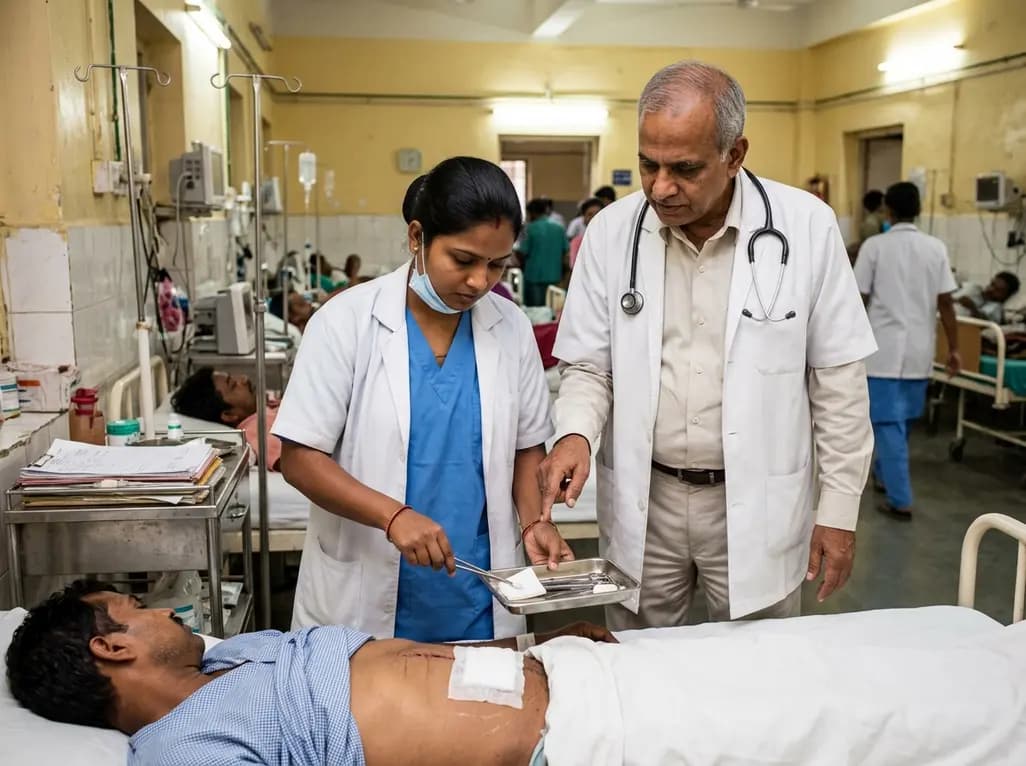
Developing effective surgical wound care practices remains a cornerstone of postoperative recovery, yet implementation often faces significant hurdles in low- and middle-income countries (LMICs). A recent observational study conducted in a 3000-bed tertiary care hospital in Sri Lanka shed light on the realities of nursing care in these environments. By observing 63 registered nurses across 13 general surgical wards, researchers identified substantial variations in how wounds are managed. These findings are particularly relevant for healthcare professionals in India, where similar resource constraints and high patient volumes often dictate clinical workflows. Consequently, understanding the specific areas where adherence to clinical practice guidelines (CPGs) falters is essential for improving patient outcomes. The study utilized both direct observation and chart audits to provide a comprehensive view of daily nursing routines. Furthermore, field notes helped contextualize the quantitative data, highlighting how environmental factors influence professional behavior. While nurses aim to provide the best possible care, systemic limitations frequently lead to unwarranted variations. Therefore, identifying these gaps is the first step toward creating sustainable, context-sensitive interventions that can bridge the divide between ideal evidence-based practice and real-world clinical application.
Hand hygiene (HH) is arguably the most effective measure to prevent healthcare-associated infections, yet compliance in surgical settings is often suboptimal. In the Sri Lankan study, nurses demonstrated a hand hygiene adherence rate of only 58.4% before performing dressing changes. Alarmingly, this figure dropped even further to 43.2% after the procedure was completed. These statistics reflect a significant risk for cross-contamination between patients in high-traffic surgical wards. Similarly, research in Indian tertiary hospitals has shown that while knowledge of the WHO \"Five Moments\" for hand hygiene is generally high, practical application is often hindered by workload and accessibility to supplies. For instance, if a sink is located far from the patient\'s bedside, a busy nurse might prioritize the technical task over the hygiene step. Additionally, the reliance on gloves as a perceived substitute for handwashing remains a common misconception that compromises safety. To address these issues, hospitals must ensure that alcohol-based hand rubs are available at the point of care. Moreover, regular audits and feedback loops can help reinforce the necessity of both pre- and post-procedure hygiene to protect both the patient and the healthcare provider from infectious agents.
One of the most striking findings from the observational data was the complete absence of standardized wound assessment and management protocols. Without a clear framework to guide their surgical wound care practices, nurses often rely on individual experience or informal ward traditions. This lack of standardization inevitably leads to inconsistent care quality. Field notes from the study highlighted that resource constraints, such as a shortage of specialized dressings or sterile supplies, forced nurses to improvise. When essential materials are unavailable, even the most diligent professional may find it impossible to adhere to international clinical practice guidelines. This situation is mirrored in many public hospitals across India, where the sheer volume of postoperative cases can overwhelm existing supplies. Consequently, there is an urgent need for the development of context-sensitive protocols that acknowledge these limitations while still prioritizing evidence-based principles. By providing clear, simplified instructions tailored to available resources, healthcare administrators can reduce unnecessary variations in care. Furthermore, implementing a multidisciplinary approach involving surgeons, nurses, and infection control teams can foster a more cohesive environment for wound management.
Effective communication through documentation and patient education is vital for long-term surgical success, yet these areas are frequently neglected. The study revealed that wound care episodes were documented in only 21.2% of the cases observed. Without accurate records of wound status, exudate levels, or signs of infection, subsequent shifts cannot monitor progress or detect early complications. This gap in the medical record poses a significant risk to patient safety, especially during transitions of care. Equally concerning was the finding that patient education occurred in only 22% of wound care episodes. Empowering patients with knowledge about their own recovery is a crucial component of modern surgical care. Specifically, patients need to understand how to recognize signs of surgical site infection (SSI) and how to maintain hygiene at home. However, in an environment where nurses are managing a high number of patients with limited time, education is often the first task to be omitted. To improve this, healthcare facilities could introduce standardized patient information leaflets or utilize digital tools to supplement verbal instructions. Enhancing these educational efforts can lead to higher patient satisfaction and reduced readmission rates.
The findings from this study offer valuable insights that are highly applicable to the Indian healthcare landscape. In many Indian tertiary centers, nursing staff face similar challenges, including high patient-to-nurse ratios and varying levels of access to advanced wound care technology. Research conducted in India suggests that structured training programs can significantly improve hand hygiene and dressing techniques. For example, a recent quasi-experimental study in an Indian multispecialty hospital showed that targeted training increased hand hygiene compliance from roughly 39% to 57%. This demonstrates that while systemic barriers exist, educational interventions can still drive meaningful change in professional behavior. Nonetheless, education alone is not a panacea; it must be supported by institutional commitment to providing necessary resources. Indian hospitals should focus on establishing local wound care committees tasked with creating and implementing standardized protocols. These protocols should be reviewed regularly to ensure they remain aligned with current best practices while staying feasible for the specific setting. By focusing on both behavioral change and structural support, hospitals can create a safer environment for surgical patients across the country.
Moving forward, the goal for resource-limited hospitals should be the integration of evidence-based surgical wound care practices into daily workflows through sustainable strategies. One effective approach is the introduction of \"wound care champions\"—nurses who receive advanced training and act as mentors for their peers. This peer-to-peer learning model can be more effective than occasional large-scale seminars, as it provides real-time guidance during actual clinical encounters. Additionally, hospitals should prioritize the procurement of basic but high-quality essentials, such as sterile saline and appropriate antiseptic solutions, over expensive niche products that may not be sustainable. Simplifying the documentation process through checklists or electronic health records can also encourage better record-keeping. Finally, fostering a culture of safety where hand hygiene and patient education are viewed as non-negotiable components of care is essential. By addressing the multifactorial barriers identified in the Sri Lankan study—ranging from staffing levels to protocol availability—healthcare systems can significantly reduce the incidence of postoperative complications. Ultimately, small, consistent improvements in nursing practice can lead to substantial gains in overall surgical outcomes and patient well-being.
Lower compliance after procedures often stems from a psychological shift where the nurse perceives the risk to the current patient has ended. Once the technical task is complete, the immediate focus frequently shifts to the next patient or task, leading to the omission of the final hygiene step. In busy wards, this \"task-switching\" pressure is a major barrier. Strengthening the understanding that post-procedure hygiene protects the environment and subsequent patients is critical for improvement.
Standardized protocols provide a clear, evidence-based roadmap that reduces decision fatigue and minimizes unwarranted variations in care. In settings where resources are scarce, these protocols can be specifically designed to maximize the utility of available supplies while maintaining safety standards. By defining exactly which steps are mandatory, they ensure that even under pressure, nurses can deliver consistent, high-quality care that aligns with international best practices for surgical wound management.
Comprehensive documentation allows for the longitudinal tracking of wound healing and the early detection of complications like surgical site infections. It serves as a vital communication tool between different shifts and multidisciplinary team members, ensuring that every professional involved in the patient\'s care is informed about the wound\'s progress. Without these records, it is impossible to conduct meaningful clinical audits or implement targeted quality improvement initiatives to enhance surgical outcomes over time.
Disclaimer: This content is for informational and educational purposes only and does not constitute professional medical advice, diagnosis, or treatment. Always seek the advice of your physician or other qualified health provider with any questions you may have regarding a medical condition. Refer to the latest local and national guidelines for clinical practice.
References
Gamage GP et al. Surgical Wound Care Practices of Nurses in a Low-Resourced Setting: An Observational Study. J Clin Nurs. 2026 Jul 12. doi: 10.1111/jocn.70445. PMID: 42437459.
Amin A et al. Impact of Training on Hand Hygiene Practices Among Healthcare Workers: A WHO Five Moments Approach. Int J Med Public Health. 2025;15(4):431-438. doi: 10.71145/rjsp.v3i4.431.
World Health Organization. WHO Guidelines on Hand Hygiene in Health Care: First Global Patient Safety Challenge Clean Care is Safer Care. Geneva: World Health Organization; 2009.
"
Read summarized clinical updates, watch expert medical content, and earn CME certifications right from your smartphone.
Open your smartphone camera to scan and install.





An observational study in a Sri Lankan tertiary care hospital reveals significant gaps in surgical wound care practices among nurses, emphasizing the need for standardized protocols and targeted training in resource-limited healthcare environments, similar to challenges faced in Indian hospitals.
3 months ago

As monsoon seasons elevate arboviral disease threats, Tamil Nadu has initiated an ICMR-monitored evaluation of the tetravalent dengue vaccine in Tenkasi district. Clinicians emphasize clinical monitoring, public prevention, and high-quality early pediatric care to reduce disease morbidity across endemic regions.
Today

A comparative cohort study evaluates vNOTES vs TLH hysterectomy for benign conditions, demonstrating shorter operative duration, faster return to daily activities, and equivalent female sexual function scores without increased dyspareunia.
Today

Review how tailored exercise programs benefit frail older patients with heart failure. Explore pathophysiological mechanisms, individualized training prescriptions, and strategies to overcome adherence barriers in clinical practice.
Today

This comparative study evaluates posterior labral tears with and without glenohumeral instability, highlighting distinct demographic patterns, MRI underestimation in stable shoulders, and successful arthroscopic repair outcomes.
Today

A clinical study demonstrates that early intervention with tocilizumab, either as monotherapy or bridged with corticosteroids, achieves significant proptosis reduction and resolves active inflammation in treatment-naive thyroid eye disease.
Today
