.webp&w=384&q=75)

Loading, please wait...
Loading, please wait...

People who use opioids face a heavy burden of psychiatric comorbidities and elevated mortality risks. While harm reduction initiatives have traditionally focused on overdose reversal and infection control, addressing suicidal ideation in opioid use has emerged as an urgent priority for modern addiction medicine. Syringe services programs serve as indispensable, low-threshold contact points for marginalized individuals. However, significant knowledge gaps have persisted regarding the exact prevalence of suicide risk in these settings and the structural barriers preventing clients from receiving timely psychiatric interventions.
Substance use disorders and mood pathology frequently intersect, creating complex clinical presentations that worsen patient outcomes. Consequently, clinicians must recognize that suicidal ideation in opioid use stems from biological, psychological, and social stressors. Chronic opioid exposure disrupts reward circuits and neuroendocrine stress pathways, which often exacerbates underlying affective disturbances. Furthermore, chronic psychosocial stressors, including social isolation, housing instability, and criminalization, magnify feelings of hopelessness among individuals who inject drugs.
Harm reduction centers frequently engage people who remain disconnected from traditional healthcare systems. Because these community venues build trusting relationships with participants, they represent a vital setting for identifying early psychiatric distress. Therefore, expanding clinical paradigms beyond infection prevention to include comprehensive behavioral assessments remains essential. Clinicians must actively evaluate both passive death wishes and active suicidal thoughts when managing substance use disorders. Recognizing early psychiatric warning signs allows healthcare teams to deliver compassionate, life-saving interventions before fatal self-harm occurs.
Recent cross-sectional data from a study conducted in New Haven, Connecticut, evaluated 199 individuals utilizing a community syringe services program. Notably, 84% of the participants met diagnostic criteria for opioid dependence, and nearly 72% were currently receiving medication for opioid use disorder. Despite substantial engagement with addiction pharmacotherapy, more than one-third of the sample reported experiencing suicidal ideation within the preceding two weeks, assessed via standardized screening tools.
In addition, over 36% of participants reported having unmet mental health needs in the preceding six months. Alarmingly, 84.4% experienced at least one major barrier when attempting to access professional psychiatric care. These findings demonstrate that receiving addiction medication alone does not automatically resolve underlying psychological distress. Thus, harm reduction programs must actively integrate dedicated mental health resources alongside opioid agonist treatment. Without direct behavioral health support, vulnerable clients remain at severe risk for self-harm and ongoing psychiatric morbidity.
Multivariable regression analyses from the investigation revealed distinct clinical determinants of suicidal risk. Specifically, individuals presenting with concurrent depressive symptoms demonstrated more than a fivefold increase in the likelihood of reporting suicidal ideation. This substantial association underscores the critical need for routine mood disorder screening among all harm reduction clients. Depression frequently amplifies drug craving, impairs treatment adherence, and elevates self-harm risk across vulnerable populations.
Conversely, the study identified a significant protective factor: participants who possessed awareness and knowledge of naloxone had an 80% reduction in the odds of experiencing suicidal ideation. Naloxone education often empowers individuals, enhances self-efficacy, and fosters community connectedness through overdose response training. Therefore, harm reduction education may confer psychological benefits that extend well beyond physiological overdose reversal. Promoting naloxone distribution and community empowerment directly strengthens individual resilience and reduces psychological distress.
Although participants expressed a clear demand for psychological support, systemic obstacles severely restricted service utilization. The vast majority of surveyed clients reported significant logistical and financial hurdles. Prohibitive out-of-pocket costs, lack of comprehensive insurance coverage, and inadequate public transit infrastructure represent pervasive impediments to consistent outpatient care. Consequently, many individuals delay seeking treatment until acute crises develop.
Furthermore, pervasive social stigma surrounding injection drug use continues to discourage patients from accessing conventional psychiatric clinics. Many individuals anticipate discriminatory treatment or punitive measures from healthcare providers, which fosters deep mistrust of medical institutions. Therefore, healthcare systems must dismantle these barriers by offering low-threshold, non-judgmental services within community-based settings. Implementing mobile behavioral health units, subsidizing transit passes, and adopting flexible walk-in scheduling can dramatically enhance treatment retention and client safety.
These empirical insights strongly argue for integrating brief, standardized suicide risk screening directly into syringe services programs. Because frontline harm reduction staff maintain high levels of trust with clients, they can effectively administer rapid screening instruments like the Patient Health Questionnaire or the Columbia-Suicide Severity Rating Scale. Prompt identification enables immediate crisis de-escalation and warm handoffs to specialized mental health professionals.
Moreover, expanding collocated behavioral health services within existing harm reduction infrastructure provides a seamless pathway to care. When psychiatric consultations, counseling, and peer navigation operate within the same physical space as syringe exchange services, attendance rates increase substantially. Clinicians and harm reduction workers must collaborate closely to ensure continuous, wrap-around support. Ultimately, treating psychiatric conditions in tandem with substance use disorders optimizes long-term recovery and prevents avoidable mortality.
The lessons derived from community harm reduction research carry profound relevance for healthcare providers worldwide, including those practicing in low- and middle-income countries. Across various clinical environments, substance use disorders remain highly stigmatized and under-resourced, leaving co-occurring psychiatric conditions largely unmanaged. Therefore, primary care physicians and mental health practitioners must adopt decentralized, integrated models of care to reach marginalized cohorts.
Task-sharing approaches, where trained community healthcare workers and peer counselors deliver basic psychosocial support, represent a highly scalable solution. Additionally, establishing rapid referral networks between primary health centers and community outreach organizations mitigates transportation and financial burdens for impoverished patients. By integrating mental health screening into existing public health initiatives, healthcare systems can create an inclusive safety net for individuals facing substance use challenges and severe emotional distress.
Recent research indicates that over one-third of syringe services program clients who use opioids experience suicidal ideation within a two-week period. This remarkably high prevalence highlights significant psychiatric distress among this population, underscoring the urgent necessity for regular behavioral health evaluations in harm reduction centers.
Naloxone education equips individuals with life-saving skills, fostering a sense of personal agency, purpose, and community connection. This empowerment, combined with active engagement in harm reduction networks, can mitigate feelings of severe helplessness and isolation, thereby functioning as a meaningful protective factor against suicidal thoughts.
The primary obstacles include high out-of-pocket treatment costs, lack of adequate insurance coverage, and unreliable transportation. Additionally, profound social stigma, fear of discrimination by healthcare workers, and fragmented healthcare infrastructure frequently prevent individuals who use opioids from seeking or maintaining regular psychiatric treatment.
Disclaimer: This content is for informational and educational purposes only. It does not constitute medical advice, diagnosis, or treatment recommendations. Healthcare professionals must exercise their independent clinical judgment. Refer to the latest local and national guidelines for clinical practice.
References

Read summarized clinical updates, watch expert medical content, and earn CME certifications right from your smartphone.
Open your smartphone camera to scan and install.





A cross-sectional study reveals that over one-third of syringe services program clients who use opioids experience suicidal ideation. High rates of unmet psychiatric needs and systemic barriers highlight the urgent necessity for integrated mental health screening and expanded harm reduction services.
last month
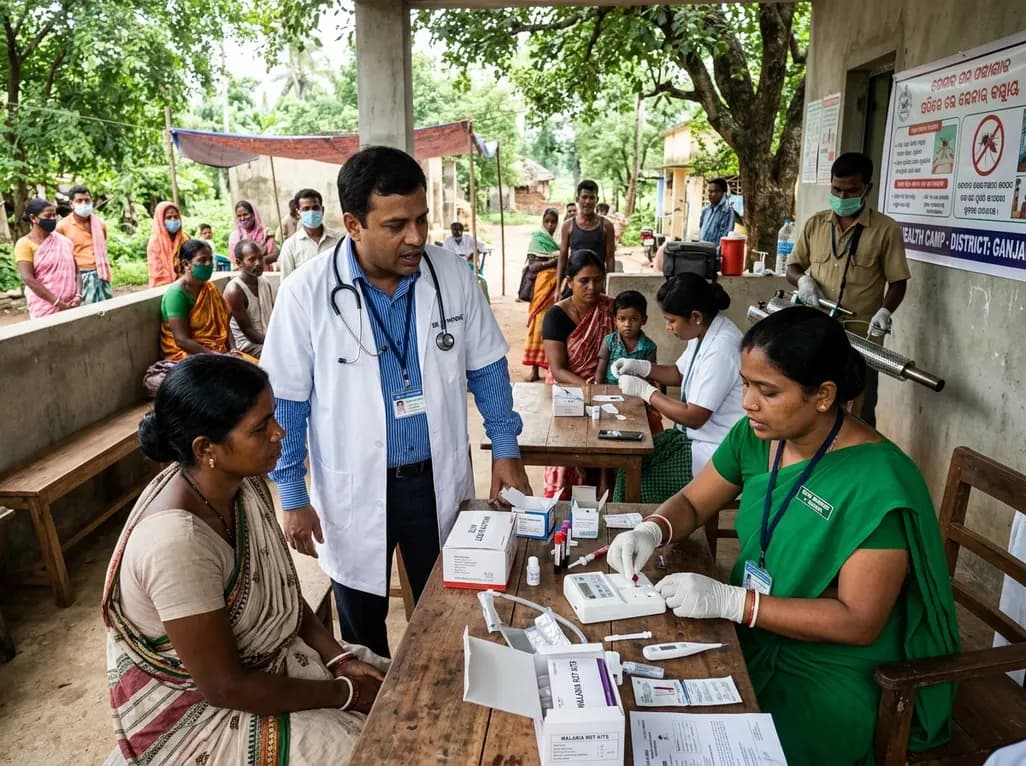
Following 37,899 reported cases and 9 deaths, Odisha has scaled up active case detection, rapid diagnostic testing, and vector control across high-burden districts. Here is a comprehensive clinical breakdown of the state's aggressive containment protocols, diagnostic pathways, and targeted field management.
Today

Endometriosis affects millions of women across India, yet diagnostic delays frequently exceed five years. Recent multi-centre genomic research has identified 21 novel genetic regions, notably on chromosome 13, establishing crucial population-specific insights to transform clinical screening and therapeutic strategies.
Today
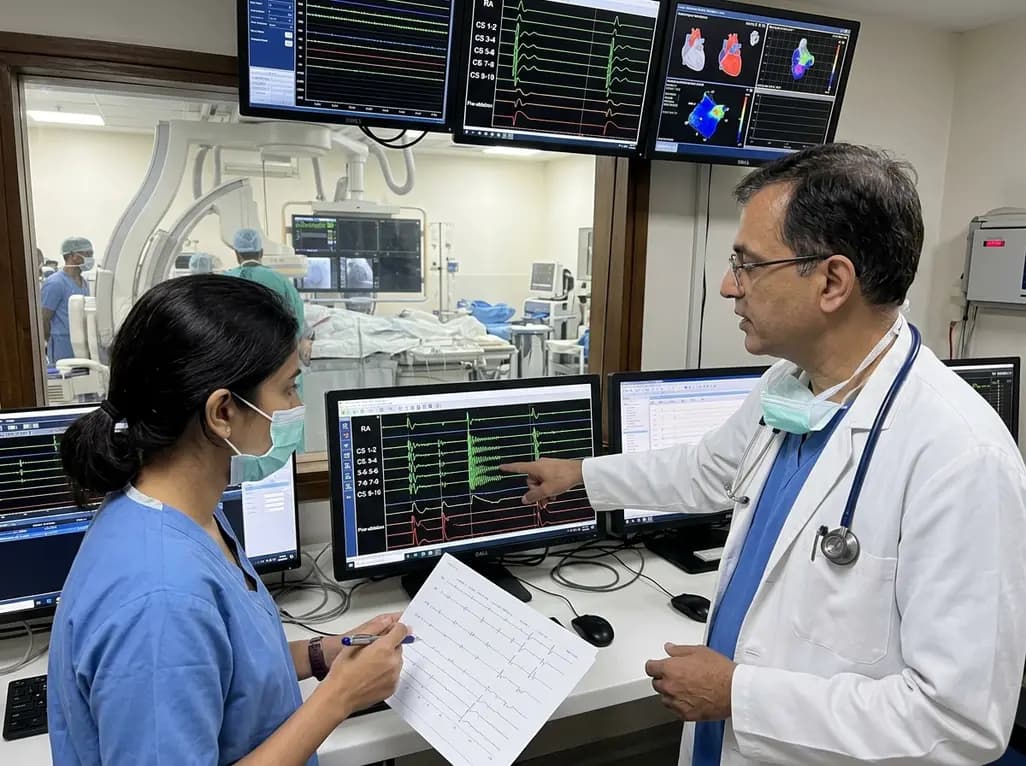
Radiofrequency catheter ablation of the cavotricuspid isthmus successfully terminates typical atrial flutter. This article reviews the mechanisms driving coronary sinus electrogram changes, wavefront activation pathways, and clinical criteria to verify bidirectional block during electrophysiology studies.
Today

A study comparing four knee flexion strength tests after ACL reconstruction using hamstring tendon autografts reveals marked variability in limb symmetry indices. Clinicians must recognize that different strength testing modalities yield divergent return-to-sport clearance rates.
Today

Discover how to identify superimposed entrapment neuropathy in diabetic patients. This review details clinical evaluation, surgical decompression evidence, and a structured algorithm for primary care referrals to prevent ulcers and preserve limb function.
Yesterday
