.webp&w=384&q=75)

Loading, please wait...
Loading, please wait...

Subxiphoid uniportal VATS (SUVATS) is rapidly changing how clinicians manage blunt thoracic trauma. While surgeons historically relied on median sternotomy for mediastinal hematomas, this minimally invasive technique offers a superior alternative. Recently, a case report highlighted how SUVATS successfully treated extrapericardial tamponade in a 65-year-old patient.
The patient sustained a sternal fracture and a retrosternal hematoma after a 4-meter fall. Although he appeared stable initially, his hemodynamic status eventually deteriorated. Consequently, an echocardiogram revealed right ventricular compression. This finding confirmed the presence of extrapericardial tamponade. Therefore, the medical team chose SUVATS for urgent surgical intervention.
Using subxiphoid uniportal VATS provides several distinct advantages for trauma patients. First, the technique allows for excellent exposure of the anterior mediastinal space. Moreover, it assists in complex procedures like sternal fixation. Second, because the incision is subxiphoid, it completely avoids the intercostal nerves. As a result, patients experience significantly less postoperative pain. Furthermore, this approach reduces the risk of respiratory complications.
Additionally, the surgical team successfully evacuated the hematoma and achieved hemostasis. Specifically, the team extubated the patient on the same day of the surgery. He subsequently left the hospital without any complications. In conclusion, SUVATS is a safe and effective option for selected trauma cases. It provides a less invasive path to recovery for patients who do not have major vascular injuries.
Extrapericardial tamponade occurs when a hematoma outside the pericardial sac, often in the anterior mediastinum, compresses the heart and impairs its function.
Unlike a median sternotomy, SUVATS is minimally invasive, avoids intercostal nerve damage, reduces postoperative pain, and speeds up patient recovery.
SUVATS is suitable for selected cases where there is no major vascular injury, providing effective hematoma evacuation and excellent visualization.
Disclaimer: This content is for informational and educational purposes only. It does not constitute professional medical advice, diagnosis, or treatment. Always seek the advice of your physician or other qualified health provider with any questions you may have regarding a medical condition. Never disregard professional medical advice or delay in seeking it because of something you have read here. Refer to the latest local and national guidelines for clinical practice.
References
Lee N et al. Extrapericardial tamponade following blunt chest trauma treated with subxiphoid uniportal video-assisted thoracoscopic surgery: a case report. J Cardiothorac Surg. 2026 Feb 06. doi: 10.1186/s13019-026-03871-x. PMID: 41652439.
Yang X, Wang L, Zhang C, et al. The Feasibility and Advantages of Subxiphoid Uniportal Video-Assisted Thoracoscopic Surgery in Pulmonary Lobectomy. World J Surg. 2019;43(8):2011-2019.
Serna-Gallegos D, Enriquez C, McKenna RJ Jr. Subxiphoid uniportal VATS: technical nuances and future directions. J Vis Surg. 2017;3:163.

Read summarized clinical updates, watch expert medical content, and earn CME certifications right from your smartphone.
Open your smartphone camera to scan and install.





A case report explores the use of subxiphoid uniportal VATS (SUVATS) to treat life-threatening extrapericardial tamponade after blunt chest trauma....
8 months ago

An observational study from the NIH All of Us Research Program reveals that adding a multi-ancestry polygenic risk score to machine learning models provides only modest improvements in predicting adult weight gain, underscoring the enduring significance of routine clinical and lifestyle factors.
Today

A study in JAMIA Open shows lightweight open-source reasoning LLMs achieve up to 95% sensitivity and accelerate evidence synthesis screening by nearly twentyfold, presenting a cost-effective, scalable AI solution for biomedical research and systematic reviews.
Today
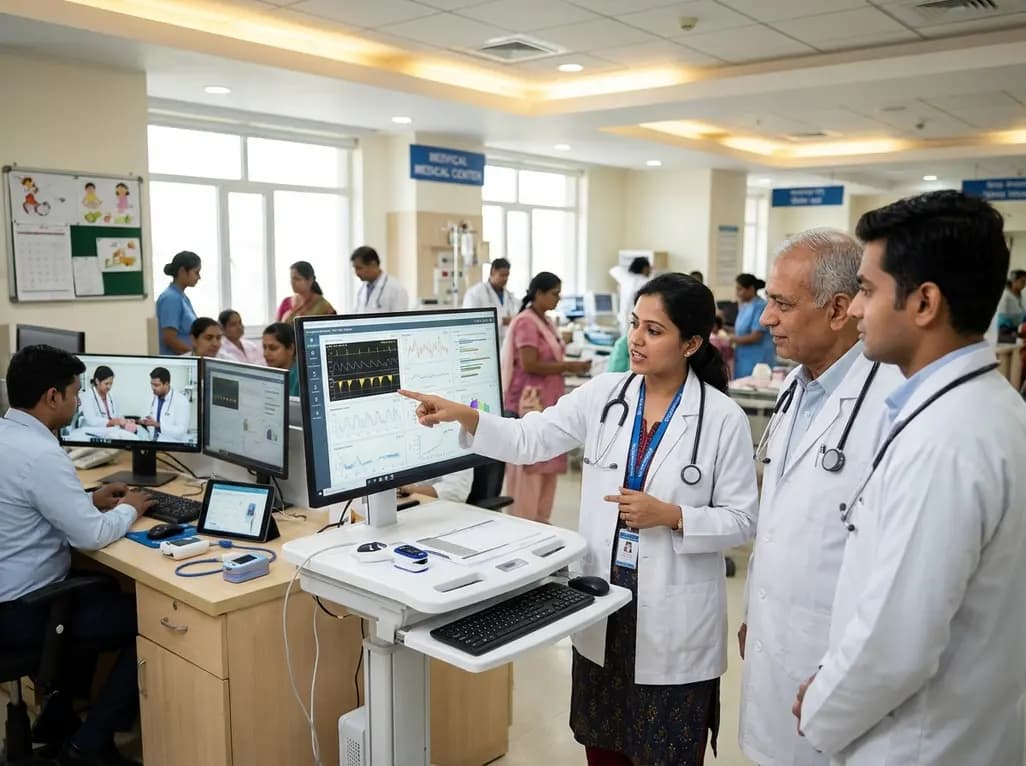
A landmark study details how an enterprise pediatric remote patient management model expanded from a single cardiology pilot to 16 diverse specialty programs by combining centralized digital operations with specialty clinical leadership.
Today
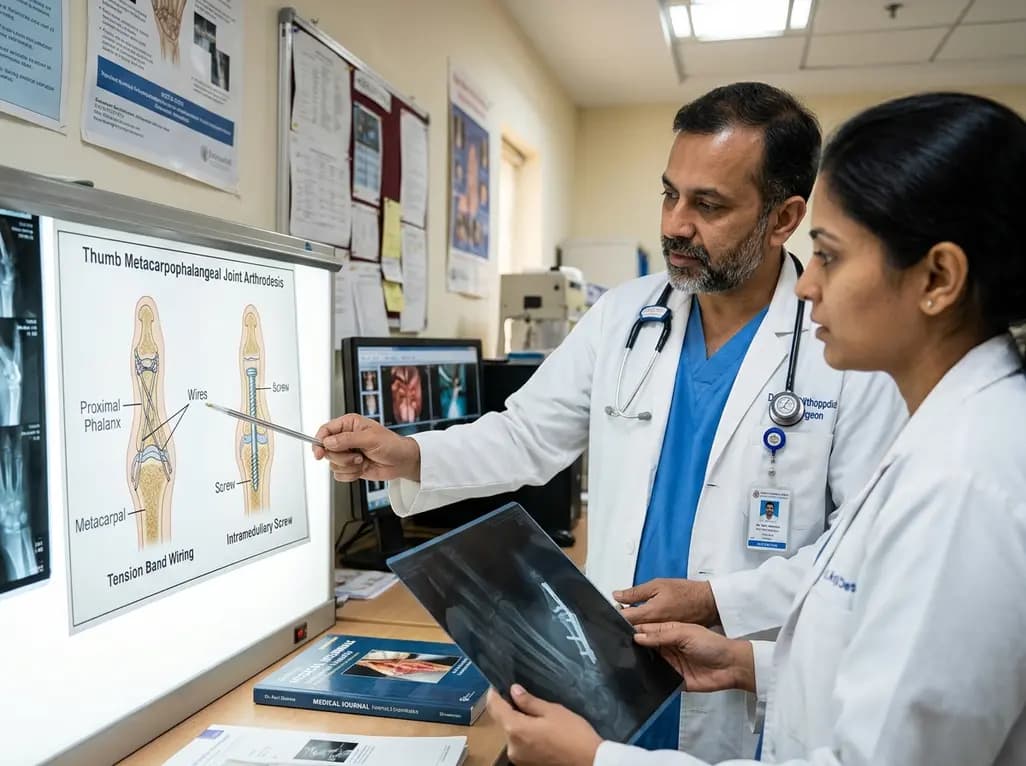
A comparative review of tension band wiring and intramedullary screw fixation in thumb metacarpophalangeal arthrodesis, evaluating union rates, hardware complications, and clinical outcomes.
Yesterday
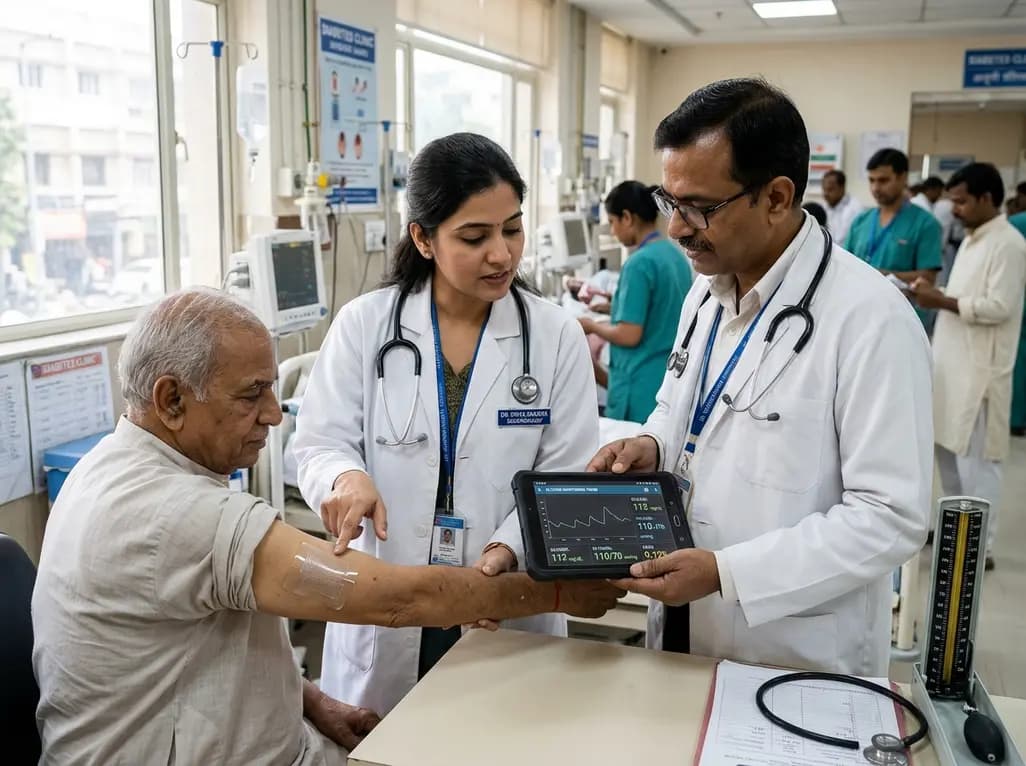
A breakthrough ultrathin multimodal sensor decouples physical hemodynamic monitoring from disposable electrochemical calibration, achieving long-term wearable glucose prediction with 81.36% accuracy and a 9.12% MARD. This offers a robust, drift-free solution for outpatient metabolic surveillance.
Yesterday
