.webp&w=384&q=75)

Loading, please wait...
Loading, please wait...

Investigating substance use patterns among young adults remains a critical public health priority for clinicians. Students attending 2-year colleges often face different socio-economic pressures and demographic realities compared to those in traditional 4-year institutions. Consequently, researchers recently used latent class analysis to categorize these students based on their specific consumption behaviors. This approach helps medical professionals identify those at the highest risk for negative health and social outcomes.
The study analyzed 234 young adults who reported recent elevated consumption of alcohol or cannabis. By examining these behaviors, researchers identified four distinct classes of users. These classes represent varying levels of risk and behavioral complexity. Specifically, 27% of students belonged to the alcohol-only group, while 13% used cannabis exclusively. More concerningly, a significant portion engaged in simultaneous use, which frequently leads to more severe consequences than using either substance alone.
Furthermore, demographic factors play a pivotal role in determining class membership. Male students and younger individuals often fall into higher-risk categories. Additionally, students who do not live with their parents show a greater tendency toward frequent substance use. Most importantly, parental approval of cannabis emerged as a major predictor for belonging to the highest-risk group. This finding underscores the lasting impact of family norms even after students enter higher education.
For healthcare providers in India, these insights are particularly valuable. Substance use among urban Indian youth is evolving, and targeted prevention strategies must address these heterogeneous patterns. Clinicians should prioritize screening for simultaneous use during routine adolescent and young adult check-ups. Moreover, involving parents in the prevention dialogue can significantly mitigate risks. By understanding these specific risk profiles, doctors can better tailor their counseling and intervention efforts for this underserved population.
The highest-risk group involves students who use alcohol and cannabis simultaneously. These individuals typically experience more severe negative health and social consequences compared to those who limit themselves to a single substance. Identifying these simultaneous users early is crucial for preventing long-term dependency.
Parental approval and monitoring significantly influence a student’s behavior. Higher parental approval of substances, especially cannabis, strongly correlates with a student joining high-risk usage groups. Conversely, clear parental disapproval and active monitoring often serve as robust protective factors.
Disclaimer: This content is for informational and educational purposes only. It is not intended as a substitute for professional medical advice, diagnosis, or treatment. Always seek the advice of your physician or other qualified health provider with any questions you may have regarding a medical condition. Refer to the latest local and national guidelines for clinical practice.
References
1. Duckworth JC et al. Exploring substance use patterns among 2-year college students: a latent class approach to identifying high-risk groups. J Am Coll Health. 2026 Jun 10. doi: 10.1080/07448481.2026.2680125. PMID: 42268653.
2. International Institute for Population Sciences (IIPS). National Family Health Survey (NFHS-5), India, 2019-21. Mumbai: IIPS.
3. Ministry of Social Justice and Empowerment. Magnitude of Substance Use in India. New Delhi: Government of India; 2019.
"
Read summarized clinical updates, watch expert medical content, and earn CME certifications right from your smartphone.
Open your smartphone camera to scan and install.





A recent study identifies four unique substance use patterns among 2-year college students, ranging from alcohol-only to high-consequence simultaneous use. Results suggest that male gender and parental approval of cannabis are major risk factors, highlighting the need for family-based prevention strategies.
4 months ago
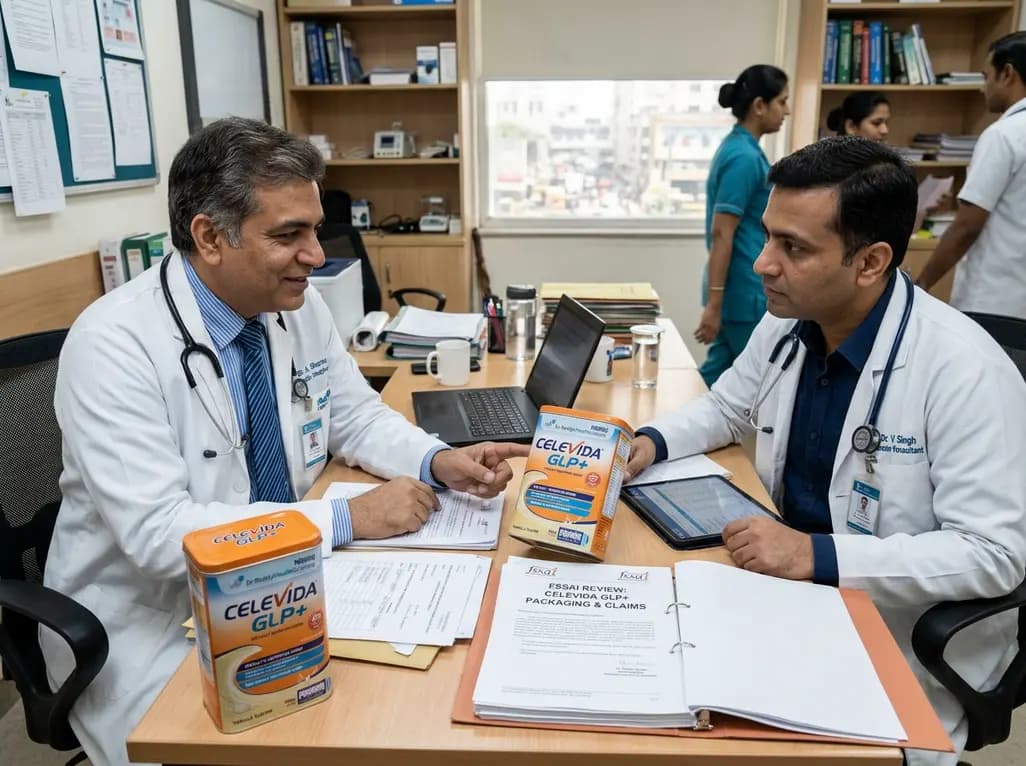
Following regulatory scrutiny from FSSAI regarding promotional representations and lean muscle preservation claims, Dr. Reddy's Laboratories and Nestlé Health Science are currently reviewing the branding and marketing strategy for their joint nutritional supplement Celevida GLP+.
Today

A comprehensive scoping review synthesises evidence linking prenatal maternal mental health to long-term offspring neurodevelopment, evaluating neuroendocrine, inflammatory, and epigenetic pathways while highlighting clinical screening and future research priorities.
Today

The Directorate General of Health Services directs Indian states to halt the hazardous reuse and reprocessing of single-use medical devices. Discover regulatory implications under the Drugs and Cosmetics Act, critical infection risks, legal liabilities, and operational changes required across clinical specialties.
Today

A 25-year multi-institutional cohort reveals high recurrence rates in pediatric giant cell tumor of bone, particularly in patients with open physes and bone marrow edema on preoperative MRI. Early surveillance and careful balance between growth plate preservation and tumor clearance are essential.
Today

India is advancing preventive healthcare by integrating genomics, artificial intelligence, and quantum technologies. With the SANGAM programme sequencing one million Indian genomes, clinicians can unlock personalized therapies, detect cardiometabolic risks early, and curb the burden of diabetes and heart disease.
Today
