.webp&w=384&q=75)

Loading, please wait...
Loading, please wait...
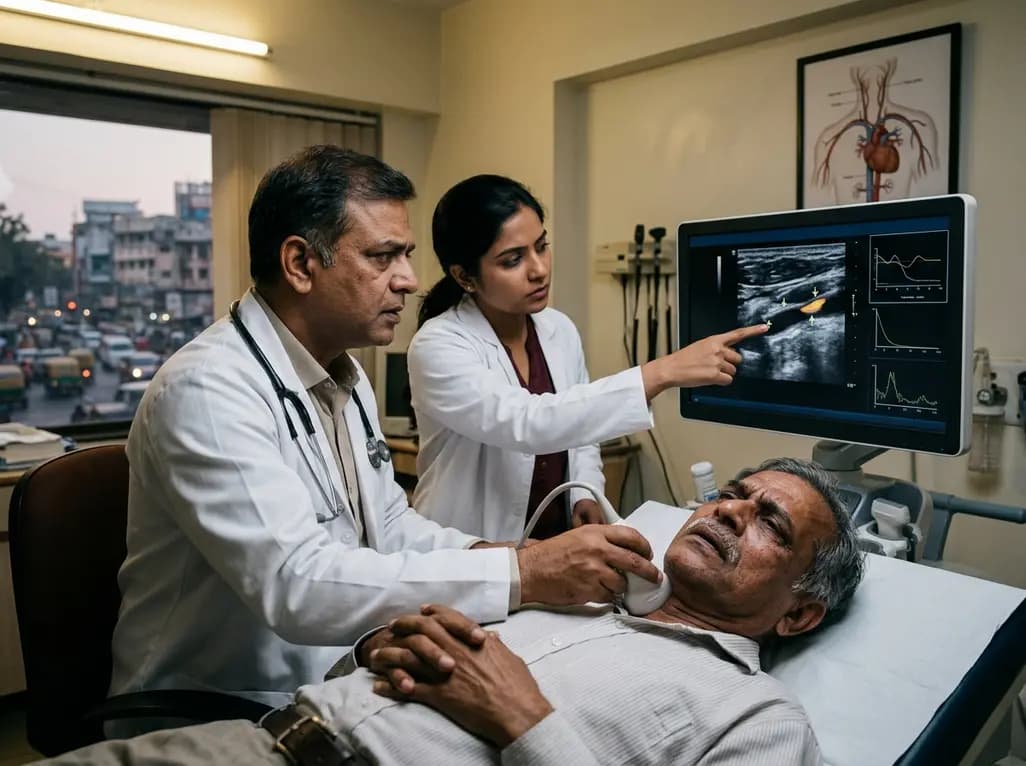
The relationship between stress and cardiovascular disease has long been recognized, yet the precise mechanisms of risk transmission remain elusive. Specifically, modern medical research focuses on how environmental contexts trigger persistent physiological activation. A recent two-year longitudinal study investigated this link by testing the "vigilance pathway" in two contemporary theories: the Generalized Unsafety Theory of Stress (GUTS) and Social Safety Theory. These models suggest that chronic stress arises when an environment lacks safety signals, keeping the body’s default stress response active. Consequently, this study provides a unique test of how situational vigilance predicts preclinical cardiovascular progression.
To examine these theories, researchers followed a diverse community sample of 300 adults. Initially, they geo-coded residential data to assess exposure to high-crime rates as a marker of environmental unsafety. Additionally, the team employed ecological momentary assessment (EMA) to track real-time situational vigilance during daily activities. Furthermore, carotid artery scans were performed at the beginning and end of the study to measure disease progression. As a result, the findings showed that individuals living in higher-crime areas reported significantly more situational vigilance. Therefore, the data suggests that environmental conditions directly shape a person's psychological state and physiological readiness.
Notably, the study found that situational vigilance served as a critical mediator for heart health. This persistent state of "being on guard" predicted a significant progression in carotid artery disease over the two-year follow-up period. Moreover, these results support the Generalized Unsafety Theory of Stress by demonstrating how chronic vigilance damages the vascular system. Because of this, clinicians must look beyond traditional risk factors to understand the holistic impact of stress and cardiovascular disease. Ultimately, addressing a patient’s sense of environmental and social safety may be just as vital as managing their blood pressure or cholesterol. Similarly, recognizing vigilance as a maladaptive response to unsafe contexts can help in developing targeted behavioral interventions.
Environmental unsafety, such as high neighborhood crime, forces the brain into a state of constant vigilance. This persistent psychological strain keeps the body's stress response active, which can accelerate the development of atherosclerosis and other cardiovascular issues.
The vigilance pathway refers to the psychological process where individuals remain alert for potential threats. This study suggests that chronic situational vigilance acts as the bridge between living in an unsafe environment and the physical progression of carotid artery disease.
Yes, clinicians can assess this risk by asking patients about their perceived safety in their daily environments. Identifying chronic hyper-vigilance can help doctors understand why some patients experience rapid disease progression despite standard clinical management.
Disclaimer: This content is for informational and educational purposes only. It does not constitute medical advice or establish a doctor-patient relationship. Refer to the latest local and national guidelines for clinical practice.
References
O'Neill RM et al. Stress and cardiovascular disease: Testing a vigilance pathway in two contemporary theories. Health Psychol. 2026 Jun 08. doi: 10.1037/hea0001615. PMID: 42258290.
Brosschot JF, Verkuil B, Thayer JF. Generalized Unsafety Theory of Stress: Unsafe Environments and Conditions, and the Default Stress Response. Int J Environ Res Public Health. 2018;15(3):464.
Slavich GM. Social Safety Theory: A Biologically Based Evolutionary Perspective on Life Stress, Health, and Behavior. Annu Rev Clin Psychol. 2020;16:43-95.

Read summarized clinical updates, watch expert medical content, and earn CME certifications right from your smartphone.
Open your smartphone camera to scan and install.





A 2-year study reveals how environmental unsafety and situational vigilance accelerate carotid artery disease, confirming new theories on stress and CVD....
4 months ago
Following Nigeria's first recorded Ebola case linked to regional travel, the Africa CDC has convened an emergency ministerial summit. This alert underscores critical clinical priorities for healthcare professionals, including differentiating early viral infection from malaria, implementing barrier nursing, and triage.
Today

Leucine Rich Bio has introduced South Asia's first comprehensive vaginal microbiome test, BugSpeaks. By profiling microbial dysbiosis, pathogens, and antimicrobial resistance, this next-generation diagnostic platform provides clinicians with deeper insights into recurrent infections, fertility, and reproductive health.
Today

Review how tailored exercise programs benefit frail older patients with heart failure. Explore pathophysiological mechanisms, individualized training prescriptions, and strategies to overcome adherence barriers in clinical practice.
Today

This comparative study evaluates posterior labral tears with and without glenohumeral instability, highlighting distinct demographic patterns, MRI underestimation in stable shoulders, and successful arthroscopic repair outcomes.
Today

A clinical study demonstrates that early intervention with tocilizumab, either as monotherapy or bridged with corticosteroids, achieves significant proptosis reduction and resolves active inflammation in treatment-naive thyroid eye disease.
Today
