.webp&w=384&q=75)

Loading, please wait...
Loading, please wait...

Managing brain vascular anomalies requires meticulous planning and tailored neurointerventional strategies. Traditionally, neurosurgeons utilized endovascular techniques primarily as an adjunct to microsurgical resection or stereotactic radiosurgery. However, ongoing innovations in steerable microcatheters, high-resolution biplane digital subtraction angiography, and modern liquid embolic agents have dramatically transformed clinical care. As a result, endovascular specialists increasingly deploy stand-alone bAVM embolization as a definitive, curative intervention in carefully selected patient cohorts across modern neurovascular centers.
Historically, clinicians reserved endovascular therapy to reduce nidal volume before craniotomy or radiosurgical irradiation. Furthermore, incomplete embolization previously left unstable remnants that elevated subsequent hemorrhage risks. Over the past two decades, newer non-adhesive liquid embolic agents, such as ethylene vinyl alcohol copolymer, revolutionized endovascular approaches. These agents provide controlled precipitation and deeper penetration into pathological microvascular networks. Consequently, interventionalists can obliterate the arteriovenous shunt completely rather than settling for partial devascularization. Modern neurointerventionalists now approach these vascular malformations with clear curative intent from the outset. In addition, practitioners employ diverse access trajectories to tackle challenging geometries. While the transarterial route remains the standard approach, transvenous retrograde embolization provides valuable access when arterial feeders prove tortuous or inaccessible. Combined transarterial and transvenous techniques further expand curative possibilities for complex lesions. Therefore, this paradigm shift offers minimally invasive alternatives for patients who cannot undergo open craniotomy. Emerging evidence confirms that definitive embolization effectively prevents future rupture when teams achieve total anatomical obliteration. Thus, endovascular therapy has evolved from a secondary adjunct into a primary therapeutic pillar.
Real-world data from resource-constrained settings provide vital insights into the viability of curative endovascular techniques. A landmark ten-year retrospective cohort study evaluated 184 adult patients treated at a high-volume tertiary neurosurgical center in Lima, Peru. Notably, 64.7 percent of these patients presented acutely with intracranial hemorrhage, illustrating high disease severity. The investigative team observed an overall complete angiographic obliteration rate of 67.4 percent across the entire decade. More importantly, the institutional cure rate demonstrated dramatic chronological progress over the study duration. Between 2014 and 2024, complete obliteration rates escalated from 44.4 percent to an impressive 81.4 percent. This substantial improvement highlights the steep institutional learning curve and the benefit of continuous technical refinement. Furthermore, the adoption of advanced imaging equipment and refined delivery techniques catalyzed this therapeutic success. Proceduralists individualized every treatment plan, utilizing transarterial, transvenous, or combined approaches based on vascular anatomy. Consequently, the team accomplished durable obliteration in a substantial majority of recent cases. These results confirm that experienced multidisciplinary centers in middle-income countries can replicate procedural outcomes typically reported by elite Western healthcare systems. Therefore, structured intervention protocols yield remarkable success despite resource limitations.
Angioarchitecture fundamentally determines the probability of achieving total angiographic cure following neurointerventional treatment. Multivariate logistic regression analysis revealed that smaller nidus size and fewer arterial feeding vessels strongly correlate with procedural success. Specifically, compact lesions measuring under three centimeters allow more uniform penetration of embolic material across the vascular core. In contrast, large diffuse nidi harbor intricate intranidal compartments that frequently resist uniform penetration. Furthermore, an increasing number of arterial feeders independently predicted endovascular treatment failure. When malformations recruit numerous branching arteries, microcatheters struggle to access every distal nidus component safely. Additionally, lesions categorized under lower Spetzler-Martin grades achieved significantly higher rates of permanent anatomical occlusion. In contrast, high-grade lesions often feature deep venous drainage and involvement of eloquent brain parenchymal areas. These challenging anatomical features restrict aggressive liquid embolic reflux, forcing operators to prioritize safety over complete obliteration. Clinicians must therefore perform meticulous baseline digital subtraction angiography to evaluate feeding patterns and drainage pathways. Ultimately, identifying favorable anatomical parameters enables neurosurgeons to select ideal candidates for stand-alone curative management.
Although curative endovascular management provides remarkable benefits, it carries substantial procedural and postoperative hazards. In the Peruvian cohort, intraprocedural complications occurred in 8.7 percent of interventions, predominantly among patients with higher Spetzler-Martin grades. Catheter-induced vessel perforation, unintended arterial dissection, and premature venous occlusion represent catastrophic intraoperative risks. Moreover, postprocedural intracranial hemorrhage emerged as a critical concern, occurring in 15.8 percent of patients. Regression analysis demonstrated that an increasing number of arterial feeders strongly correlated with postoperative bleeding. When interventionists partially occlude complex feeder networks, remaining patent vessels experience sudden surges in perfusion pressure. This dramatic hemodynamic alteration can precipitate hemorrhagic breakthrough within adjacent normal parenchyma or residual malformation tissue. In addition, delayed venous thrombosis may impede outflow before complete nidus thrombectomy occurs. Overall 30-day mortality reached 3.5 percent in this challenging surgical population. Therefore, neurointensive care teams must maintain strict postoperative blood pressure control to mitigate hyperperfusion phenomena. Close neurological monitoring in specialized neurocritical care units ensures rapid detection and surgical intervention if postoperative hematomas develop. Ultimately, rigorous hemodynamic stability safeguards vulnerable cerebral tissue following extensive embolization.
The successful implementation of curative neurointerventional programs in Latin America offers transformative lessons for Indian healthcare infrastructure. Both geographical regions navigate similar socioeconomic landscapes, characterized by variable insurance coverage, centralized specialist hubs, and high clinical volumes. In India, tertiary centers encounter numerous patients presenting with ruptured vascular malformations after prolonged diagnostic delays. Consequently, expanding access to endovascular therapies represents an urgent clinical priority. While surgical craniotomy requires extensive operative infrastructure and prolonged hospital stays, endovascular approaches offer reduced hospitalization times and minimal surgical trauma. However, hospitals must carefully manage the substantial financial costs associated with specialized microcatheters and embolic agents. Health systems should invest in centralized training initiatives to accelerate the neurointerventional learning curve for young specialists. In addition, establishing standardized institutional registries helps monitor patient safety, clinical efficacy, and long-term recurrence rates. As neurointerventionists gain technical mastery, they can strategically select low-risk lesions for definitive embolization, conserving surgical resources for complex reconstructions. Thus, integrating endovascular therapy as a stand-alone modality enhances overall healthcare delivery and expands life-saving neurovascular interventions across developing healthcare ecosystems.
Neurointerventional teams achieve the highest success with lesions presenting compact nidus architecture, superficial location, and limited arterial feeders. In contrast, complex lesions requiring multiple microcatheter trajectories increase procedural risk. Consequently, patients with low Spetzler-Martin grades and non-eloquent nidus locations represent ideal candidates for definitive, curative endovascular obliteration without supplementary interventions.
Multiple arterial feeding vessels significantly complicate endovascular navigation and prolong procedure times. In addition, partial occlusion of complex feeder networks disrupts internal hemodynamics, thereby increasing intranidal pressures within fragile vessels. This hemodynamic alteration dramatically raises the risk of postprocedural intracranial hemorrhage. Therefore, clinicians must carefully anticipate delayed rupture risks during staging sessions.
Resource-limited settings frequently encounter delayed patient presentation, limited access to specialized liquid embolic agents, and financial constraints. However, dedicated neurovascular teams overcome these barriers by refining microcatheter techniques, adopting structured clinical protocols, and optimizing case selection. Consequently, institutional experience progressively bridges the outcome gap between emerging healthcare systems and established high-income neurosurgical facilities.
Disclaimer: This content is for informational and educational purposes only and should not be taken as medical advice. Always consult a qualified healthcare provider for diagnosis and treatment of medical conditions. Refer to the latest local and national guidelines for clinical practice.
References

Read summarized clinical updates, watch expert medical content, and earn CME certifications right from your smartphone.
Open your smartphone camera to scan and install.





A 10-year study of 184 patients in Peru highlights the viability of stand-alone curative embolization for brain arteriovenous malformations, showing cure rates rising to 81.4% with optimal angioarchitectural selection.
Today

Left bundle branch pacing is an emerging physiological resynchronization strategy for heart failure. While observational data and some trials show benefits over biventricular pacing, divergent trial outcomes highlight the importance of confirmed conduction capture and specialized operator technique.
Today

A retrospective study of 86,012 pregnancies demonstrates that size-selective cfDNA enrichment boosts mean fetal fraction to 18.88% and achieves a 59.20% PPV for fetal copy number variants. However, 85.83% of CNVs showed size discrepancies, underscoring the mandatory role of confirmatory microarray testing.
Today
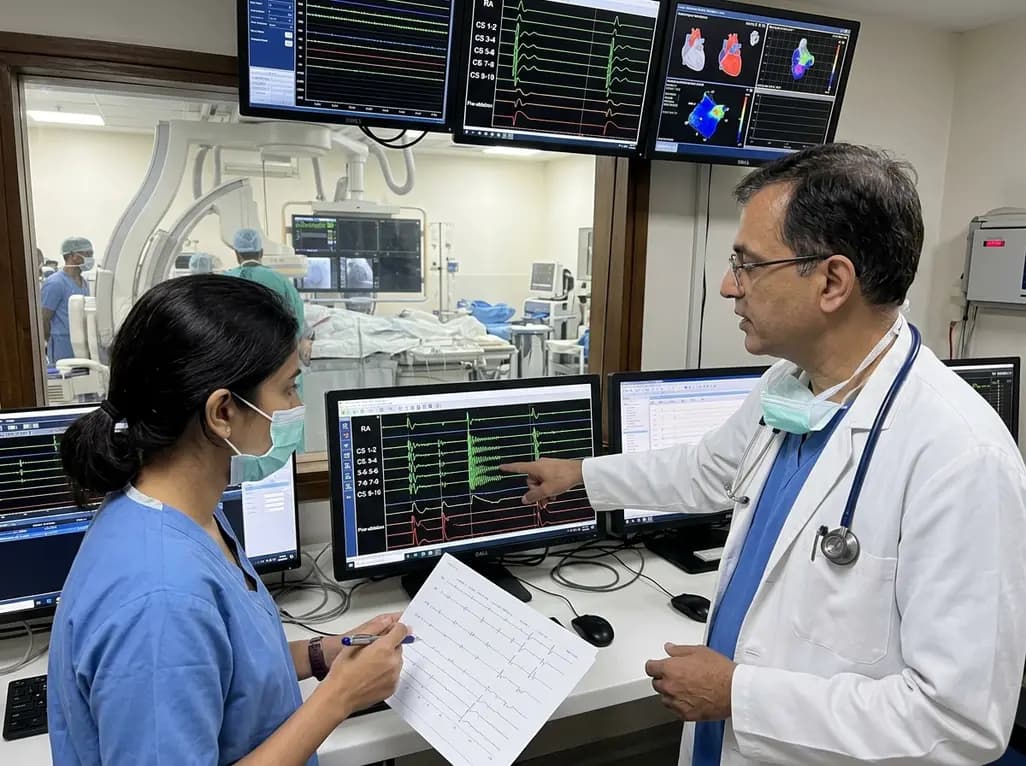
Radiofrequency catheter ablation of the cavotricuspid isthmus successfully terminates typical atrial flutter. This article reviews the mechanisms driving coronary sinus electrogram changes, wavefront activation pathways, and clinical criteria to verify bidirectional block during electrophysiology studies.
Today

A recent investigation examined load-dependent kinetic and kinematic profiles during two-way ballistic exercise across 30% to 80% 1-RM. Findings highlight load effects on velocity, impulse, and power, offering sports physicians objective guidance for neuromuscular conditioning and rehabilitation.
Today

A cross-sectional study demonstrates that increased BMI in adolescents significantly enhances mandibular length and alters salivary adipokines like adiponectin and resistin, providing novel insights into craniofacial growth and orthodontic planning.
Today
