.webp&w=384&q=75)

Loading, please wait...
Loading, please wait...
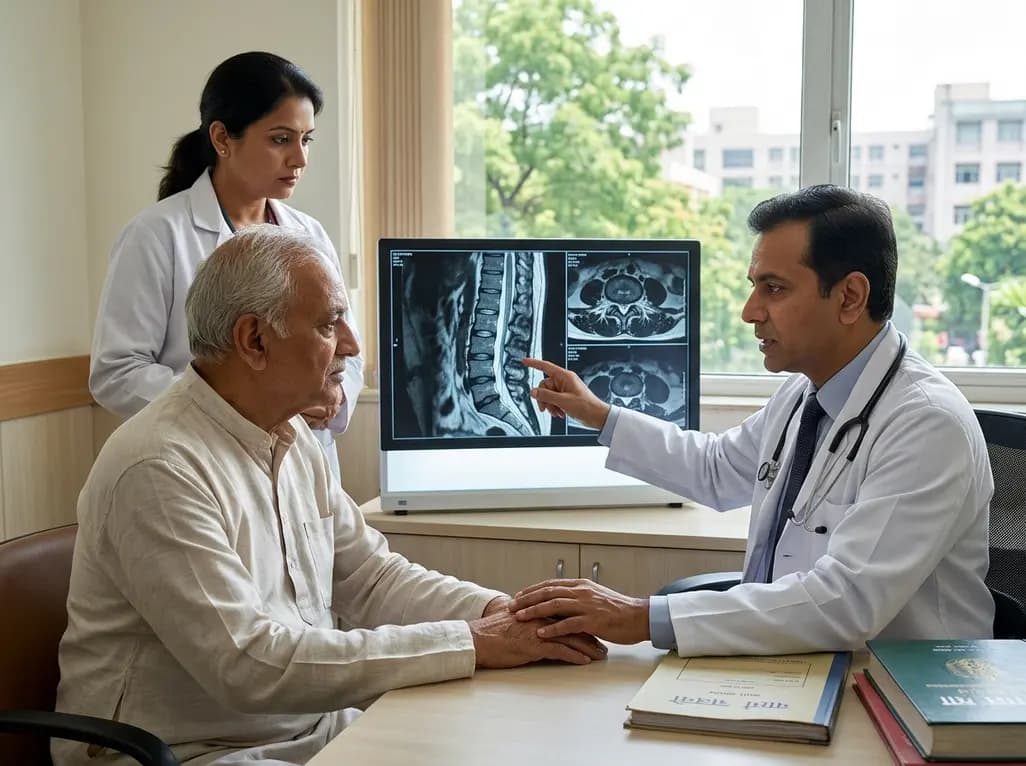
As the global population ages, the prevalence of Parkinson's disease and concomitant degenerative spinal conditions continues to rise. Clinicians increasingly encounter patients who present with both neurodegenerative motor symptoms and significant spinal pathology. Spinal surgery Parkinson's disease management represents a unique clinical challenge because of the complex interplay between neuromuscular stability and bone health. While surgical intervention aims to alleviate pain and restore function, the underlying pathology of Parkinson's disease often complicates the postoperative course. Understanding these risks is vital for spine surgeons and neurologists when counseling patients about elective procedures. Recently, a major meta-analysis sought to clarify the specific risks and clinical outcomes for this patient population, providing a clearer roadmap for evidence-based decision-making in the surgical theater. Furthermore, the findings emphasize that while surgery remains a viable option, the expectations for clinical improvement must be carefully managed.
The recent systematic review and meta-analysis conducted by Osborne-Grinter and colleagues provides striking data regarding the incidence of adverse events. Specifically, the study found that patients with Parkinson's disease have a significantly higher incidence of complications compared to control groups. Data from over 689,000 participants indicated a complication incidence of 0.54 in the Parkinson's cohort, versus only 0.07 in the controls. These complications often include medical issues such as postoperative delirium, urinary tract infections, and pneumonia. Additionally, surgical site infections and wound healing issues appear more frequently in this population. It is important to note that while the incidence of these events is higher, the absolute risk of death following surgery did not differ significantly from the general population. This suggests that while these patients are more likely to experience setbacks, the procedures are not inherently more fatal. However, the increased morbidity necessitates a higher level of perioperative vigilance and potentially longer hospital stays for monitoring and rehabilitation.
One of the most sobering findings of recent research is the significantly elevated rate of revision surgery among those with Parkinson's. The incidence of revision procedures was found to be 0.6 in Parkinson's patients compared to just 0.1 in the control groups. Several factors contribute to this increased need for reoperation. Firstly, the characteristic parkinsonian posture, marked by trunk flexion and a shifted center of gravity, places abnormal mechanical loads on spinal instrumentation. This often leads to hardware failure, such as screw pull-out or rod breakage. Secondly, the high prevalence of osteoporosis in Parkinson's patients further compromises the integrity of surgical fixations. Consequently, proximal junctional kyphosis and adjacent segment disease are frequent occurrences that necessitate further surgical intervention. Surgeons must consider using longer fusion constructs or cement augmentation to mitigate these mechanical risks. Therefore, the decision to operate must account for the high likelihood that a single procedure may not be the final solution for the patient's spinal issues.
Clinical improvement following spinal surgery is the primary goal for most patients, yet those with Parkinson's often see less dramatic gains. The meta-analysis demonstrated a significantly lower incidence of clinical improvement (0.27) compared to controls (0.57). This disparity does not necessarily mean that surgery is ineffective, but rather that the neurodegenerative nature of Parkinson's may mask or limit the functional benefits of spinal decompression. For example, while a laminectomy might successfully resolve radicular pain, the patient may still struggle with gait instability and bradykinesia due to their primary neurological condition. Moreover, the chronic stooped posture associated with Parkinson's can lead to persistent muscle strain even after the spinal canal has been widened. Because of these factors, it is essential for clinicians to set realistic expectations during the preoperative consultation. Patients and their families must understand that surgery addresses specific structural issues but cannot reverse the broader motor deficits of Parkinson's disease.
Given the elevated risks identified, a multidisciplinary approach to spinal surgery Parkinson's disease management is no longer optional but essential. Successful outcomes depend heavily on the optimization of medical management before the patient ever reaches the operating table. This involves close collaboration between the spine surgeon, a neurologist, and often a geriatrician. Neurologists should ensure that dopaminergic therapy is finely tuned to minimize motor fluctuations and dyskinesia, which can interfere with early postoperative mobilization. Furthermore, bone health must be a priority; evaluating and treating osteoporosis preoperatively can significantly reduce the risk of hardware failure. Additionally, anesthesia teams must be prepared to manage the specific risks of postoperative delirium, which is notably common in this demographic. By implementing an individually tailored surgical plan that includes rigorous medical optimization, the healthcare team can potentially lower the incidence of avoidable complications and improve the overall patient experience.
The findings from this meta-analysis highlight a critical need for more prospective research and standardized treatment protocols. Currently, much of the data comes from retrospective studies, which may have inherent biases. Future research should focus on identifying which specific surgical techniques, such as minimally invasive approaches versus open fusions, offer the best risk-benefit ratio for Parkinson's patients. There is also a growing interest in the role of deep brain stimulation (DBS) and its impact on spinal alignment and surgical success. As our understanding of the biomechanics of the "Parkinsonian spine" evolves, we may see the development of specialized hardware designed to withstand the unique stresses of this population. Ultimately, the goal is to move toward a highly personalized model of care. For now, the evidence suggests a cautious approach where surgery is reserved for those who have failed all conservative measures and whose quality of life is severely impacted by their spinal condition. Through careful selection and comprehensive perioperative care, we can continue to offer these complex patients the relief they seek.
The higher revision rates are primarily due to mechanical challenges. The stooped, flexed posture of Parkinson's disease shifts the body's center of gravity, placing excessive stress on surgical hardware. Additionally, underlying osteoporosis in these patients often leads to screw pull-out, rod breakage, or proximal junctional kyphosis, requiring reoperation to stabilize the spine.
No, spinal surgery is intended to treat structural issues like spinal stenosis or disc herniation, not the Parkinson's disease itself. While it can effectively reduce localized pain and improve mobility hindered by nerve compression, it does not address the core symptoms of Parkinson's, such as tremors, bradykinesia, or baseline postural instability.
The priority is multidisciplinary medical optimization. This includes adjusting dopaminergic medications to control motor fluctuations, assessing and treating bone density to prevent hardware failure, and screening for cognitive issues to mitigate the risk of postoperative delirium. A well-coordinated plan between the neurologist, surgeon, and anesthesiologist is essential for reducing complications.
Disclaimer: This content is for informational and educational purposes only and does not constitute medical advice or a professional relationship. Always seek the advice of a qualified healthcare provider regarding any medical condition or treatment. Refer to the latest local and national guidelines for clinical practice.
References
Osborne-Grinter M et al. Understanding the role of surgical intervention for patients with concomitant degenerative spinal disease without deformity and Parkinson's disease: a meta-analysis. Br J Neurosurg. 2025 Dec. doi: 10.1080/02688697.2024.2374581. PMID: 39037021.
Alissa A et al. Outcomes following spinal surgery in patients with Parkinson's disease: a systematic review and meta-analysis. Mesentery and Peritoneum. 2024. doi: 10.21037/map-24-11.
Simms J et al. Guidance for the Management of Adults with Parkinson's disease Undergoing Surgery. NHS Foundation Trust Clinical Guideline. 2022.

Read summarized clinical updates, watch expert medical content, and earn CME certifications right from your smartphone.
Open your smartphone camera to scan and install.





A comprehensive meta-analysis examines the outcomes of spinal surgery in patients with Parkinson's disease, revealing a significantly higher incidence of complications and revision surgeries compared to controls, highlighting the need for multidisciplinary preoperative optimization.
3 months ago

As monsoon seasons elevate arboviral disease threats, Tamil Nadu has initiated an ICMR-monitored evaluation of the tetravalent dengue vaccine in Tenkasi district. Clinicians emphasize clinical monitoring, public prevention, and high-quality early pediatric care to reduce disease morbidity across endemic regions.
Today

Leucine Rich Bio has introduced South Asia's first comprehensive vaginal microbiome test, BugSpeaks. By profiling microbial dysbiosis, pathogens, and antimicrobial resistance, this next-generation diagnostic platform provides clinicians with deeper insights into recurrent infections, fertility, and reproductive health.
Today

Review how tailored exercise programs benefit frail older patients with heart failure. Explore pathophysiological mechanisms, individualized training prescriptions, and strategies to overcome adherence barriers in clinical practice.
Today

This comparative study evaluates posterior labral tears with and without glenohumeral instability, highlighting distinct demographic patterns, MRI underestimation in stable shoulders, and successful arthroscopic repair outcomes.
Today

A clinical study demonstrates that early intervention with tocilizumab, either as monotherapy or bridged with corticosteroids, achieves significant proptosis reduction and resolves active inflammation in treatment-naive thyroid eye disease.
Today
