.webp&w=384&q=75)

Loading, please wait...
Loading, please wait...

Spermatic cord lipomas are common benign adipose lesions that surgeons frequently encounter during inguinal hernia evaluations. Although these tumors are non-cancerous, they often cause significant diagnostic confusion because they perfectly mimic the clinical presentation of a hernia. Consequently, clinicians must distinguish these masses from true hernias to ensure appropriate surgical planning. Understanding the anatomy of spermatic cord lipomas is essential for any surgical resident or practicing urologist.
Accurate identification of these lesions often requires more than just a physical examination. While a soft, non-reducible mass in the groin may suggest a lipoma, imaging provides the definitive answer. Modern modalities like ultrasound, CT, and MRI have revolutionized diagnostic accuracy. Specifically, MRI is the gold standard for soft tissue evaluation in the groin. Furthermore, preoperative imaging helps the surgeon determine if the patient has a pure lipoma or a lipoma associated with an indirect hernia sac.
Surgical management typically involves complete excision or reduction of the adipose mass. Surgeons can perform these procedures using either open or laparoscopic techniques, such as TAPP or TEP. During surgery, meticulous exploration of the internal ring is mandatory. If a surgeon leaves a lipoma behind, the patient may experience persistent symptoms or a pseudo-recurrence. Therefore, removing the lipoma during a standard hernia repair is widely recommended to ensure the best long-term outcomes.
Symptoms usually include a palpable groin bulge and a dull ache. These symptoms often mirror those of an inguinal hernia, which frequently leads to diagnostic challenges during a physical exam.
Clinicians usually recommend surgical excision for symptomatic patients. If the lipoma causes pain or a significant bulge, removing it often provides complete symptom relief and prevents the appearance of a recurrent hernia.
Disclaimer: This content is for informational and educational purposes only. It does not constitute professional medical advice, diagnosis, or treatment. Always seek the advice of your physician or other qualified health provider with any questions you may have regarding a medical condition. Refer to the latest local and national guidelines for clinical practice.
References

Read summarized clinical updates, watch expert medical content, and earn CME certifications right from your smartphone.
Open your smartphone camera to scan and install.





An expert review on spermatic cord lipomas, covering diagnostic imaging, surgical excision techniques, and their differentiation from inguinal hernias....
5 months ago
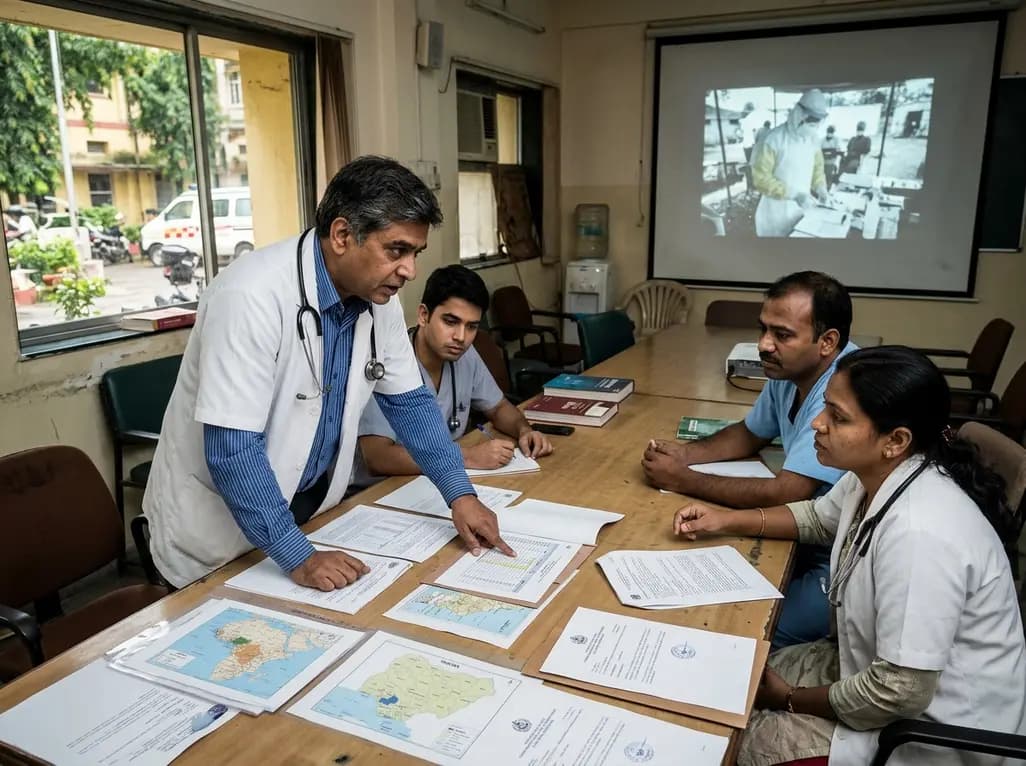
Following Nigeria's first recorded Ebola case linked to regional travel, the Africa CDC has convened an emergency ministerial summit. This alert underscores critical clinical priorities for healthcare professionals, including differentiating early viral infection from malaria, implementing barrier nursing, and triage.
Today

Leucine Rich Bio has introduced South Asia's first comprehensive vaginal microbiome test, BugSpeaks. By profiling microbial dysbiosis, pathogens, and antimicrobial resistance, this next-generation diagnostic platform provides clinicians with deeper insights into recurrent infections, fertility, and reproductive health.
Today

Review how tailored exercise programs benefit frail older patients with heart failure. Explore pathophysiological mechanisms, individualized training prescriptions, and strategies to overcome adherence barriers in clinical practice.
Today

This comparative study evaluates posterior labral tears with and without glenohumeral instability, highlighting distinct demographic patterns, MRI underestimation in stable shoulders, and successful arthroscopic repair outcomes.
Today

A clinical study demonstrates that early intervention with tocilizumab, either as monotherapy or bridged with corticosteroids, achieves significant proptosis reduction and resolves active inflammation in treatment-naive thyroid eye disease.
Today
