.webp&w=384&q=75)

Loading, please wait...
Loading, please wait...

Biological macromolecules assemble into sophisticated architectures to orchestrate fundamental cellular processes. Consequently, mapping these structures is vital for modern medicine. Driven by sequencing breakthroughs, spatial omics technologies have emerged as transformative tools for researchers worldwide. They provide a unique window into the molecular landscape of intact tissues. Therefore, clinicians can now explore complex disease mechanisms with unprecedented spatial detail.
Current methodologies vary significantly in their technical capabilities. Specifically, researchers must assess parameters like spatial resolution and capture efficiency. Moreover, robustness remains a critical factor for wide-scale laboratory adoption. Therefore, selecting the right tool depends on the specific biological question at hand. High-throughput imaging and sequencing both play essential roles in this evaluation process. Accordingly, the field is moving toward more standardized evaluation metrics.
These cutting-edge platforms offer unique insights into tissue heterogeneity. For instance, they help map the complex tumor microenvironment in modern oncology. Additionally, researchers use them to study neuroanatomy and developmental dynamics with high precision. Notably, these tools reveal how cells interact within their native neighborhoods. Consequently, we gain a deeper understanding of cell-to-cell communication in both health and disease. Furthermore, these insights are paving the way for more personalized therapeutic approaches.
Translating these innovations into the clinic requires significant technical advancements. However, persistent challenges in data analysis and operational costs still exist. Accordingly, experts are developing strategies to improve standardized protocols and diagnostic reliability. Ultimately, these innovations will lead to more precise and effective diagnostic tools for various diseases. Furthermore, improved capture efficiency will enhance the reliability of clinical results in the future.
Unlike bulk or single-cell sequencing, these technologies preserve the spatial context of cells within their native tissue. This allows researchers to see exactly where specific gene expressions or protein interactions occur.
Current challenges include high processing costs, data complexity, and the lack of standardized protocols across different labs. Improving technical robustness is also vital for routine diagnostic applications.
Disclaimer: This content is for informational and educational purposes only. It does not constitute medical advice or establish a doctor-patient relationship. Refer to the latest local and national guidelines for clinical practice.
References
Wu X et al. A Guide for Spatial Omics Technologies: Innovation, Evaluation, and Application. Adv Sci (Weinh). 2026 Feb 23. doi: 10.1002/advs.202520806. PMID: 41725579.
Lee SH, et al. Spatial Omics in Clinical Research: A Comprehensive Review of Technologies and Guidelines for Applications. Int J Mol Sci. 2025;26(9):3949. doi:10.3390/ijms26093949.
Black AJ, et al. Challenges and Opportunities for the Clinical Translation of Spatial Transcriptomics Technologies. Glomerular Dis. 2024;4(2):49-61. doi:10.1159/000536551.

Read summarized clinical updates, watch expert medical content, and earn CME certifications right from your smartphone.
Open your smartphone camera to scan and install.





A comprehensive guide on spatial omics technologies, exploring their role in oncology, neurology, and the challenges of clinical translation in 2026....
7 months ago

Review how tailored exercise programs benefit frail older patients with heart failure. Explore pathophysiological mechanisms, individualized training prescriptions, and strategies to overcome adherence barriers in clinical practice.
Today
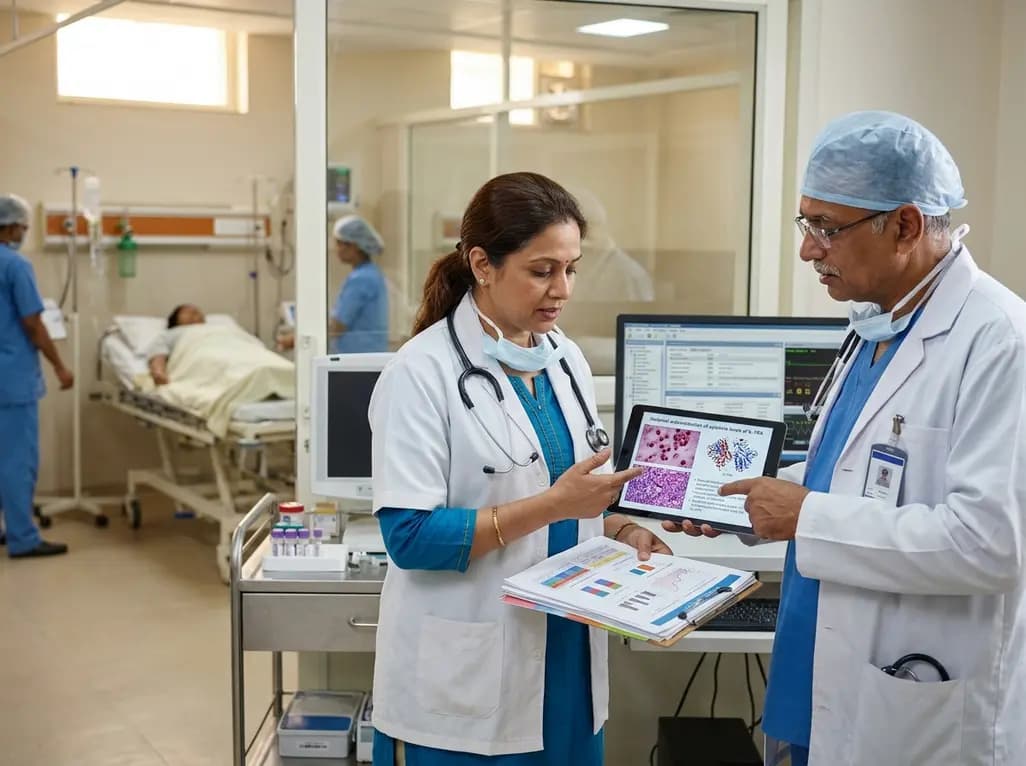
Recent clinical studies reveal maternal autoantibodies targeting IL-1RA as potential triggers for preterm labor, opening avenues for targeted cytokine therapies. Concurrently, new perioperative findings show inhaled cannabis increases propofol requirements during upper endoscopy compared to oral edible consumption.
Today

In high-risk pulmonary embolism complicated by severe anemia and active uterine bleeding, systemic thrombolysis is contraindicated. Large-bore aspiration thrombectomy provides rapid hemodynamic rescue without fibrinolysis, supported by inferior vena cava filter placement and multidisciplinary critical care.
Today

This comparative study evaluates posterior labral tears with and without glenohumeral instability, highlighting distinct demographic patterns, MRI underestimation in stable shoulders, and successful arthroscopic repair outcomes.
Today

A clinical study demonstrates that early intervention with tocilizumab, either as monotherapy or bridged with corticosteroids, achieves significant proptosis reduction and resolves active inflammation in treatment-naive thyroid eye disease.
Today
