.webp&w=384&q=75)

Loading, please wait...
Loading, please wait...
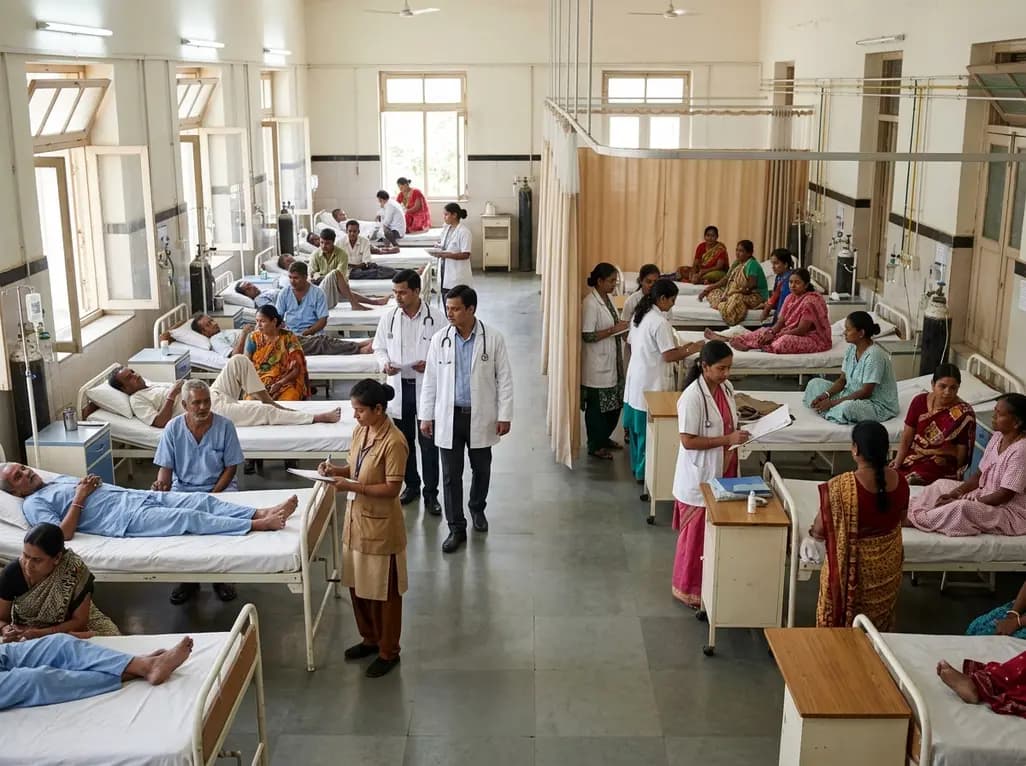
South Korea recently withdrew a controversial regulatory reform that aimed to introduce gender-neutral hospital rooms in the country. Consequently, the health ministry decided to maintain its strict policy of separating male and female inpatient wards. This sudden reversal occurred after a wave of public backlash highlighted critical concerns regarding safety, privacy, and patient dignity.
The government initially proposed the change to help families and married couples share rooms during hospital stays. Additionally, many children's hospitals already accommodate patients without strict gender divisions. However, the proposal faced immense resistance. Specifically, the National Legislation Information Center received over 4,000 opposing comments from the public during the consultation period.
Many citizens expressed fear that mixed-gender spaces would increase the risk of sexual harassment. Furthermore, critics argued that sharing a room with the opposite sex behind a simple curtain infringes upon human rights. Patients frequently perform highly private activities in these wards, such as changing clothes or replacing catheters. Therefore, the public demanded the absolute protection of patient privacy.
Specifically, South Korea has mandated sex segregation in hospital rooms under the Medical Service Act since 2012. If hospitals violate this rule, they face a corrective order and a subsequent 15-day suspension. However, some minor exceptions will remain in place. For instance, intensive care units where patients require constant monitoring do not require gender segregation. Similarly, immediate family members sharing two-bed rooms will remain exempt from the rule to ease caregiving burdens.
Q1: Why did South Korea propose gender-neutral hospital rooms?
The health ministry proposed the change to accommodate married couples and immediate family members sharing two-bed rooms, reducing the general caregiving burden on families.
Q2: What penalty do South Korean hospitals face for violating the gender-segregation rule?
Under the current Medical Service Act, hospitals that fail to segregate inpatient rooms by sex face a corrective order and up to a 15-day suspension of operations.
Q3: Are there any exceptions to the mandatory sex-segregation rule in South Korean hospitals?
Yes, intensive care units and two-bed rooms for immediate family members remain exempt from the mandatory gender-segregation rule.
Disclaimer: This content is for informational and educational purposes only. It does not constitute medical advice or replace professional judgment. Refer to the latest local and national guidelines for clinical practice.
References

Read summarized clinical updates, watch expert medical content, and earn CME certifications right from your smartphone.
Open your smartphone camera to scan and install.





South Korea's Health Ministry withdrew a proposal to lift mandatory sex-segregation in wards after receiving thousands of public complaints over safety....
4 months ago

Following regulatory scrutiny from FSSAI regarding promotional representations and lean muscle preservation claims, Dr. Reddy's Laboratories and Nestlé Health Science are currently reviewing the branding and marketing strategy for their joint nutritional supplement Celevida GLP+.
Today
Demanding exhaustive hormonal profiling can inadvertently discourage clinical studies involving females. Methodological standards must align with the specific scientific question to expand, not restrict, equitable evidence for women.
Today

The Directorate General of Health Services directs Indian states to halt the hazardous reuse and reprocessing of single-use medical devices. Discover regulatory implications under the Drugs and Cosmetics Act, critical infection risks, legal liabilities, and operational changes required across clinical specialties.
Today

A novel calcium polyphosphate coacervate enables injectable bone implants with in situ hierarchical porosity via phase separation and gas foaming, significantly enhancing cell proliferation, energy metabolism, and osteogenic differentiation for minimally invasive bone defect repair.
Today

India is advancing preventive healthcare by integrating genomics, artificial intelligence, and quantum technologies. With the SANGAM programme sequencing one million Indian genomes, clinicians can unlock personalized therapies, detect cardiometabolic risks early, and curb the burden of diabetes and heart disease.
Today
