.webp&w=384&q=75)

Loading, please wait...
Loading, please wait...

Recent clinical research highlights the high prevalence of social frailty in HF among hospitalized older adults. This cross-sectional study found that 52.8% of patients with heart failure (HF) experience social frailty. Furthermore, another 34.3% of these patients remain in the pre-social frailty stage. These findings suggest that social health is just as critical as physical health for geriatric management. Consequently, clinicians must prioritize psychosocial assessments during hospital stays to improve long-term outcomes for their patients.
The study utilized ordered multifactorial logistic regression to identify independent factors associated with social health. Researchers found that marital status, activities of daily living (ADL), and physical frailty significantly impact a patient\'s social status. However, depression emerged as the most significant factor (β=0.642, P < 0.001). Therefore, treating underlying mood disorders may be a key strategy in reducing social isolation. Additionally, physical frailty (β=0.551, P < 0.001) serves as a strong predictor of social decline in these populations.
Moreover, the inability to perform basic daily tasks often leads to a withdrawal from social circles. This withdrawal further exacerbates the cycle of frailty and heart failure progression. Consequently, a multidimensional approach is necessary for effective care. For instance, addressing nutritional status and cognitive health alongside cardiovascular treatment can create a more holistic care plan. Specifically, targeted interventions should focus on providing emotional support for unmarried or depressed patients.
Given the high burden of social frailty in HF, multidisciplinary teams are essential in the modern healthcare context. Geriatricians and cardiologists should collaborate with psychologists to screen for depressive symptoms early. Furthermore, improving social support systems can alleviate the stress of chronic illness. Similarly, enhancing a patient\'s functional independence through physiotherapy may indirectly improve their social engagement. Thus, managing heart failure involves more than just optimizing medications; it requires fostering a supportive social environment.
Social frailty refers to the loss or risk of losing social resources, activities, and support systems. In heart failure patients, it is linked to higher mortality rates and frequent rehospitalizations. Addressing it helps improve the patient\'s overall quality of life and treatment adherence.
Depression is a primary predictor of social frailty because it reduces a patient\'s motivation to interact with others. It often leads to social withdrawal and a lack of self-care. Effectively managing depression can therefore break the cycle of social and physical decline.
Yes, improving physical strength and activities of daily living allows patients to remain socially active. Consequently, physical rehabilitation often leads to better social participation, which helps mitigate the effects of social frailty.
Disclaimer: This content is for informational and educational purposes only. It does not constitute medical advice or a professional relationship. Refer to the latest local and national guidelines for clinical practice.
References
Liu J et al. Current status of social frailty and its associated physical-psychological factors in older adult patients hospitalized with HF: a cross-sectional study. Eur J Cardiovasc Nurs. 2026 Mar 07. doi: undefined. PMID: 41793759.
Prajapati D. Geriatric Heart Failure Patients Management: Indian Perspective. Indian Heart Journal. 2024;72(2).
Jujo K et al. Beyond Physical Impairment: The Role of Social Frailty in Heart Failure. J Am Heart Assoc. 2021;10(17):e021133.

Read summarized clinical updates, watch expert medical content, and earn CME certifications right from your smartphone.
Open your smartphone camera to scan and install.





New research highlights high social frailty prevalence in older heart failure patients, emphasizing the significant impact of depression on patient outcomes...
7 months ago

Review how tailored exercise programs benefit frail older patients with heart failure. Explore pathophysiological mechanisms, individualized training prescriptions, and strategies to overcome adherence barriers in clinical practice.
Today

Leucine Rich Bio has introduced South Asia's first comprehensive vaginal microbiome test, BugSpeaks. By profiling microbial dysbiosis, pathogens, and antimicrobial resistance, this next-generation diagnostic platform provides clinicians with deeper insights into recurrent infections, fertility, and reproductive health.
Today
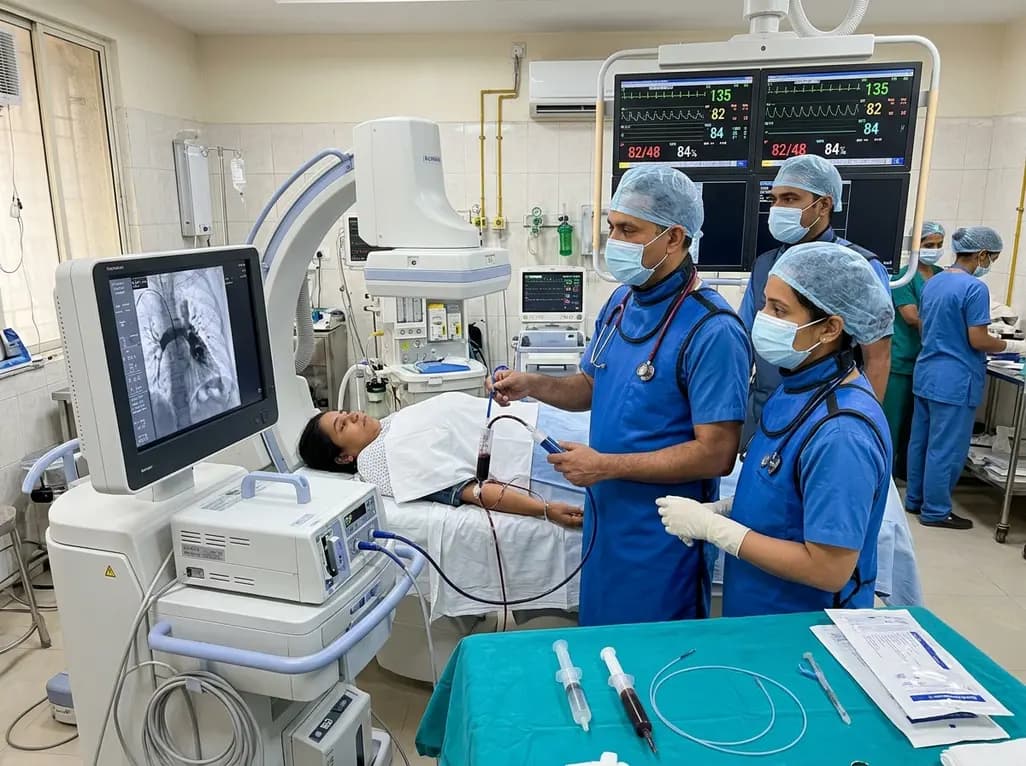
In high-risk pulmonary embolism complicated by severe anemia and active uterine bleeding, systemic thrombolysis is contraindicated. Large-bore aspiration thrombectomy provides rapid hemodynamic rescue without fibrinolysis, supported by inferior vena cava filter placement and multidisciplinary critical care.
Today

This comparative study evaluates posterior labral tears with and without glenohumeral instability, highlighting distinct demographic patterns, MRI underestimation in stable shoulders, and successful arthroscopic repair outcomes.
Today

A clinical study demonstrates that early intervention with tocilizumab, either as monotherapy or bridged with corticosteroids, achieves significant proptosis reduction and resolves active inflammation in treatment-naive thyroid eye disease.
Today
