.webp&w=384&q=75)

Loading, please wait...
Loading, please wait...

Wearable digital technology has transformed physiological monitoring in community-dwelling older adults. Modern consumer smartwatches continuously track vital parameters such as resting heart rate and daily physical activity levels. Furthermore, clinical researchers have developed composite digital biomarkers, including daily heart rate per step, to assess systemic cardiovascular efficiency during normal daily routines. While resting heart rate and daily step counts independently reflect cardiorespiratory fitness, combining these metrics provides deeper physiological insights. Specifically, elevated cardiac effort relative to physical output often signals underlying vascular stiffness, autonomic dysfunction, or poor metabolic health. Consequently, integrating wearable technology with detailed neuropsychological assessments allows medical professionals to evaluate subclinical cardiovascular risk factors that directly affect brain health. In aging individuals, subtle cerebral microvascular changes frequently occur years before noticeable clinical memory loss or executive dysfunction appears. Therefore, identifying sensitive digital biomarkers that capture early physiological strain could significantly improve preventive strategies against vascular cognitive impairment. Understanding how consumer wearable devices capture continuous, real-world cardiovascular stress offers a promising, non-invasive approach for proactive cognitive health assessment across primary care, cardiology, neurology, and geriatric practice.
To evaluate these potential associations, investigators conducted a comprehensive cross-sectional study within the electronic Framingham Heart Study cohort between 2021 and 2024. This innovative protocol integrated continuous smartwatch data with standardized neuropsychological evaluations performed between 2018 and 2023. The study cohort comprised 248 community-dwelling older adults with a mean age of 73 years and a median Mini-Mental State Examination score of 29. Women represented 56 percent of the participants, and 14 percent were from multiethnic backgrounds, including Black, Hispanic, Asian, Indian, Pacific Islander, and Native American origins. Participants wore smartwatches for an impressive median duration of 662 wear days, generating robust longitudinal biometric datasets. The primary exposure variable was the daily heart rate per step ratio, defined as average daily heart rate divided by total daily steps. Meanwhile, cognitive performance was assessed using composite neuropsychological scores covering memory, executive function, language, and visuospatial domains. Investigators used multivariable linear mixed-effects models to evaluate associations between smartwatch metrics and repeated cognitive measures, adjusting for essential demographic and vascular covariates.
The investigation yielded significant observational findings regarding wearable biometrics and cognitive performance in older adults. Over the median 662 watch-wearing days, participants recorded a median daily average heart rate of 74 beats per minute and a median daily step count of 4,810 steps. Multivariable statistical modeling revealed that every 1-standard deviation higher daily heart rate per step was significantly associated with a 0.06-standard deviation lower composite neuropsychological score. Conversely, daily physical activity demonstrated a clear, positive association with cognitive scores. Specifically, every additional 1,000 steps per day corresponded to a 0.03-standard deviation higher composite neuropsychological score. Crucially, the daily heart rate per step ratio predicted cognitive performance beyond the independent effects of heart rate or step count alone. This metric effectively quantifies cardiac exertion relative to physical movement. Consequently, a higher ratio indicates that an individual's cardiovascular system undergoes excessive hemodynamic strain to achieve basic physical activity, reflecting subclinical cardiovascular inefficiency that directly correlates with lower cognitive performance.
The biological mechanisms linking smartwatch cardiac metrics to cognitive function center primarily on microvascular perfusion and autonomic regulation. Optimal brain function depends upon steady, continuous cerebral blood flow to support energy-demanding neural circuits. When an individual displays an elevated heart rate relative to physical steps taken, it indicates heightened peripheral arterial resistance, reduced stroke volume, or impaired autonomic tone. Consequently, the cardiovascular system works under higher functional exertion during routine daily activities. Over extended periods, chronic subclinical vascular strain compromises microvascular autoregulation within sensitive brain regions, including the hippocampus and frontal cortex. These vascular disturbances can lead to subtle white matter hyperintensities, subclinical lacunar lesions, and impaired neurovascular coupling. Furthermore, elevated systemic exertion ratios often correlate with systemic inflammation and endothelial dysfunction, accelerating cerebral vessel disease. By identifying these physiological imbalances early, consumer wearable devices provide clinicians with a continuous, passive method to detect subclinical cardiovascular stress before overt vascular cognitive impairment or clinical dementia develops.
Translating smartwatch-derived metrics into modern medical practice offers exciting opportunities for personalized preventive healthcare. For primary care physicians, cardiologists, and geriatricians, passive wearable monitoring bridges the clinical gap between episodic clinic appointments and daily home environments. Because physical activity and cardiovascular efficiency are modifiable factors, identifying patients with unfavorable wearable metrics allows for targeted therapeutic interventions. Clinicians can recommend structured physical conditioning, targeted cardiovascular risk factor management, and lifestyle modifications to improve stroke volume and autonomic regulation. Additionally, tracking wearable metrics enhances patient engagement and empowers individuals to take an active role in their cardiovascular and brain health. However, researchers note that cross-sectional study designs cannot establish direct causality. Prospective longitudinal studies are required to determine whether monitoring changes in daily heart rate per step over time can reliably predict cognitive decline trajectories and therapeutic responses. Ultimately, integrating wearable technology with comprehensive clinical evaluations provides a practical, scalable pathway toward preserving cognitive vitality in aging populations.
Daily heart rate per step is a novel smartwatch metric calculated by dividing an individual's average daily heart rate by their total daily steps. This ratio measures cardiovascular efficiency during routine daily activities. A higher value indicates that the heart must beat faster to accomplish less physical movement, signaling potential cardiovascular strain or reduced cardiorespiratory fitness. This metric offers greater predictive value for cardiovascular and cognitive health than evaluating heart rate or steps individually.
Higher daily physical activity promotes cognitive health by improving cerebral blood flow, enhancing neuroplasticity, and reducing systemic inflammation. Regular movement stimulates neurotrophic factors like brain-derived neurotrophic factor, which support neuronal survival and synaptic plasticity. In the electronic Framingham Heart Study, every additional 1,000 daily steps was associated with higher cognitive scores. Physical activity also helps control vascular risk factors like hypertension and diabetes, preventing microvascular brain damage that contributes to cognitive decline.
Smartwatches cannot independently diagnose vascular cognitive impairment or dementia. Consumer wearables serve as passive screening tools that capture subtle physiological biomarkers like elevated cardiac exertion during daily routines. These metrics alert healthcare providers to subclinical cardiovascular strain, prompting detailed clinical evaluations. When clinicians observe abnormal wearable data, they can order comprehensive neuropsychological batteries, structural neuroimaging, and cardiovascular assessments to accurately diagnose cognitive conditions and implement personalized preventive strategies.
Disclaimer: This content is for informational and educational purposes only. It is not intended as formal medical advice or a substitute for professional clinical judgment, diagnosis, or treatment. Refer to the latest local and national guidelines for clinical practice.
References
He J et al. Associations Between Smartwatch-Derived Measures and Cognitive Function: Findings From the Electronic Framingham Heart Study. J Am Heart Assoc. 2026 Aug 07. doi: 10.1161/JAHA.126.049284. PMID: 42568104.
Chen Z et al. Daily Heart Rate per Step: A Wearables Metric Associated With Cardiovascular Disease in a Cross-Sectional Study of the All of Us Research Program. J Am Heart Assoc. 2025 May 06. doi: 10.1161/JAHA.124.036801. PMID: 40156587.

Read summarized clinical updates, watch expert medical content, and earn CME certifications right from your smartphone.
Open your smartphone camera to scan and install.





A cross-sectional analysis from the Electronic Framingham Heart Study reveals that a higher daily heart rate per step ratio is associated with lower composite cognitive scores in older adults, highlighting smartwatch metrics as valuable tools for detecting subclinical cardiovascular factors linked to brain health.
last month

FDA staff reviewers have raised no major safety or analytical concerns regarding Grail's Galleri blood test ahead of an advisory panel meeting. This milestone advances liquid biopsy technologies designed to identify tumor methylation signals across dozens of malignancies before clinical symptoms emerge.
Today

Meghalaya recorded a historic 55% reduction in maternal deaths, dropping from 244 to 107 over five years. Through the MOTHER app, dedicated transit homes, and expanded infrastructure like the 150-bed Tura Maternity Hospital with its first public NICU, the state demonstrates an effective public health model.
Today

Explore modern perioperative management protocols for clinical xenotransplantation. Learn how costimulation blockade, anti-inflammatory perfusion, and coagulopathy rescue overcome interspecies hurdles.
Today

North India's first Centre of Excellence for Brain and Spine at Amrita Hospital Faridabad integrates Brainlab's Loop-X mobile robot. This landmark facility combines cone-beam computed tomography with surgical navigation to elevate precision, optimize operative workflows, and enhance specialized clinician training.
Today
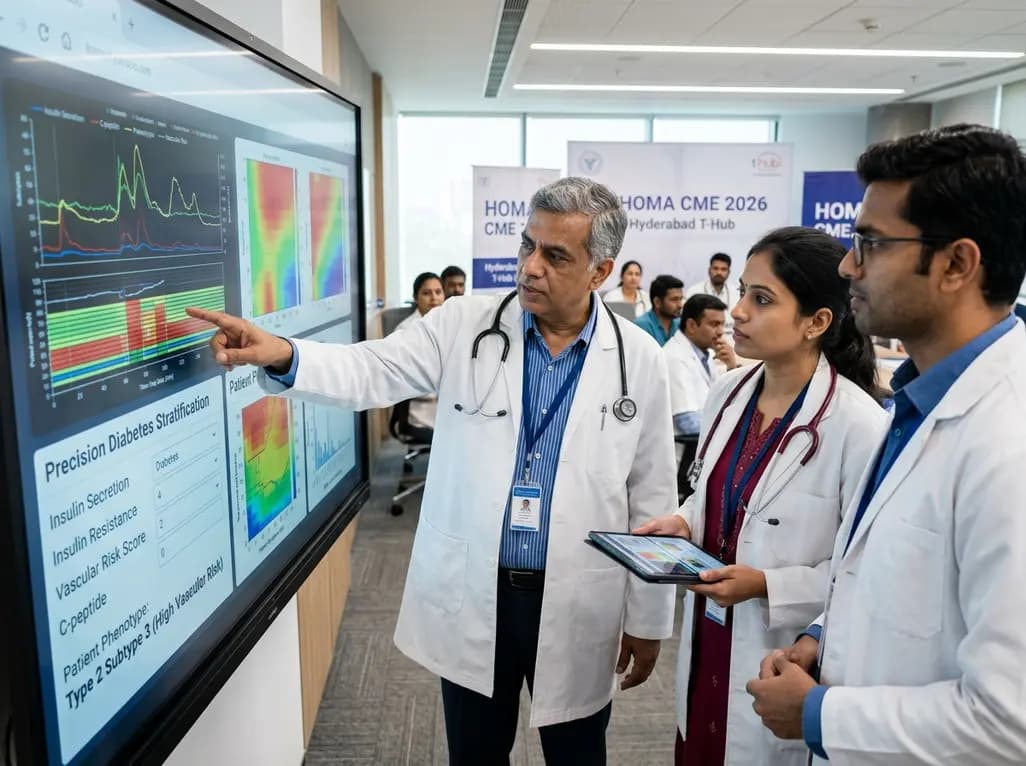
At Homa CME 2026 at Hyderabad's T-Hub, healthcare leaders emphasized moving beyond routine metrics through digital calculators and precision stratification. Discover why characterizing individual insulin secretion, resistance patterns, and vascular risks transforms chronic metabolic care in India.
Today
