.webp&w=384&q=75)

Loading, please wait...
Loading, please wait...

Myopia prevalence is rising globally, and this trend makes early detection critical. Also, recent research highlights smartphone-based pupillometry as a key tool. Specifically, it can assess ocular functions and retinal health by quantifying the pupillary light reflex. Consequently, this provides vital insights for clinicians because it measures autonomic responses. Moreover, the study explores severity while focusing on dynamic parameters. In addition, the results help practitioners, so the technology is extremely valuable and useful.
The comparative study included 160 participants and researchers divided them into four groups. Initially, they grouped emmetropes and myopes for analysis. Furthermore, they used the Reflex Pro app to capture data while maintaining standard lighting. Because axial length increases in high myopia, they observed altered dynamics. Specifically, the high myopia group showed slower constriction and reduced amplitude. Therefore, the results were significant and notably clear. Consequently, this suggests reduced autonomic efficiency in myopic eyes. Indeed, the findings offer a path for better monitoring and care.
In conclusion, smartphone-based pupillometry is a portable and non-invasive solution for all. For instance, it measures latency and speed which are hard to see but important. Moreover, the integration of this technology into routine exams could enhance precision and also accuracy. In addition, this method supports telehealth and rural medicine because it is very accessible for users. Although more studies are necessary, the current evidence is strong and also valid. Finally, adopting these digital tools may revolutionize healthcare and also vision science because they work.
High myopia often leads to axial elongation, which can alter the autonomic and retinal pathways, resulting in slower pupillary constriction and reduced amplitude compared to emmetropic eyes.
While infrared pupillometers are the gold standard, validated smartphone-based pupillometry apps offer a reliable, cost-effective, and portable alternative for screening and routine monitoring.
The application quantifies several key metrics, including latency, constriction velocity, maximum constriction speed, and average pupil diameter under standardized illumination.
Disclaimer: This content is for informational and educational purposes only. It does not constitute professional medical advice, diagnosis, or treatment. Always seek the advice of your physician or other qualified health provider with any questions you may have regarding a medical condition. Refer to the latest local and national guidelines for clinical practice.
References
1. Dutta P et al. Association between myopia severity and pupillary dynamics: a quantitative smartphone-based pupillometry study. Clin Exp Optom. 2026 May 12. doi: 10.1080/08164622.2026.2669529. PMID: 42117369.
2. McAnany JJ, et al. Smartphone-based pupillometry: a novel approach to measuring the pupillary light reflex. Trans Vis Sci Tech. 2018;7(6):15.
3. McGrath E, et al. Accuracy and Reliability of a Smartphone-Based Pupillometer. Journal of Neuroscience Nursing. 2022;54(3):121-126.

Read summarized clinical updates, watch expert medical content, and earn CME certifications right from your smartphone.
Open your smartphone camera to scan and install.





A study using smartphone-based pupillometry shows that high myopia significantly alters pupillary dynamics, offering a new tool for clinical evaluation....
5 months ago

An ICMR study reveals that nearly 25% of tribal adults in Odisha suffer from renal decline. Driven by untreated hypertension, diabetes, and lifestyle risks, this hidden burden highlights the critical need for point-of-care diagnostics, proactive screening, and targeted non-communicable disease interventions.
Today
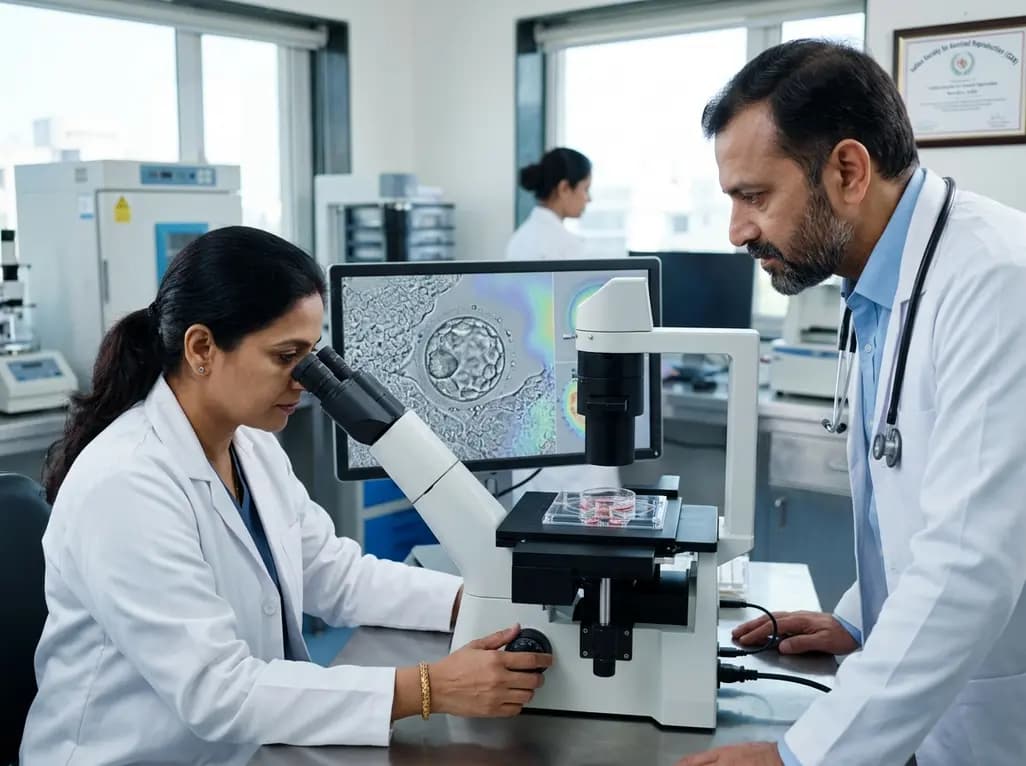
Recent research reveals distinct protein secretion profiles and morphometric shifts between euploid and aneuploid human blastocysts cultured in an advanced 3D endometrial platform, opening new avenues for non-invasive embryo assessment.
Today
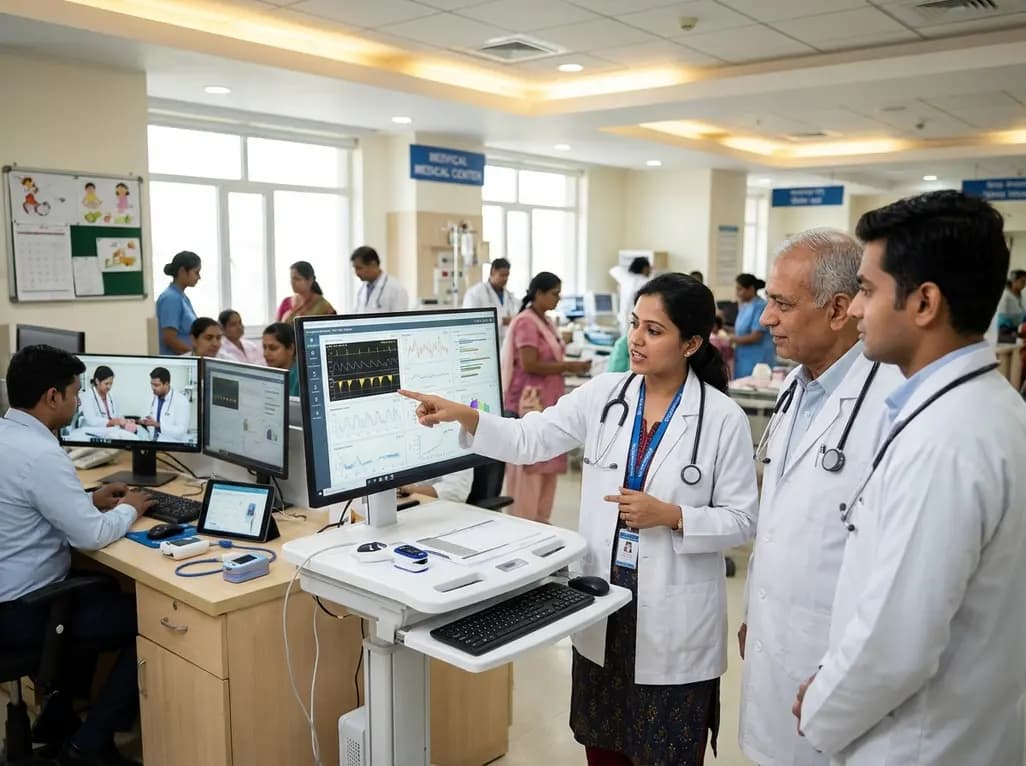
A landmark study details how an enterprise pediatric remote patient management model expanded from a single cardiology pilot to 16 diverse specialty programs by combining centralized digital operations with specialty clinical leadership.
Yesterday

Peripheral nerve injuries present clinical challenges due to regenerative mismatches between sensory and motor neurons. This review explores cutting-edge tissue-engineered nerve grafts designed as central-peripheral signal relays to overcome denervation atrophy and restore functional motor-sensory recovery.
Today

Protein O-GlcNAcylation couples cellular nutrient status to vital neuronal functions. This review explores how disrupted O-GlcNAc cycling drives both neurodevelopmental delays and neurodegenerative cascades, positioning metabolic post-translational modifications as therapeutic targets in clinical neurology.
Today
