.webp&w=384&q=75)

Loading, please wait...
Loading, please wait...
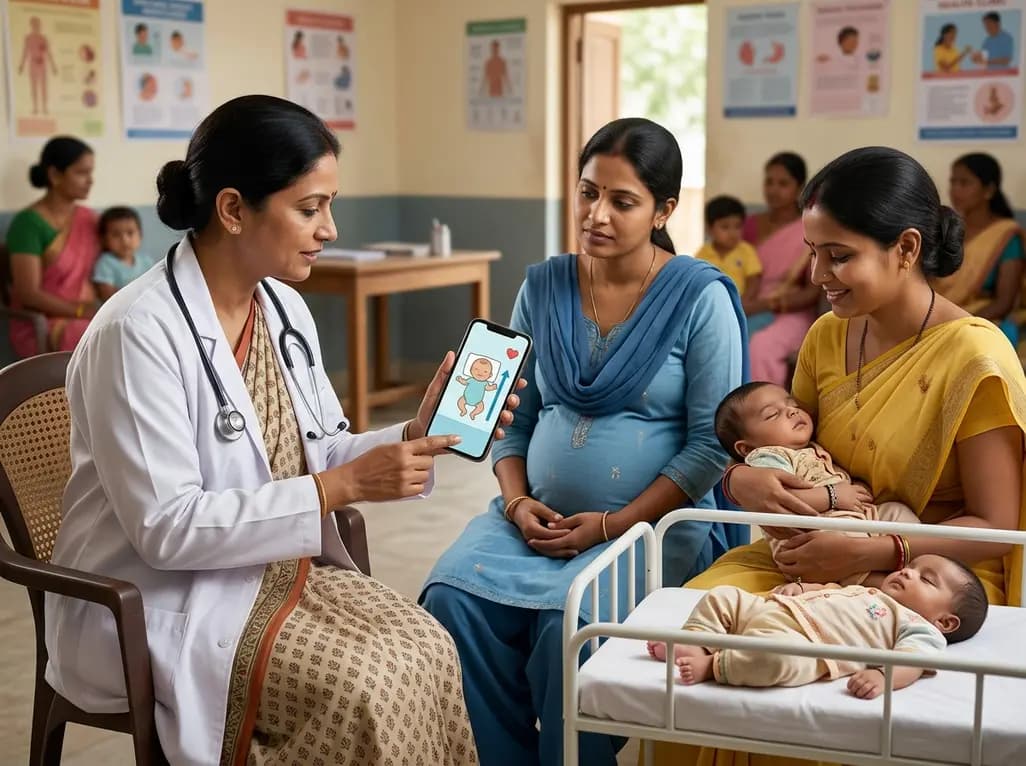
Sudden unexpected infant death remains a major cause of post-neonatal infant mortality globally. Modifiable risk factors such as non-supine sleep positioning, bed-sharing, soft bedding, and pacifier non-use directly influence these outcomes. Healthcare providers frequently seek innovative strategies to bridge educational gaps, particularly among socioeconomically disadvantaged populations. The SMARTER randomized clinical trial investigated whether a text-delivered video intervention targeted at low-income mothers enrolled in the Special Supplemental Nutrition Program for Women, Infants, and Children (WIC) could measurably improve adherence to recommended infant safe sleep practices. Although digital health solutions offer wide reach and low implementation cost, clinical trials must rigorously test their real-world clinical effectiveness. In this landmark study, researchers evaluated both prenatal and postnatal messaging schedules to determine if timely educational videos could shift caregiver behaviors during the crucial first two months of life. Understanding these trial results helps clinicians design better preventive care pathways, enhance prenatal counseling, and optimize public health strategies.
The SMARTER trial employed an unblinded, four-group randomized clinical trial design across WIC clinics and Federally Qualified Health Centers located in 18 states. Participant recruitment spanned from May 2022 through December 2024. Investigators implemented a rigorous two-stage randomization protocol conducted at 34 weeks' gestation and again immediately following delivery. Pregnant participants were assigned to receive safe sleep educational videos (the intervention) or breastfeeding educational videos (the control group). The timing of text delivery varied across four distinct study arms: combined prenatal and postnatal intervention, prenatal intervention alone, postnatal intervention alone, or control messaging. Educational texts began at 34 weeks' gestation for prenatal cohorts and continued through 60 days post-birth for postnatal cohorts. Twelve percent of participants received intervention materials in Spanish, reflecting diverse demographic representation. Out of 1,790 randomized pregnant mothers, 1,383 completed the primary 60-day follow-up survey and were included in the primary analysis. Demographically, 59.1% of mothers were aged 24 to 34 years, with 23.4% identifying as Black, 23.5% as Hispanic, and 43.2% as White.
The trial's primary endpoint focused on maternal self-reports regarding four fundamental infant safe sleep practices assessed at 60 or more days after birth. These core recommended practices included usual supine sleep position, usual room sharing without bed-sharing, non-use of soft bedding, and any pacifier use. Across all intervention and control groups, baseline adherence rates remained surprisingly high. Maternal reports for usual supine positioning ranged from 87.6% to 92.2% across groups. Usual room sharing without bed-sharing ranged from 83.8% to 89.5%. Avoidance of soft bedding was reported by 75.6% to 84.5% of mothers, while pacifier use ranged between 72.5% and 76.0%. Consequently, statistical analyses revealed no significant differences among the four study arms regarding these primary endpoints. Consequently, the study demonstrated that adding automated text-based video delivery did not significantly increase adherence above existing baseline care levels for primary outcomes in this low-income cohort.
Despite non-significant findings across primary endpoints, secondary outcomes provided crucial, nuanced insights regarding intervention timing. Investigators evaluated seven secondary outcomes, including exclusive supine positioning, exclusive room sharing, prenatal planned sleep behaviors reported at 36 weeks' gestation, and time-to-initial-report of non-recommended sleep habits collected via weekly text queries. Notably, reported exclusive supine positioning at 60 days was significantly higher among participants receiving the prenatal intervention compared to control participants. Specifically, 70.6% (240 of 343) of mothers in the prenatal group maintained exclusive supine sleep positioning, compared to 60.9% (212 of 348) in the control group. This outcome represented an adjusted risk difference of 9.7% with a 95% confidence interval ranging from 3.8% to 15.0%. Thus, educational timing during pregnancy appears to exert a stronger influence on establishing exclusive behavior patterns than postnatal messaging alone.
These trial findings offer valuable lessons for pediatricians, obstetricians, family physicians, neonatologists, and public health nurses caring for low-income families. First, high overall adherence rates observed across all groups indicate that baseline knowledge and intent regarding infant safety are substantial among WIC participants. Second, passive text-delivered video messages, while convenient and scalable, may not produce massive incremental gains over standard healthcare advice for primary outcomes. However, the positive outcome observed in exclusive supine positioning from prenatal messaging highlights the critical importance of early educational engagement. Providers should consistently initiate infant safe sleep conversations during third-trimester prenatal visits rather than delaying guidance until after delivery. Furthermore, clinicians must combine digital health tools with direct, personalized counseling to address persistent environmental barriers, such as crowded living conditions or familial pressure to bed-share.
To optimize future mHealth strategies, healthcare organizations and researchers must explore interactive, culturally tailored, and multi-component intervention models. Automated video delivery provides broad accessibility, but interactive platforms featuring peer support, nurse navigation, or personalized feedback could yield greater long-term behavioral changes. Future clinical trials should investigate how mHealth tools intersect with broader socioeconomic stressors, housing instability, and family support systems. Additionally, public health systems should evaluate whether combining prenatal text interventions with structured postpartum home visits or community outreach enhances overall compliance. By refining digital educational tools and integrating them into routine clinical workflows, healthcare systems can better support vulnerable populations, reduce sleep-related infant mortality, and advance health equity in maternal and child care.
The SMARTER trial evaluated whether delivering short educational videos about infant safe sleep via text messages during prenatal and postnatal periods improved adherence to safe sleep recommendations among low-income WIC participants. The primary objective was to assess maternal report of four key infant sleep practices at 60 or more days after delivery: usual supine sleep position, usual room sharing without bed-sharing, avoidance of soft bedding, and pacifier use.
No, the text-delivered video intervention did not demonstrate statistically significant differences among study groups for the primary outcomes. Baseline adherence across all groups was already high, with 87.6% to 92.2% reporting usual supine position and 83.8% to 89.5% reporting room sharing without bed-sharing. Consequently, adding text-delivered videos did not significantly boost usual safe sleep practices beyond standard baseline guidance provided to participants.
The trial revealed that prenatal intervention significantly improved exclusive supine positioning at 60 days post-birth compared to control groups (70.6% versus 60.9%). This represented an adjusted risk difference of 9.7%. This finding demonstrates that delivering educational content during the prenatal period, starting at 34 weeks' gestation, is more effective at establishing exclusive safe sleep habits than initiating interventions solely after delivery.
Disclaimer: This content is for informational and educational purposes only. It does not constitute medical advice, diagnosis, or treatment. Always consult a qualified healthcare provider regarding clinical decisions or infant care guidelines. Refer to the latest local and national guidelines for clinical practice.
References

Read summarized clinical updates, watch expert medical content, and earn CME certifications right from your smartphone.
Open your smartphone camera to scan and install.





The SMARTER randomized clinical trial evaluated text-delivered video safe sleep interventions among low-income WIC participants. While primary safe sleep practices showed no significant differences between groups, prenatal intervention improved exclusive supine sleep positioning at 60 days.
2 months ago

As monsoon seasons elevate arboviral disease threats, Tamil Nadu has initiated an ICMR-monitored evaluation of the tetravalent dengue vaccine in Tenkasi district. Clinicians emphasize clinical monitoring, public prevention, and high-quality early pediatric care to reduce disease morbidity across endemic regions.
Today

Leucine Rich Bio has introduced South Asia's first comprehensive vaginal microbiome test, BugSpeaks. By profiling microbial dysbiosis, pathogens, and antimicrobial resistance, this next-generation diagnostic platform provides clinicians with deeper insights into recurrent infections, fertility, and reproductive health.
Today

Review how tailored exercise programs benefit frail older patients with heart failure. Explore pathophysiological mechanisms, individualized training prescriptions, and strategies to overcome adherence barriers in clinical practice.
Today

This comparative study evaluates posterior labral tears with and without glenohumeral instability, highlighting distinct demographic patterns, MRI underestimation in stable shoulders, and successful arthroscopic repair outcomes.
Today

A clinical study demonstrates that early intervention with tocilizumab, either as monotherapy or bridged with corticosteroids, achieves significant proptosis reduction and resolves active inflammation in treatment-naive thyroid eye disease.
Today
