

Loading, please wait...
Loading, please wait...

Simulation-based training represents a vital pillar of modern healthcare education, allowing clinicians to refine crisis management without jeopardizing patient safety. Within this paradigm, post-event discussion constitutes the most impactful learning phase. However, assessing debriefing quality remains challenging and resource-intensive for teaching hospitals. Emerging artificial intelligence tools now offer practical avenues to evaluate instructional conversations systematically. In this setting, automated simulation debriefing analysis provides objective pedagogical evaluations aligned with established educational standards. By processing dialogue transcripts, natural language models identify strengths and missed teaching opportunities. Consequently, digital feedback mechanisms can enhance residency curricula, improve faculty facilitation skills, and optimize clinical team preparedness.
Effective debriefing transforms high-fidelity simulation from a simple technical drill into lasting reflective learning. During these crucial sessions, clinical instructors guide learners through clinical decision-making, team communication, and latent medical errors. Furthermore, deliberate dialogue encourages self-critique and solidifies essential patient safety protocols among postgraduate residents. However, providing master-level debriefing requires substantial pedagogical expertise, emotional intelligence, and regular performance review. Many healthcare institutions struggle to maintain consistent debriefing standards due to limited access to certified evaluators. In addition, manual evaluation methods demand immense faculty hours that busy clinical departments cannot afford. Therefore, automated simulation debriefing analysis introduces a sustainable pathway for continuous faculty development. Natural language processing models rapidly analyze session transcripts, identify core conversational themes, and highlight unrecognized instructional weaknesses. As a result, clinical educators receive prompt, individualized feedback on their facilitation behaviors. This timely insight allows instructors to adjust their conversational balance before facilitating subsequent training exercises. Consequently, systematic assessment elevates overall institutional educational standards. Ultimately, scalable digital evaluations foster higher instructional consistency across academic healthcare environments.
Medical educators recognize the Debriefing Assessment for Simulation in Healthcare, widely known as DASH, as a benchmark evaluation tool. Specifically, this validated instrument evaluates six core facilitator behaviors that drive productive learning conversations. The first element assesses how well instructors establish an engaging, psychologically safe educational setting. Similarly, the second element monitors whether the facilitator maintains this safe climate throughout complex or stressful discussions. Furthermore, the third element inspects how clearly the instructor structures the session timeline and preserves conversational focus. The fourth element evaluates whether the teacher provokes active, deep discussion instead of delivering a passive lecture. Additionally, the fifth element examines how effectively the facilitator identifies performance gaps and explores clinical rationales. Finally, the sixth element measures whether the instructor guides learners toward concrete strategies for future clinical performance. Evaluators score each domain using an anchored seven-point effectiveness scale. Because manual DASH scoring demands rigorous rater calibration and substantial faculty time, integrating artificial intelligence presents an exciting opportunity to scale standardized educational assessment. Furthermore, standardized scoring supports reproducible benchmarking across diverse clinical specialties.
The prospective, observational AIDE study evaluated the feasibility of using artificial intelligence to analyze simulation debriefing transcripts. Investigators examined thirty consecutive debriefing sessions involving anesthesia residents in their second and fourth postgraduate years. An experienced instructor facilitated all clinical scenarios and subsequent reflective discussions within a simulation center. Researchers audio-recorded, professionally transcribed, and strictly anonymized each session to protect participant privacy. Subsequently, investigators processed the transcripts using a large language model prompted with the six DASH behavioral dimensions. The model successfully completed qualitative and quantitative evaluations for all thirty sessions without technical failures. Notably, four DASH domains achieved high median ratings of six on the seven-point scale. Instructors excelled at establishing safety, maintaining engagement, provoking discussion, and exploring clinical performance gaps. However, session organization received the lowest median score of four, showing variable conversational structuring. In addition, helping trainees sustain future performance achieved a median score of five. Overall, the automated system demonstrated remarkable capability in detecting cross-session pedagogical strengths and facilitation trends. These reproducible metrics validate natural language processing as an efficient educational evaluation instrument.
Although generative language models demonstrate remarkable analytical speed, educators must recognize their inherent technical boundaries. First, the AIDE investigation examined text transcripts exclusively, omitting nonverbal communication signals entirely. Critical nonverbal cues, including tone, eye contact, hesitant pauses, and body posture, strongly influence psychological safety during debriefing. Because textual transcripts overlook these physical dynamics, language models provide an incomplete appraisal of facilitator warmth and empathy. Second, researchers did not compare the artificial intelligence scores directly with certified human DASH evaluators. Therefore, academic communities cannot yet confirm whether the model replicates human judgment or introduces unmeasured scoring biases. Furthermore, deploying digital tools requires strict adherence to institutional data governance and clinical confidentiality standards. Transcribing clinical educational exercises risks inadvertently capturing identifiable resident performance data or sensitive clinical scenarios. Consequently, healthcare institutions must implement secure, enterprise-grade data protections before deploying automated educational tools broadly. Therefore, cross-disciplinary validation studies remain imperative before widespread clinical implementation. Ultimately, artificial intelligence should complement human coaching rather than replace experienced faculty mentors.
Residency training programs can derive substantial practical value from automated debriefing analytics. First, simulation leaders should encourage instructors to dedicate explicit time for forward-looking performance strategies. Facilitators often spend excessive energy reviewing past simulation errors, leaving insufficient time for trainees to formulate actionable future behaviors. Applying structured debriefing models ensures that residents leave every session with clear, transferable clinical takeaways. Second, academic departments can employ artificial intelligence evaluations as non-punitive formative development tools for faculty members. Providing teachers with objective conversational metrics, such as speaking ratios and inquiry styles, sparks productive self-reflection. In addition, program directors can analyze aggregate educational data to discover systemic training gaps across postgraduate cohorts. However, clinical departments must maintain robust data de-identification protocols whenever processing educational audio files. Moreover, experienced educators must interpret algorithmic feedback alongside direct peer observation and mentorship. By thoughtfully adopting these digital innovations, simulation programs build a reflective teaching culture that directly advances clinical care. Ultimately, thoughtful technological integration supports both educator growth and improved patient outcomes.
Artificial intelligence evaluates simulation debriefings by analyzing transcribed dialogue through natural language processing algorithms. The system reviews linguistic cues, conversational turns, and pedagogical prompts against validated frameworks like DASH. Furthermore, the model scores specific facilitator behaviors on numerical scales and extracts illustrative quotations from the transcript. Consequently, educators receive objective, itemized summaries detailing their facilitation strengths and highlighting actionable areas for instructional improvement without requiring manual evaluator scoring.
Large language models cannot completely replace experienced human debriefing evaluators in simulation education. Although artificial intelligence excels at parsing linguistic structure and identifying textual patterns, it lacks awareness of nonverbal communication, physical gestures, and subtle interpersonal tension. Therefore, institutions should view artificial intelligence as a supportive faculty development adjunct. Human mentors remain essential for interpreting contextual clinical nuances, delivering empathetic feedback, and guiding professional behavioral growth during high-stakes simulation programs.
Debriefing quality directly governs whether clinical simulation translates into durable clinical competency and enhanced patient safety. During effective debriefing, residents deconstruct complex clinical decisions, recognize cognitive biases, and refine interprofessional teamwork under expert guidance. If debriefings lack organization or psychological safety, learners may miss crucial educational takeaways or develop defensive attitudes. Therefore, maintaining rigorous debriefing standards ensures that residency programs maximize educational value and cultivate resilient, highly competent healthcare practitioners.
Disclaimer: This content is for informational and educational purposes only. It is not intended to be a substitute for professional medical advice, diagnosis, or treatment. Refer to the latest local and national guidelines for clinical practice.
References

Read summarized clinical updates, watch expert medical content, and earn CME certifications right from your smartphone.
Open your smartphone camera to scan and install.





The AIDE study evaluates using large language models to assess postsimulation debriefings with the DASH framework. Findings show high feasibility in rating psychological safety and discussion, while identifying opportunities to improve session structure and future-oriented action plans.
Today
A rigorous within-subject study evaluates virtual reality exergaming platforms FitXR and Supernatural against video shadowboxing. Discover key findings on moderate-to-vigorous physical activity, participant enjoyment, and minimal cybersickness to guide modern exercise prescription.
Today
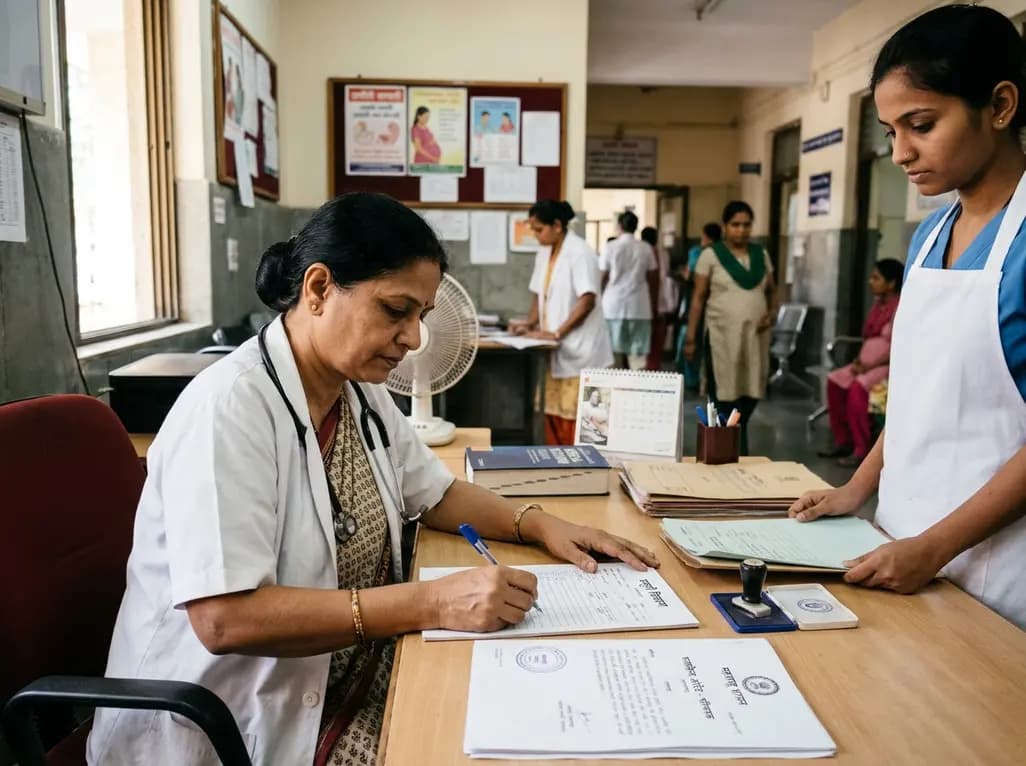
With caesarean rates reaching 59% in private hospitals and 37% in public facilities, the Maharashtra health department has instituted mandatory clinical audits under the LaQshya framework. Clinicians must now document surgical indications immediately to promote maternal safety and curb non-indicated interventions.
Today
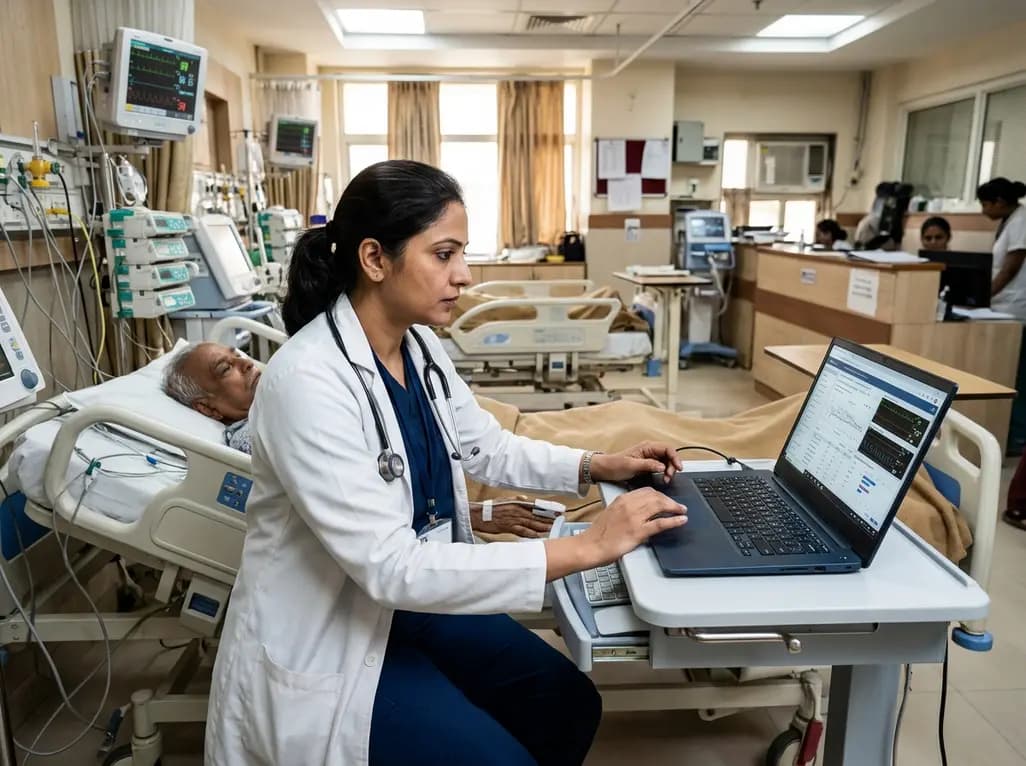
A prospective machine learning study demonstrates that an interpretable XGBoost model using 30 photoplethysmography features accurately estimates continuous blood pressure in intensive care units, achieving Grade A British Hypertension Society standards and reducing reliance on invasive arterial catheters.
Today

A 491-patient cohort study in Sudan reveals critical insights into war trauma reconstructive surgery, analyzing injury patterns, soft-tissue procedures, and a 25.5% complication rate in resource-limited conflict zones.
Today
A secondary analysis of the Living Healthier with Diabetes trial reveals that positive baseline technology attitudes significantly improve engagement with digital diabetes self-management apps, leading to enhanced self-care behaviors and better long-term glycemic control in adults with type 2 diabetes.
Today
