

Loading, please wait...
Loading, please wait...
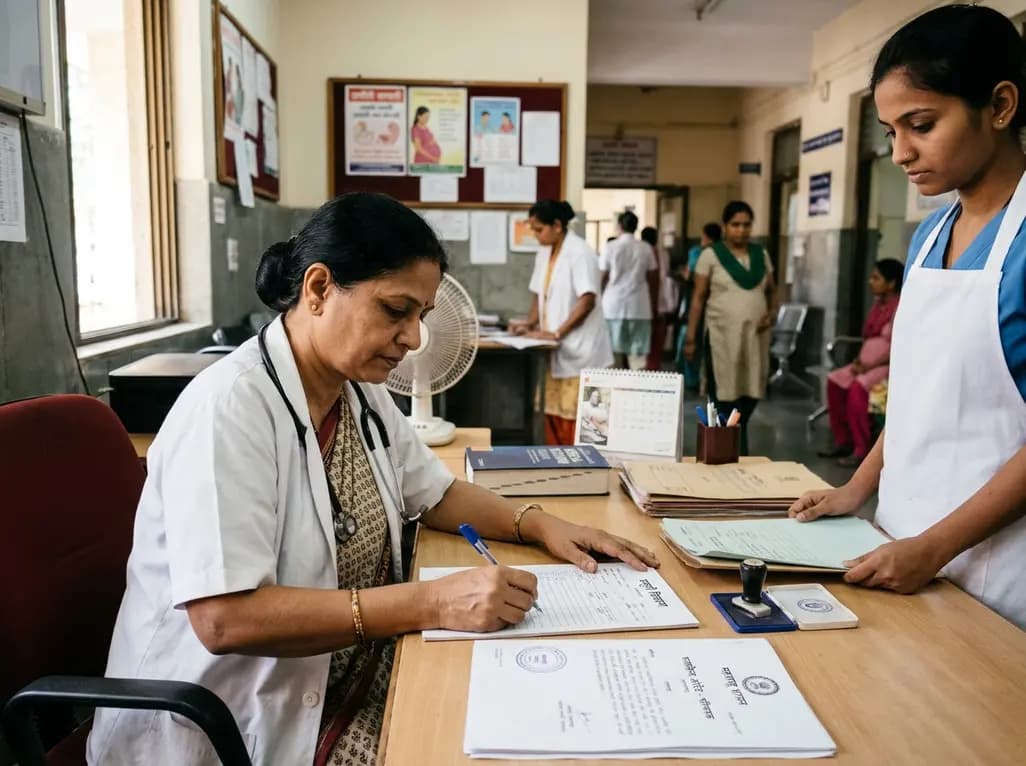
The Maharashtra public health department has recently issued comprehensive directives mandating statewide C-section delivery audits across institutional healthcare centers. This timely policy intervention addresses alarming state registry data showing that surgical interventions now comprise nearly 48 per cent of all hospital deliveries across the state. In particular, private healthcare institutions report caesarean rates approaching 59 per cent, whereas government hospitals average 37 per cent. Therefore, health authorities aim to curb non-essential surgical interventions and safeguard maternal and neonatal health. By enforcing systematic clinical evaluations, administrators intend to uphold high clinical standards and eliminate commercially motivated surgical practices across Maharashtra. Consequently, obstetricians must prepare for increased clinical transparency.
Health Management Information System records reveal notable regional and sectoral discrepancies across Maharashtra between January and September 2026. Out of 6,41,928 total institutional deliveries, healthcare providers performed 3,07,188 caesarean sections statewide. Specifically, private hospitals conducted 1,89,152 surgical births out of 3,18,683 admissions. In comparison, public facilities recorded 1,18,036 caesarean procedures out of 3,23,245 total births.
Furthermore, municipal corporations registered significantly higher surgical percentages than rural administrative districts across both healthcare sectors. Public institutions in urban corporations reported a 50 per cent surgical delivery proportion, while district facilities maintained a 30 per cent average. Similarly, private facilities in municipal corporations achieved a 64 per cent intervention rate compared to 55 per cent in district regions.
Moreover, certain geographic districts exhibited unprecedented surgical frequencies that alarmed public health experts. Bhandara led all districts, recording an 86 per cent rate in private hospitals and 64 per cent in public hospitals. Private clinics in Gondia, Amravati, and Nagpur also logged rates of 84, 77, and 75 per cent, respectively. Among corporations, Akola reported a 69 per cent surgical rate in public centers. Meanwhile, private institutions in Kolhapur achieved an 82 per cent rate. Consequently, these extreme variations demonstrate an urgent need for rigorous clinical scrutiny.
Under the new circular, health authorities have established strict operational protocols for conducting C-section delivery audits across all healthcare levels. Dr Sandeep Sangale, Additional Director of Health Services, directed district civil surgeons, municipal health officers, and medical college deans to enforce immediate reviews.
Importantly, operating obstetricians must complete standardized audit sheets on the exact day of surgery without administrative delays. Furthermore, an independent reviewer must assess every primary and repeat surgical delivery within twenty-four hours. This reviewing practitioner must record an unbiased clinical judgment regarding the medical necessity of the intervention. Consequently, hospitals cannot defer or overlook these essential clinical justifications under any operational circumstance.
In addition, the state integrates these evaluations directly into the national LaQshya quality improvement initiative. Comprehensive Emergency Obstetric and Newborn Care centers handling massive patient loads must use the revised statutory format. Furthermore, administrators are instructing public health officers to actively counsel private practitioners. These officers encourage private clinics to adopt identical standardized review templates. As a result, both public and private sectors can maintain clinical transparency and eliminate unwarranted surgical procedures.
The official circular emphasizes that surgical deliveries should primarily serve as emergency procedures to protect mothers and neonates. Accordingly, health authorities have reiterated recognized clinical indications that justify surgical delivery in institutional practice.
First, clinicians can justify surgical intervention in cases of absolute cephalopelvic disproportion. Second, severe antepartum haemorrhage constitutes a clear indication requiring prompt abdominal delivery. In addition, transverse or breech fetal presentations, premature labor with distress, and twin gestations warrant specialized surgical consideration. Furthermore, patients with prior uterine scars or previous caesarean deliveries require cautious assessment before deciding on trial of labor.
However, health officials firmly emphasize that normal vaginal delivery remains the default physiological standard of obstetric care. Therefore, obstetricians must exhaust appropriate conservative delivery methods before recommending an abdominal incision. Clinicians cannot use maternal convenience or institutional scheduling as acceptable medical indications. Moreover, hospital teams must document real-time fetal monitoring strips and labor progression partographs in the permanent patient file. Consequently, auditing committees can independently confirm whether clinicians followed evidence-based management algorithms before initiating surgical intervention.
To ensure consistent accountability, the health department has structured a multi-tiered monitoring framework with strict deadlines. Healthcare institutions must submit their consolidated monthly audit forms to district nodal officers by the fifth day of every month without fail.
Subsequently, District Reproductive and Child Health officers examine these institutional submissions thoroughly. These officers compile regional findings and forward comprehensive reports to the state maternal health office by the tenth day of each cycle. Thereafter, the state maternal health directorate reviews statewide statistics and submits quarterly evaluations to the Union Ministry of Health.
Furthermore, hospital quality teams must present their audit data during monthly LaQshya quality circle meetings. These regular quality discussions actively involve regional obstetrics leaders, ensuring multidisciplinary review. Specifically, representatives from the Federation of Obstetric and Gynaecological Societies of India and the Association of Maharashtra Obstetric and Gynaecological Societies contribute expert opinions. As a result, peer review panels can constructively discuss contentious surgical cases. Thus, this collaborative oversight structure identifies systemic institutional deficiencies, corrects errant prescribing behaviors, and elevates clinical standards statewide.
The newly published data also exposes stark differences between public and private healthcare facilities within the same geographical jurisdictions. For instance, public hospitals in Sangli logged a 15 per cent caesarean rate, while private clinics reported 62 per cent. Similarly, Latur documented a 21 per cent public caesarean rate compared to 60 per cent in private facilities.
In contrast, Parbhani presented a reverse trend, recording 44 per cent in public facilities and only 7 per cent in private centers. Such dramatic divergence suggests that non-clinical elements strongly influence delivery decisions. Therefore, health administrators are urging private providers to collaborate with municipal health officers and civil surgeons.
Additionally, expert bodies such as FOGSI and AMOGS play an essential role in bridging this systemic divide. By aligning private clinical protocols with national guidelines, professional societies can curb commercial pressures on obstetricians. Furthermore, structured patient counseling during antenatal care can dispel common misconceptions regarding vaginal birth. When practitioners reassure families regarding intrapartum pain management and safety, elective surgical requests decrease significantly. Consequently, uniform auditing standards across public and private hospitals will foster parity and protect patient autonomy.
Q1: Why has the Maharashtra government mandated regular C-section delivery audits?
The state health department mandated audits because surgical births reached 48 per cent statewide, with private hospitals exceeding 59 per cent. These statistics substantially exceed the World Health Organization recommended 10 to 15 per cent threshold. Consequently, officials instituted daily audits to verify clinical indications, curb unjustified interventions, and ensure both public and private practitioners prioritize maternal and neonatal safety.
Q2: What specific timeline must clinicians follow for audit documentation?
Operating obstetricians must complete standardized audit forms on the exact day of surgery. In addition, an independent medical reviewer must evaluate every primary and repeat surgical delivery within twenty-four hours to judge necessity. Furthermore, facilities must send monthly summaries to district nodal officers by the fifth, which officers compile and submit to the state maternal health division by the tenth.
Q3: How do professional obstetrics bodies participate in these quality reviews?
Major professional organizations, including FOGSI and AMOGS, participate directly in monthly LaQshya quality circle meetings. These societies collaborate with civil surgeons and municipal health officers to evaluate clinical audit findings, counsel private clinicians, and promote evidence-based obstetric standards. Their structured participation guarantees objective peer reviews and assists local medical facilities in rectifying recurrent procedural deficiencies.
Disclaimer: This content is for informational and educational purposes only. It does not constitute medical advice or replace professional judgment. Refer to the latest local and national guidelines for clinical practice.
References

Read summarized clinical updates, watch expert medical content, and earn CME certifications right from your smartphone.
Open your smartphone camera to scan and install.





With caesarean rates reaching 59% in private hospitals and 37% in public facilities, the Maharashtra health department has instituted mandatory clinical audits under the LaQshya framework. Clinicians must now document surgical indications immediately to promote maternal safety and curb non-indicated interventions.
Today
The rapid resurgence of Bundibugyo virus disease in Central Africa presents unprecedented epidemiological challenges. Frontline medical teams confront acute resource limitations, active civil conflict, and diagnostic complexities as international health agencies scale up cross-border surveillance and clinical trials.
Today

A prospective machine learning study demonstrates that an interpretable XGBoost model using 30 photoplethysmography features accurately estimates continuous blood pressure in intensive care units, achieving Grade A British Hypertension Society standards and reducing reliance on invasive arterial catheters.
Today

A 491-patient cohort study in Sudan reveals critical insights into war trauma reconstructive surgery, analyzing injury patterns, soft-tissue procedures, and a 25.5% complication rate in resource-limited conflict zones.
Today
A secondary analysis of the Living Healthier with Diabetes trial reveals that positive baseline technology attitudes significantly improve engagement with digital diabetes self-management apps, leading to enhanced self-care behaviors and better long-term glycemic control in adults with type 2 diabetes.
Today
