.webp&w=384&q=75)

Loading, please wait...
Loading, please wait...

Mastering periodontal instrumentation remains one of the most demanding milestones during undergraduate dental education. Preclinical students frequently struggle to establish the precise blade-to-tooth angulation required for safe calculus removal. To address this challenge, researchers recently evaluated an innovative angle-correction guide device specifically designed for sickle scaler training. Early evidence indicates that structured mechanical guidance can markedly improve learner satisfaction and technical confidence. Consequently, integrating dedicated guidance tools into preclinical curricula offers promising solutions to long-standing instructional bottlenecks in periodontics.
Dental students must master tactile sensitivity and fine motor coordination while maintaining an optimal working angulation between 70 and 80 degrees. However, beginners often tilt the blade improperly against typodont teeth during initial laboratory sessions. If the angulation drops below 70 degrees, burnishing of calculus deposits occurs rather than clean fracture. Conversely, an angle exceeding 80 degrees can cause severe soft tissue laceration or root gouging in clinical scenarios. Instructors often find it difficult to monitor multiple students simultaneously during fast-paced phantom head practicals. Furthermore, conventional verbal feedback and visual demonstrations provide only retrospective correction after errors occur. Therefore, learners frequently develop flawed muscle memory that persists into patient clinics. Because students cannot continuously visualize the microscopic cutting edge, their anxiety levels rise while confidence declines. Consequently, educators have sought adjunctive educational technologies that standardize blade angulation and accelerate skill acquisition before students treat live patients.
To overcome these preclinical limitations, investigators conducted a randomized comparative trial examining the novel sickle scaler working angle guidance device, designated as SS-WAGD. The researchers enrolled 80 dental hygiene students and randomly allocated them into two parallel groups. Specifically, the control cohort of 40 students practiced scaling techniques using standard sickle scalers alone. In contrast, the experimental cohort of 40 students utilized the specialized SS-WAGD during their sessions. Both cohorts completed five structured preclinical training modules designed to simulate routine supragingival calculus debridement on typodont models. During each module, students focused on maintaining proper finger fulcrums, wrist-forearm activation, and continuous adaptation along tooth contours. The SS-WAGD provided physical and visual cues that prevented excessive tilting of the instrument shank. As a result, experimental participants received continuous tactile reinforcement regarding correct working angulation. In addition, faculty members monitored student adherence to ergonomic guidelines throughout the training periods. This systematic protocol allowed investigators to evaluate learner perceptions under highly standardized laboratory conditions.
The trial demonstrated striking differences in educational outcomes between the two instructional groups. Following the completion of five sessions, investigators assessed practice satisfaction, focusing primarily on learning satisfaction and procedural confidence. Remarkably, students in the experimental group achieved a mean satisfaction score of 4.73 ± 0.38 on a 5-point scale. In comparison, students in the standard control group achieved a significantly lower score of 4.20 ± 0.82. Statistical analysis confirmed that this difference was highly significant, with a P-value below 0.05. Furthermore, experimental learners reported substantially greater self-assurance when approaching complex proximal tooth surfaces. Standard instrumentation training often leaves novices hesitant because they cannot independently verify their blade orientation. However, the mechanical guide eliminated guesswork by confirming proper alignment at each stroke. Consequently, students reported reduced procedural anxiety and higher motivation to master delicate scaling strokes. These findings indicate that structured guidance devices fundamentally elevate student engagement and psychological readiness for clinical patient care.
Beyond measuring basic satisfaction scores, the study thoroughly examined the multidimensional user experience of the experimental cohort. Researchers evaluated pragmatic quality, which reflects device usability and task efficiency, alongside hedonic quality, which captures novelty and enjoyment. Pearson correlation analyses revealed strong positive associations between these experiential domains and overall educational reception. Specifically, high pragmatic ratings correlated directly with smoother skill acquisition and reduced physical strain during instrumentation. Meanwhile, favorable hedonic scores indicated that students genuinely enjoyed working with the innovative guidance apparatus. Furthermore, analysis revealed a significant positive correlation between positive user experience and students' intention to recommend the device to peers. When dental instruments are intuitive and ergonomically supportive, students actively embrace deliberate practice rather than viewing laboratory exercises as tedious chores. Therefore, combining high pragmatic utility with positive emotional engagement accelerates preclinical learning trajectories. These psychological factors play a vital role in sustaining long-term interest in periodontal therapy.
These international findings offer valuable lessons for dental colleges and residency programs across India. Currently, dental curricula regulated by the Dental Council of India place heavy emphasis on early preclinical phantom head training. However, large student-to-faculty ratios in Indian dental institutions frequently hinder individualized supervision during scaling exercises. As a result, novice clinicians can inadvertently adopt improper wrist motions and incorrect blade angulations that go uncorrected. Implementing devices like the SS-WAGD could bridge this supervision gap by providing independent verification of blade angles. Moreover, incorrect scaling posture and improper finger rests contribute significantly to early work-related musculoskeletal disorders among young Indian dental surgeons. By instilling correct working angles during formative training years, institutions can protect practitioners from repetitive strain injuries. Additionally, improved preclinical competency directly translates to gentle, tissue-preserving calculus removal in community dental camps and hospital outpatient departments. Thus, investing in biomechanically guided training tools represents an evidence-based strategy to elevate preclinical standards nationwide.
As dental pedagogy evolves, the integration of objective guidance tools represents an essential step toward precision dental education. Traditional apprenticeship models in dentistry rely heavily on subjective visual appraisals by faculty members. In contrast, modern simulation tools offer standardized metrics that guarantee uniform competency across diverse student cohorts. Future iterations of angle-correction systems could incorporate digital sensor chips and auditory feedback mechanisms. For example, micro-sensors embedded within scaler handles could alert students instantly whenever blade angulation deviates from the therapeutic 70-to-80-degree window. Furthermore, combining mechanical angle guides with virtual reality typodont simulators may create comprehensive multimodal training ecosystems. Such innovations would enable self-directed, asynchronous learning where students refine periodontal instrumentation skills at their own pace. Ultimately, early preclinical validation studies lay the groundwork for next-generation dental training aids. Dental faculties should proactively explore these emerging tools to enrich curriculum delivery and optimize student readiness.
The therapeutic working angle for a sickle scaler typically ranges between 70 and 80 degrees relative to the tooth surface. If the angle falls below 70 degrees, the cutting edge slides over calculus deposits and burnishes them without achieving detachment. Conversely, exceeding an 80-degree angulation risks gouging root cementum or causing severe soft tissue laceration. Maintaining this precise window ensures efficient calculus removal while safeguarding patient safety and oral tissue health.
An angle-correction guide device provides immediate physical and visual orientation that stabilizes the scaler shank during simulated debridement. Instead of relying solely on periodic instructor reviews, students receive continuous tactile feedback confirming correct blade adaptation. Consequently, this real-time alignment minimizes procedural trial-and-error, prevents bad motor habits, and significantly boosts learner confidence. Novices master proper wrist-forearm activation much faster, leading to higher overall satisfaction during preclinical periodontic training.
Maintaining correct instrument angulation allows clinicians to generate effective lateral pressure using large forearm and wrist muscle groups rather than straining delicate finger joints. Improper blade angles force clinicians to grip the handle tightly and pinch awkwardly to dislodge calculus deposits. Over time, these compensatory movements cause chronic repetitive strain injuries, including carpal tunnel syndrome and tendinitis. Learning proper angulation early in preclinical training establishes sustainable ergonomic habits that protect career longevity.
Disclaimer: This content is for informational and educational purposes only... Refer to the latest local and national guidelines for clinical practice.
References

Read summarized clinical updates, watch expert medical content, and earn CME certifications right from your smartphone.
Open your smartphone camera to scan and install.





A clinical study evaluated a novel sickle scaler working angle guidance device (SS-WAGD) in preclinical education. Dental hygiene students using the device reported significantly higher learning satisfaction and confidence compared to standard training, highlighting its value for mastering periodontal instrumentation.
Today
A nationwide Japan AMI Registry study reveals right ventricular involvement in RCA-related STEMI treated with PCI increases 12-month mortality (HR 2.05) and major bleeding (HR 2.28). In patients with RVI, major bleeding was tied to a nearly fivefold risk of death, highlighting crucial access and antithrombotic management.
Today
A landmark randomized clinical trial published in NEJM reveals that high maternal intake of eggs and peanuts during pregnancy and lactation does not lower the risk of infant egg or peanut allergy at one year of age, reinforcing existing dietary recommendations for balanced maternal nutrition without restrictions.
Today
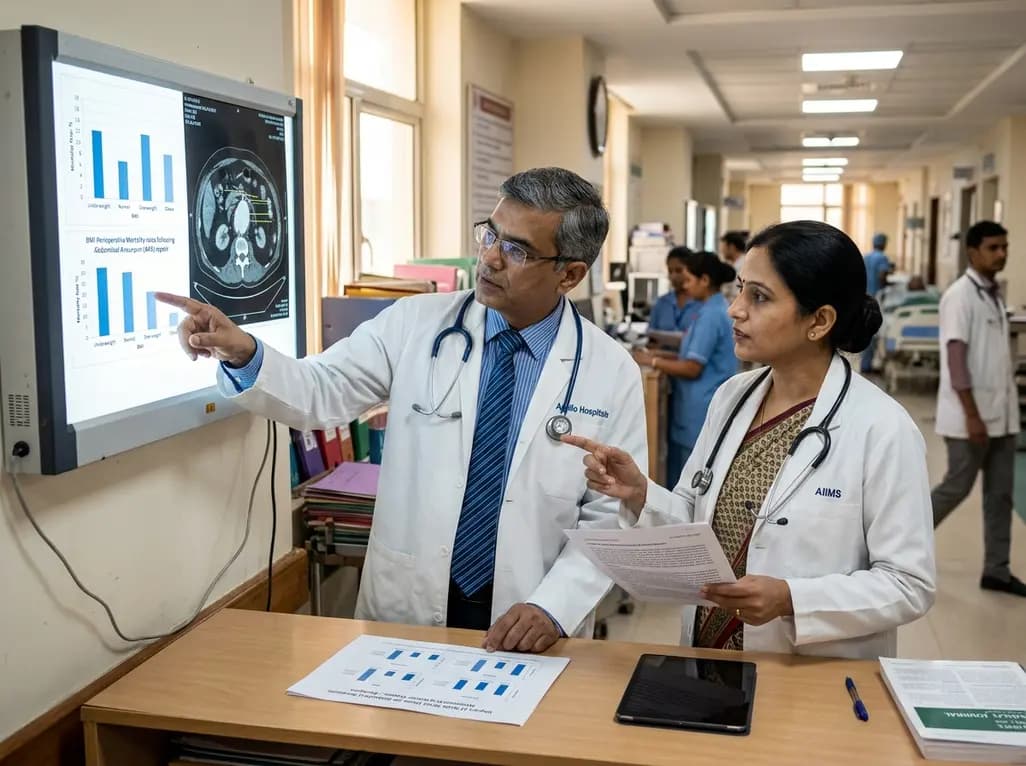
A comprehensive meta-analysis evaluates the association between Body Mass Index and outcomes following abdominal aortic aneurysm repair. Discover how overweight and obesity correlate with lower mortality while underweight status confers heightened risk, challenging conventional preoperative risk stratification.
Today

The SOLARIO trial shows that a short course (≤7 days) of systemic antibiotic therapy is noninferior to long courses (≥4 weeks) in orthopedic infections treated with local antibiotic carriers, with significantly fewer adverse events.
Today
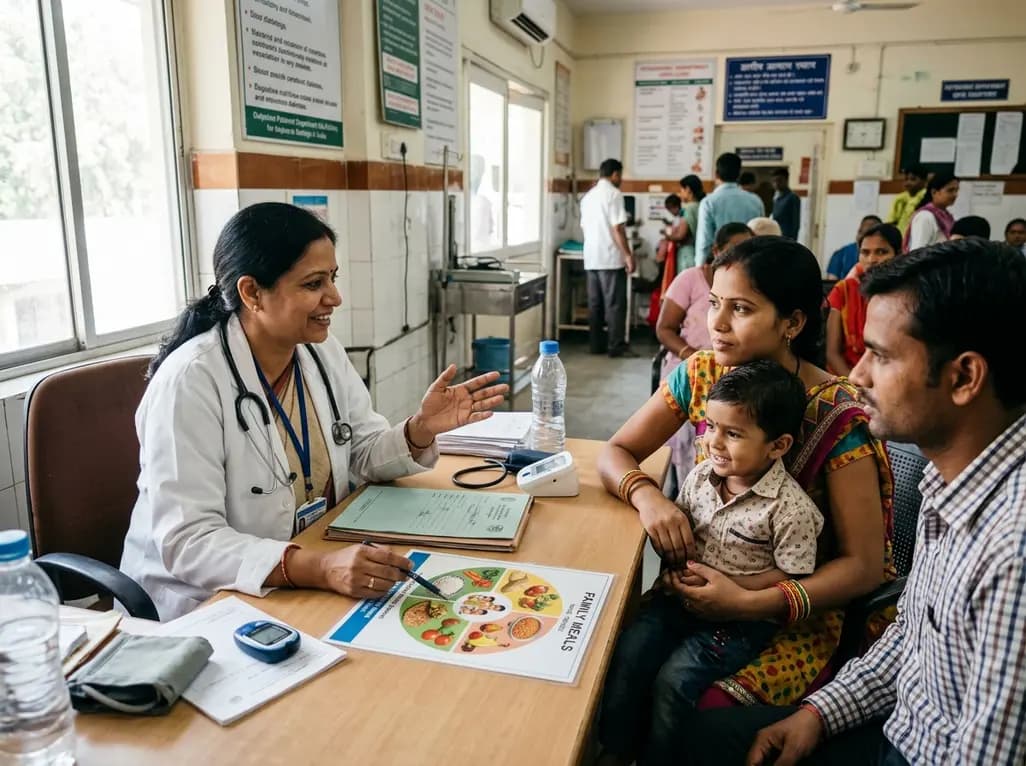
Gestational diabetes doubles the future risk of type 2 diabetes for mothers and offspring. Adopting a life-course approach centered on family meals and brief, supportive nutrition messaging empowers households to reduce metabolic risks and establish sustainable dietary habits across generations.
Today
