.webp&w=384&q=75)

Loading, please wait...
Loading, please wait...
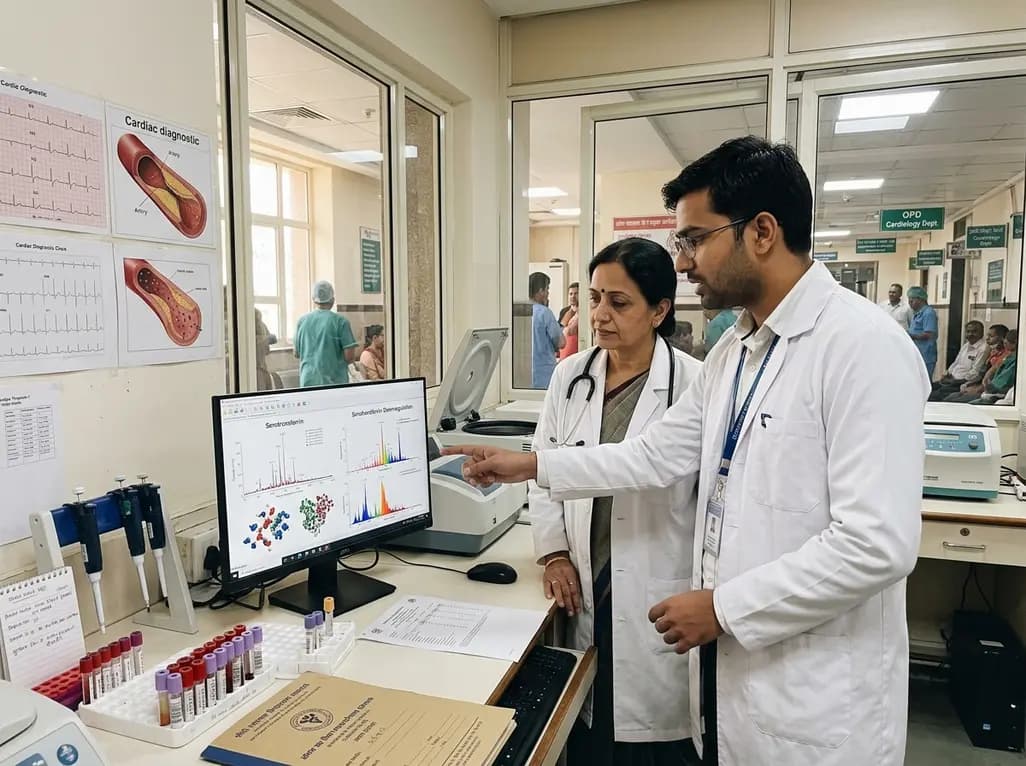
Atherosclerotic cardiovascular diseases remain the leading cause of premature mortality worldwide, necessitating robust methods for early detection. Recently, Indian researchers highlighted the pivotal role of serotransferrin in coronary artery disease pathogenesis. Clinicians conventionally identify arterial stenosis only after significant ischemic damage or luminal obstruction occurs. However, emerging proteomic evidence indicates that circulating iron transporters alter long before overt clinical manifestations emerge. Understanding these molecular shifts empowers clinicians to intervene earlier and improve long-term cardiovascular outcomes.
Coronary artery disease develops through an insidious, chronic inflammatory cascade within the arterial intima. Specifically, low-density lipoproteins accumulate in the subendothelial space and undergo oxidative modification. Subsequently, circulating monocytes migrate into the vascular wall, transforming into macrophages that ingest lipids to form foam cells. This persistent immune activation produces fibrofatty plaques that gradually compromise myocardial perfusion. In addition, ongoing shear stress and endothelial dysfunction accelerate plaque instability. Consequently, patients face an elevated risk of acute coronary syndromes when vulnerable lesions rupture. Traditional risk scores evaluate factors like hypertension, dyslipidemia, and smoking habits. However, these clinical metrics frequently fail to capture active microvascular inflammation during subclinical phases. Therefore, cardiologists require objective, circulating biomarkers that mirror early endothelial perturbation. By detecting pathological alterations before substantial luminal stenosis occurs, healthcare teams can initiate targeted preventive therapies. Furthermore, identifying specific molecular perturbations provides critical mechanistic insight into individual disease trajectories. Ultimately, addressing atherosclerosis at its biochemical inception remains the most effective strategy to prevent irreversible myocardial necrosis and heart failure.
To uncover novel vascular biomarkers, scientists at the CSIR-Institute of Genomics and Integrative Biology conducted an extensive proteomic investigation. Specifically, the research team analyzed blood serum proteins from 50 confirmed coronary artery disease patients and 40 healthy control subjects. The investigators utilized isobaric tags for relative and absolute quantification to profile plasma proteomes with exceptional precision. Among 197 differentially expressed proteins, serotransferrin demonstrated striking downregulation in individuals with coronary disease compared to healthy cohorts. Moreover, the researchers validated these alterations through western blotting and targeted enzyme-linked immunosorbent assays. Lead investigator Dr. Sagarika Biswas emphasized that this iron-transporting glycoprotein holds genuine promise as a sensitive diagnostic marker. In particular, serotransferrin suppression appears during early stages of vascular injury, predating conventional clinical detection. Atherosclerotic progression consistently alters systemic protein expression patterns. Therefore, high-resolution proteomic profiling provides an invaluable window into arterial remodeling. Consequently, this benchmark Indian study, published in Acta Cardiologica, establishes a molecular foundation for improved cardiovascular risk stratification. Through rigorous comparative mapping, the authors demonstrated that circulating transport proteins reflect pathological vascular stress with high reproducibility.
The investigative team also examined the clinical relationship between serotransferrin and established markers of myocardial stress. Most notably, the study revealed a significant inverse correlation between serotransferrin levels and cardiac troponin I concentrations. Troponin I represents a highly specific structural protein found exclusively in cardiac myocytes. When myocardial tissue experiences ischemic injury or necrosis, cellular membrane integrity fails, releasing troponin directly into the circulation. In this cohort, patients with advanced coronary obstruction exhibited elevated troponin I alongside marked reductions in circulating serotransferrin. Furthermore, worsening ischemia and local hypoxia intensify myocardial cellular damage, promoting continuous troponin leakage. Conversely, the accompanying systemic inflammatory environment and metabolic stress suppress hepatic serotransferrin synthesis and reduce its plasma bioavailability. As a result, this reciprocal biomarker pattern offers a dynamic picture of both active tissue injury and impaired transport physiology. Clinicians currently rely heavily on troponins for acute coronary event triage. However, integrating serotransferrin measurements could enhance sensitivity during subacute or chronic evaluations. Thus, tracking both proteins simultaneously may allow earlier recognition of ischemic vulnerability before catastrophic infarction occurs.
Iron plays an indispensable physiological role in cellular metabolism, mitochondrial respiration, and enzymatic defenses. Therefore, maintaining balanced systemic iron kinetics is vital for cardiovascular health. Serotransferrin represents the primary beta-globulin responsible for binding and transporting ferric ions safely through the bloodstream. Under normal physiological conditions, transferrin saturation ranges between 20 and 50 percent. When saturation dips below 20 percent, clinicians diagnose iron deficiency, indicating impaired transport capacity. Importantly, functional iron deficiency frequently occurs in cardiovascular disease even when absolute ferritin stores appear adequate. Chronic vascular inflammation upregulates hepatic hepcidin, which traps iron inside reticuloendothelial macrophages and degrades ferroportin channels. Consequently, plasma iron levels drop, and functional serotransferrin expression diminishes. Dr. Biswas pointed out that lower serotransferrin concentrations directly limit circulating iron delivery to metabolically active tissues. Furthermore, deprived cardiomyocytes struggle to sustain mitochondrial adenosine triphosphate production during sustained ischemic challenges. Hence, systemic dysregulation of iron transport compounds ischemic damage across the myocardium. Evaluating transferrin biology therefore broadens our comprehension of cardiovascular pathophysiology beyond traditional lipid-centric paradigms.
The identification of serotransferrin in coronary artery disease heralds significant advancements for everyday cardiovascular practice. Presently, physicians depend on stress testing, coronary computed tomography, and invasive angiography to evaluate symptomatic patients. While effective, these modalities identify anatomical lesions only after extensive atherosclerosis has developed. In contrast, circulating serotransferrin measurements offer a cost-effective, non-invasive method to gauge subclinical plaque activity. Moreover, identifying reduced serotransferrin could alert practitioners to investigate underlying vascular inflammation and latent iron dysregulation promptly. Longitudinal clinical trials must now determine the precise lead time serotransferrin provides before conventional symptom onset. Additionally, researchers must clarify whether targeted iron repletion or anti-inflammatory therapies restore normal serotransferrin expression in high-risk patients. Because coronary disease disproportionately impacts individuals in low- and middle-income regions, accessible blood biomarkers hold immense public health value. Incorporating serotransferrin into routine multiparametric biomarker panels could significantly refine primary prevention protocols. Ultimately, this discovery equips physicians with a molecular compass to detect vulnerability earlier, optimize lifestyle interventions, and prevent fatal ischemic sequelae.
Q1: What is the biological function of serotransferrin in the human body?
Serotransferrin is a specialised glycoprotein synthesized primarily in the liver. Its primary role involves binding ferric iron securely and transporting it through the bloodstream to tissues requiring iron for enzymatic reactions, cellular metabolism, and erythropoiesis. Furthermore, serotransferrin prevents free iron from generating harmful reactive oxygen species in the circulation. Consequently, adequate serotransferrin concentrations maintain stable iron transport capacity and protect cardiovascular endothelial tissues from oxidative cellular damage.
Q2: Why do serotransferrin levels decline during coronary artery disease progression?
Serotransferrin levels decrease due to systemic inflammation and metabolic stress triggered by coronary atherosclerosis. As arterial plaques develop, injured endothelial cells provoke continuous immune activation and cytokine release. In response, inflammatory cytokines downregulate hepatic serotransferrin synthesis and interfere with systemic iron mobilization. Additionally, worsening myocardial ischemia further suppresses protein availability. Therefore, depleted serotransferrin reflects an active inflammatory state combined with compromised vascular and metabolic homeostasis.
Q3: How does serotransferrin differ from cardiac troponin I in clinical utility?
Cardiac troponin I is a structural protein that leaks into blood when heart muscle cells suffer acute ischemic damage. In contrast, serotransferrin is a circulating iron transporter that declines during early vascular inflammation and subclinical atherosclerotic progression. Consequently, while troponin I detects established myocardial injury, serotransferrin provides earlier prognostic insight. Therefore, it identifies disease before irreversible heart damage occurs.
Disclaimer: This content is for informational and educational purposes only. It does not constitute medical advice or replace professional judgment. Refer to the latest local and national guidelines for clinical practice.
References

Read summarized clinical updates, watch expert medical content, and earn CME certifications right from your smartphone.
Open your smartphone camera to scan and install.





Recent proteomic research from CSIR-IGIB identifies serotransferrin downregulation as a promising circulating biomarker for coronary artery disease. Reduced levels correlate inversely with cardiac troponin I, shedding light on vascular inflammation, functional iron deficiency, and early subclinical atherosclerosis.
last month

Failing to account for competing events like mortality in longitudinal geriatric studies produces biased risk estimates and misleading inferences. This review highlights key methodological principles, insights from the Precipitating Events Project, and practical approaches for clinical research appraisal.
Today

A study in JAMIA Open shows lightweight open-source reasoning LLMs achieve up to 95% sensitivity and accelerate evidence synthesis screening by nearly twentyfold, presenting a cost-effective, scalable AI solution for biomedical research and systematic reviews.
Today
A landmark study details how an enterprise pediatric remote patient management model expanded from a single cardiology pilot to 16 diverse specialty programs by combining centralized digital operations with specialty clinical leadership.
Today

A comparative review of tension band wiring and intramedullary screw fixation in thumb metacarpophalangeal arthrodesis, evaluating union rates, hardware complications, and clinical outcomes.
Yesterday
A breakthrough ultrathin multimodal sensor decouples physical hemodynamic monitoring from disposable electrochemical calibration, achieving long-term wearable glucose prediction with 81.36% accuracy and a 9.12% MARD. This offers a robust, drift-free solution for outpatient metabolic surveillance.
Today
