.webp&w=384&q=75)

Loading, please wait...
Loading, please wait...
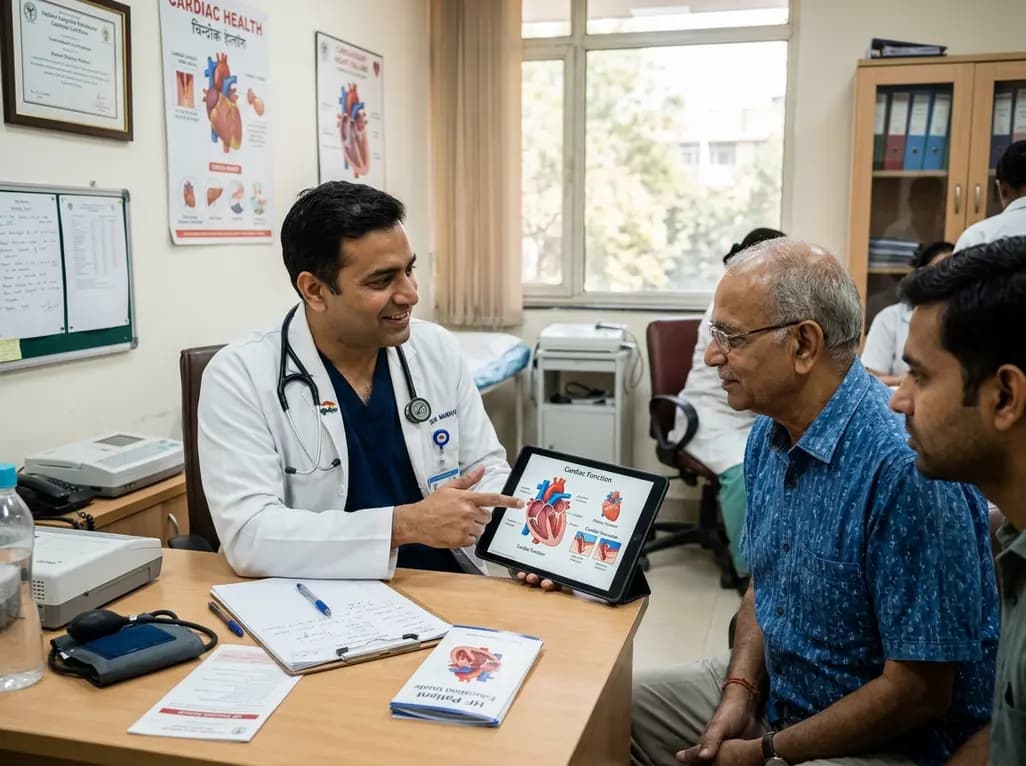
Heart failure represents a progressive clinical syndrome that imposes an immense physical and emotional burden on affected individuals. While contemporary pharmacotherapy and device management form the backbone of guideline-directed medical therapy, non-pharmacological management plays an equally decisive role in long-term outcomes. Clinicians widely recognize structured nursing and educational support as vital tools for reducing hospital admissions and enhancing functional capacity. However, the exact psychological and behavioral mechanisms that translate educational sessions into long-term functional well-being have remained inadequately defined. A robust understanding of heart failure self-care education allows multidisciplinary teams to refine bedside and outpatient teaching protocols. By unraveling whether clinical improvements stem from raw disease knowledge, enhanced coping skills, or structured routine habits, clinicians can design targeted programs that maximize health-related quality of life across diverse demographic cohorts.
Chronic disease education in heart failure extends far beyond handing an informational brochure to a patient prior to hospital discharge. Structured educational programs systematically address complex pathophysiology, sodium and fluid restrictions, symptom recognition, and daily weight tracking. Consequently, patients learn to interpret subtle physical changes such as nocturnal dyspnea, ankle edema, and sudden weight gain before decompensation requires emergency stabilization. Structured nurse-led interventions often combine face-to-face coaching with regular telephone follow-up assessments to reinforce vital self-monitoring behaviors. Therefore, continuous engagement ensures that patients do not merely memorize medical facts but actively convert foundational knowledge into practical daily routines. Furthermore, regular reinforcement through remote follow-up helps bridge the vulnerable transition window between inpatient stabilization and outpatient maintenance therapy, solidifying self-confidence.
In routine clinical practice, structured educational programs establish an interactive therapeutic relationship between healthcare professionals and patients. Rather than delivering a rigid didactic lecture, skilled educators tailor instruction to individual health literacy levels, cultural dietary preferences, and socioeconomic barriers. As a result, patients experience less anxiety regarding complicated multidrug regimens and lifestyle modifications. Moreover, when educational protocols incorporate deliberate problem-solving exercises, patients become proactive participants in their own therapeutic plan. This interactive educational model establishes a dynamic partnership that directly addresses treatment inertia, enhances adherence to life-prolonging therapeutics, and lays the groundwork for sustained behavioral modification throughout the chronic trajectory of the disease.
To examine how educational programs influence health-related quality of life, clinical researchers increasingly employ causal mediation analysis. Traditional observational correlations frequently fail to establish whether improved outcomes arise directly from the intervention itself or indirectly through intermediary clinical parameters. By utilizing counterfactual causal frameworks, investigators can separate direct intervention effects from indirect pathways mediated by dynamic behavioral constructs. Specifically, this statistical approach models how structured teaching at baseline influences interim mediators, such as disease knowledge, self-care maintenance, self-care management, and self-care confidence. Consequently, researchers can quantify the precise proportion of therapeutic benefit attributable to specific psychological and behavioral modifications over subsequent follow-up intervals.
Within this analytical architecture, interim mediators measured at intermediate timepoints serve as critical stepping stones toward long-term physical and emotional health. Evaluating self-care behaviors requires distinguishing between routine maintenance and acute symptom management. While self-care maintenance involves regular physical activity and adherence to low-sodium diets, self-care management encompasses autonomous decision-making during acute symptom worsening, such as taking an extra diuretic tablet. Furthermore, self-care confidence represents the psychological bedrock that empowers patients to execute these vital tasks without overwhelming apprehension. Therefore, causal mediation models clarify which behavioral components must be prioritized during outpatient follow-up consultations to produce the most profound improvements in overall patient-reported health outcomes.
Recent rigorous trial evaluations demonstrate that structured educational programs robustly boost core parameters within three months of initiation. Participants assigned to tailored education and telephone monitoring exhibit marked improvements in disease literacy, self-care maintenance, symptom management, and task-specific confidence. Interestingly, while the intervention effectively enhances self-efficacy and behavioral execution, its direct impact on perceived external social support remains modest. This critical distinction indicates that structured educational programs primarily exert their transformative benefits by fostering internal patient agency rather than by restructuring the patient’s existing domestic social network. Consequently, educational programs empower individuals to master their own health destiny through predictable, repeatable actions.
Moreover, when researchers track patient cohorts over extended follow-up periods, the indirect pathway mediated by behavioral execution emerges as the true driver of long-term health-related quality of life. Knowledge acquisition alone is insufficient to produce lasting clinical relief; factual recall does not alter symptom burdens unless translated into consistent behavioral changes. Patients who actively weigh themselves daily, recognize congestive signs early, and adjust diuretic regimens accurately experience significantly fewer symptomatic episodes and reduced functional impairment. Thus, self-care maintenance and confidence operate as indispensable bridges linking structured educational outreach to tangible physical vitality and emotional well-being at six months post-intervention.
Integrating comprehensive educational interventions into daily hospital workflows poses substantial operational challenges for contemporary cardiology teams. High inpatient turnover rates, severe nursing workforce constraints, and brief consultation windows often limit patient education to hurried discharge instructions. Furthermore, health literacy disparities and linguistic diversity across patient populations can prevent vulnerable individuals from grasping complex self-care concepts. Consequently, clinicians must transition away from one-time verbal warnings and adopt multidisciplinary care pathways that leverage specialized nurse navigators, digital health platforms, and culturally adapted educational media. Systematically integrating structured teach-back techniques during bedside rounds guarantees that patients comprehend critical self-care instructions before leaving the hospital setting.
Additionally, clinicians must proactively address psychological comorbidities, particularly clinical depression and cognitive decline, which frequently derail self-care capabilities in elderly heart failure populations. Depressive symptoms diminish intrinsic motivation, impair problem-solving capabilities, and erode treatment adherence, often neutralizing the clinical advantages conferred by structured educational initiatives. Therefore, routine baseline screening for depressive symptoms and cognitive status must become standard protocol in heart failure management programs. When teams identify significant emotional distress or cognitive impairment, they should adapt the educational program by simplifying management tasks, involving family caregivers, and coordinating collaborative behavioral health consultations to preserve patient safety.
To harness the insights derived from causal mediation research, healthcare providers must deliberately reshape routine clinical encounters. Physicians and clinical nurses should not merely evaluate left ventricular ejection fraction and serum natriuretic peptides; they must actively assess patient confidence in performing self-care routines. Inquiring about a patient’s specific plan of action when weight spikes occur offers profound insight into their functional self-efficacy. Furthermore, acknowledging minor successes in sodium restriction or medication adherence reinforces positive reinforcement loops, steadily elevating the patient’s confidence. Clinicians can thereby transform standard clinical reviews into empowering coaching sessions that continually strengthen the behavioral mediators responsible for durable quality of life gains.
Ultimately, clinical institutions must invest in scalable post-discharge monitoring architectures to support self-care execution over time. Scheduled telephonic check-ins, automated mobile health applications, and community health worker networks provide vital touchpoints that reinforce education during high-risk post-discharge intervals. By combining empathetic direct communication with structured self-care tracking, healthcare systems create a protective safety net around vulnerable heart failure patients. This comprehensive approach ensures that the proven benefits of educational science translate reliably into reduced readmission rates, enhanced functional independence, and substantially improved life quality across the continuum of cardiovascular care.
Structured educational programs systematically address core disease mechanisms, strict sodium and fluid restrictions, consistent daily weight tracking, and comprehensive medication adherence protocols. In addition, these specialized interventions train patients to recognize subtle early symptoms of fluid accumulation, such as worsening dyspnea or progressive lower-extremity swelling. By teaching clear problem-solving steps and reinforcing instructions through scheduled telephone follow-up calls, programs ensure that individuals successfully convert factual knowledge into sustainable, practical daily habits.
Self-care confidence acts as a vital psychological driver that empowers individuals to perform essential daily disease-management tasks effectively. When patients possess robust confidence in their self-monitoring capabilities, they experience significantly less disease-related anxiety and manage acute symptom fluctuations promptly. This enhanced personal agency prevents unneeded treatment delays during early decompensation, which in turn reduces distressing physical limitations, curtails hospital readmissions, and substantially elevates long-term physical and emotional quality of life.
Acquiring theoretical disease knowledge represents only the initial foundation of chronic disease management. Knowing dietary restrictions or target dosages does not yield clinical benefits unless a patient consistently integrates that information into daily behavioral choices. Causal mediation research indicates that health-related quality of life improves primarily when patients translate knowledge into active self-care maintenance and effective symptom management. Actionable habits and decisive self-management ultimately mitigate the disabling symptoms of progressive heart failure.
Disclaimer: This content is for informational and educational purposes only and does not constitute medical advice, diagnosis, or treatment. Healthcare professionals must exercise independent clinical judgment. Refer to the latest local and national guidelines for clinical practice.
References

Read summarized clinical updates, watch expert medical content, and earn CME certifications right from your smartphone.
Open your smartphone camera to scan and install.





Discover how targeted educational interventions enhance health-related quality of life in heart failure patients by fostering self-care behaviors and confidence, as demonstrated through causal mediation analysis.
last month

Review how tailored exercise programs benefit frail older patients with heart failure. Explore pathophysiological mechanisms, individualized training prescriptions, and strategies to overcome adherence barriers in clinical practice.
Today

Recent clinical studies reveal maternal autoantibodies targeting IL-1RA as potential triggers for preterm labor, opening avenues for targeted cytokine therapies. Concurrently, new perioperative findings show inhaled cannabis increases propofol requirements during upper endoscopy compared to oral edible consumption.
Today

In high-risk pulmonary embolism complicated by severe anemia and active uterine bleeding, systemic thrombolysis is contraindicated. Large-bore aspiration thrombectomy provides rapid hemodynamic rescue without fibrinolysis, supported by inferior vena cava filter placement and multidisciplinary critical care.
Today

This comparative study evaluates posterior labral tears with and without glenohumeral instability, highlighting distinct demographic patterns, MRI underestimation in stable shoulders, and successful arthroscopic repair outcomes.
Today

A clinical study demonstrates that early intervention with tocilizumab, either as monotherapy or bridged with corticosteroids, achieves significant proptosis reduction and resolves active inflammation in treatment-naive thyroid eye disease.
Today
