.webp&w=384&q=75)

Loading, please wait...
Loading, please wait...
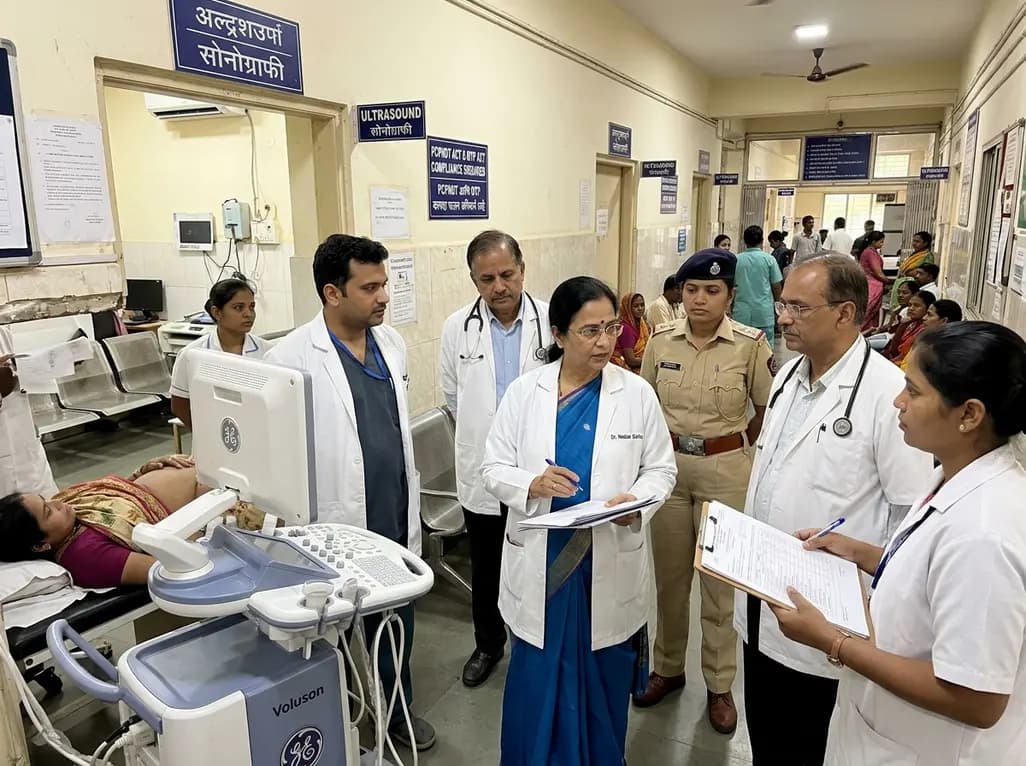
The Government of Maharashtra has recently announced a major administrative drive to eliminate illegal sex determination and prevent female foeticide. Consequently, the state public health department issued a formal resolution establishing a high-level regulatory body. This specialized intervention reinforces PCPNDT Act enforcement across municipal and rural jurisdictions. The dedicated drive targets systemic non-compliance, unauthorized pregnancy terminations, and unregistered imaging machinery. By mobilizing inter-departmental oversight, state officials intend to safeguard the child sex ratio. Furthermore, authorities seek to ensure strict adherence to established reproductive healthcare statutes.
The newly formed state task force operates under the leadership of Maharashtra Legislative Council member Dr. Neelam Gorhe. Additionally, the government appointed seven prominent women legislators to the regulatory panel. These members include Dr. Pragya Satav, Bhavana Gawali, Chitra Wagh, Uma Khapre, Dr. Manisha Kayande, Sneha Dubey Pandit, and Shweta Mahale. Furthermore, the Additional Director of the State Family Welfare Bureau in Pune serves as the member-secretary.
This specialized regulatory panel holds an official tenure of three years. During this period, members will systematically visit diverse districts and municipal corporations. Their core responsibility involves reviewing the ground-level performance of designated Appropriate Authorities. Consequently, the task force bridges the gap between state health directorates and local administrative machinery.
Moreover, the panel will submit quarterly analytical reports directly to the Public Health Department. These quarterly dossiers will detail regional inspection findings, systemic lapses, and recommended punitive measures. Therefore, municipal commissioners and district collectors must provide complete logistical, administrative, and data support. Ultimately, this structured political and administrative oversight ensures swift institutional accountability across all Maharashtra health territories.
Rigorous PCPNDT Act enforcement represents the central pillar of the newly constituted task force mandate. Decades after Parliament enacted the law in 1994, clandestine sex determination networks continue to challenge regulatory bodies. Therefore, the task force focuses extensively on sonography clinics, genetic laboratories, and diagnostic imaging centers. Unannounced site inspections will evaluate operational workflows to detect illicit sex determination practices early.
Additionally, inspectors will scrutinize the registration status of diagnostic equipment. The illegal deployment of portable ultrasound machines remains a serious regulatory concern across semi-urban and rural districts. Portable machines enable unregistered practitioners to conduct off-site fetal evaluations. Consequently, authorities have placed mobile scanners under severe surveillance.
Flying squads will cross-verify machine serial numbers against official district registry records during surprise audits. Furthermore, enforcement teams will assess whether clinical centers prominently exhibit required statutory notices prohibiting sex selection. Technicians and radiologists who fail to maintain complete patient registers will face rapid equipment seizure. Thus, the government aims to eliminate covert communication of fetal sex. Ultimately, sustained oversight will protect female fetuses and improve the state's child sex ratio at birth.
Beyond fetal imaging regulation, the task force holds explicit authority to enforce the Medical Termination of Pregnancy Act. Illegal abortions often function hand-in-hand with clandestine prenatal sex determination. Therefore, state authorities are deploying a synchronized oversight strategy that examines diagnostic and therapeutic facilities together. This dual approach ensures that pregnancy terminations happen only within approved institutions under qualified medical supervision.
Consequently, inspectors will evaluate private nursing homes and maternal clinics offering surgical or medical abortion services. Registered Medical Practitioners must strictly document the clinical indications justifying every pregnancy termination. For instance, practitioners must verify gestational age limits, obtain valid statutory consent, and preserve maternal confidentiality. Moreover, facilities must record the dispensation of medical abortion pills with absolute precision.
In addition, unauthorized backroom abortion providers will face immediate criminal proceedings. Unregulated terminations severely endanger maternal health, causing severe hemorrhage, uterine perforation, sepsis, and maternal mortality. By weeding out illegal providers, the task force protects female reproductive rights. Furthermore, authorities ensure that legitimate abortion care remains safe, legal, accessible, and compliant with national reproductive standards.
To execute effective surveillance, the task force will collaborate closely with local law enforcement and civil surgeons. These inter-departmental teams will deploy decoy operations to expose illicit networks. Such networks often involve unethical brokers, ultrasound operators, and clandestine clinics. Historically, covert operations have yielded crucial documentary evidence against organized rackets operating across district boundaries.
Consequently, active sting operations will remain a vital enforcement tool during the three-year campaign. Additionally, the task force will audit administrative tracking mechanisms across municipal corporations. Officials will verify whether local authorities maintain updated online portals for mandatory scan filings. Sudden statistical discrepancies in birth sex ratios within specific talukas will immediately trigger focused on-site investigations.
Therefore, district collectors must maintain active oversight over statistical trends in their respective jurisdictions. Furthermore, the task force will review prosecution records to address procedural delays in pending judicial matters. In many instances, legal technicalities allow violators to evade penalties. To overcome this hurdle, the panel will recommend standardized evidentiary protocols to ensure robust legal convictions. As a result, administrative bodies will handle violations with speed, transparency, and uncompromised legal accuracy.
For legitimate radiologists, obstetricians, and clinic directors, heightened regulatory activity requires rigorous internal documentation standards. The most critical operational mandate centers on the meticulous completion of statutory Form F. Sonologists must record complete patient identity proof, obstetrical history, and clinical indications before scanning. Incomplete or retroactively signed forms represent non-compoundable statutory offenses under current jurisprudence.
Consequently, medical administrators must organize monthly internal compliance audits. Diagnostic centers should preserve all electronic ultrasound logs, physical registers, and consent forms securely for two years. Additionally, imaging centers must submit Form F summaries to the local Appropriate Authority by the fifth day monthly. Any planned alteration in machine location, servicing, or operating personnel requires prior statutory notification.
Furthermore, medical establishments must educate clinical and nursing staff regarding legal restrictions and patient rights. Ensuring transparent record-keeping shields honest healthcare providers from unwarranted harassment during surprise task force visits. Ultimately, proactive legal adherence guarantees smooth clinical workflow, maintains professional integrity, and upholds ethical medical standards throughout Maharashtra.
Q1: What specific mandate does the new Maharashtra task force hold?
The newly constituted task force holds a three-year mandate to eradicate prenatal sex selection and unauthorized abortions across Maharashtra. Led by Dr. Neelam Gorhe, the body conducts unannounced inspections of private and public sonography centers. Additionally, the panel collaborates with district collectors and civil surgeons to evaluate enforcement data. It submits comprehensive quarterly reports to the Public Health Department to drive punitive administrative actions and ensure strict statutory compliance.
Q2: How does the PCPNDT Act regulate routine obstetric ultrasound scans?
The PCPNDT Act strictly prohibits disclosing or seeking the sex of a fetus under any circumstances. Consequently, registered ultrasound centers must maintain meticulous documentation for every pregnant woman examined. Radiologists and sonologists must obtain a signed Form F declaration before scanning. Furthermore, facilities must preserve scan reports, patient identification records, and clinical indications for at least two years. Failure to comply can result in machine confiscation, license suspension, and criminal prosecution.
Q3: What immediate steps must diagnostic clinics take to maintain full compliance?
Diagnostic facilities must display valid registration certificates and mandatory statutory warning boards in Marathi and English prominently. Additionally, staff must update digital tracking systems and physical Form F registers without clerical omissions. Practitioners should ensure that only registered sonologists perform scans on authorized equipment. Furthermore, clinical centers must submit monthly records to the local Appropriate Authority by the fifth day of every month to prevent punitive inspections and audits.
Disclaimer: This content is for informational and educational purposes only. It does not constitute medical advice or replace professional judgment. Refer to the latest local and national guidelines for clinical practice.
References

Read summarized clinical updates, watch expert medical content, and earn CME certifications right from your smartphone.
Open your smartphone camera to scan and install.





The Maharashtra public health department has established a specialized task force headed by Dr. Neelam Gorhe to eliminate illegal sex determination and unauthorized abortions. The team will execute surprise inspections of ultrasound facilities, audit medical documentation, and enforce strict statutory standards.
Today

Declining international regulatory farm visits have coincided with a widespread parasitic produce contamination crisis. Healthcare professionals must understand the pathophysiology of Cyclospora cayetanensis, identify prolonged watery diarrhea, order specific stool assays, and initiate targeted antimicrobial therapy.
Today

Protosappanin A, derived from Caesalpinia sappan, suppresses atherosclerosis by regulating the MDM2/GPX4 axis to halt endothelial ferroptosis, reducing plaque burden, lowering lipid peroxidation, and preserving vascular integrity in preclinical models.
Today

A propensity-matched study reveals that patients with severe generalized ligamentous laxity experience a slower recovery trajectory after hip arthroscopy for femoroacetabular impingement. While final two-year outcomes remain favorable, tailored rehabilitation and capsular management are critical.
Today

Researchers have developed an innovative ultrasound-responsive nano-contrast agent that co-delivers CIITA-siRNA and rapamycin directly to inflamed thyroid tissue, significantly reducing autoimmune injury and thyroid autoantibodies in preclinical models of Hashimoto thyroiditis.
Today
