.webp&w=384&q=75)

Loading, please wait...
Loading, please wait...

Modern medical training is rapidly evolving, with serious games in anatomy emerging as a key interest for digital-native students. Serious games (SGs) provide interactive platforms where learning objectives take priority over mere entertainment. Educators today face a choice: develop proprietary tools or invest in commercially available serious games (CASGs). However, a recent systematic evaluation suggests that the current commercial market might focus more on engagement than deep pedagogical structure.
An extensive environmental scan identified nearly 900 digital games dedicated to anatomy education. Most of these applications are quiz-based and designed for single-player use. Furthermore, many lack official affiliations with academic institutions. While these games often provide immediate in-game feedback, they frequently miss essential elements like adaptivity and collaboration. Consequently, their role in fostering complex understanding remains limited. For serious games in anatomy to be effective, they must move beyond simple rote memorization.
The study highlights a significant gap in instructional design. Features supporting social interaction or personalized learning paths are remarkably scarce. Therefore, while these tools are accessible, they may not yet replace traditional dissection or formal lectures. Educators should carefully evaluate the underlying pedagogical principles before integrating these games into their curriculum.
As the National Medical Commission (NMC) emphasizes competency-based medical education in India, digital tools are becoming indispensable. Serious games in anatomy offer a low-risk environment for students to visualize complex 3D structures. Nevertheless, the current market trends suggest that many games act as supplementary \"revision tools\" rather than comprehensive teaching platforms. Educators must look for games that encourage critical thinking and offer collaborative features.
Future development should prioritize pedagogical robustness. By aligning game mechanics with established learning theories, developers can create more immersive experiences. This shift will ensure that digital tools truly enhance the educational journey of medical undergraduates in India and beyond.
Current research suggests they are excellent for knowledge acquisition and engagement. However, they are most effective when used as a supplement to traditional methods like cadaveric dissection.
Educators should prioritize games that offer clear pedagogical principles, such as adaptivity, collaboration, and high-quality in-game feedback rather than simple quiz-based mechanics.
Disclaimer: This content is for informational and educational purposes only. It does not constitute professional medical advice, diagnosis, or treatment. Always seek the advice of your physician or other qualified healthcare provider with any questions you may have regarding a medical condition. Refer to the latest local and national guidelines for clinical practice.
References
Haeng ALC et al. Environmental scan and pedagogical evaluation of commercially available digital serious games for anatomy education. Anat Sci Educ. 2026 May 16. doi: 10.1002/ase.70257. PMID: 42141858.
Al Habsi et al. Are Serious Games an Effective Teaching Tool in Anatomy Education? A Systematic Review. Applied Sciences. 2025; 15(5):2474. doi: 10.3390/app15052474.
Sharma D. Revolutionizing Medical Education in India: Bridging the Gap Between Tradition and Technology. IHW Council. March 2024.

Read summarized clinical updates, watch expert medical content, and earn CME certifications right from your smartphone.
Open your smartphone camera to scan and install.





Systematic evaluation of commercially available digital serious games for anatomy shows limited pedagogical depth despite their growing availability for stu...
5 months ago
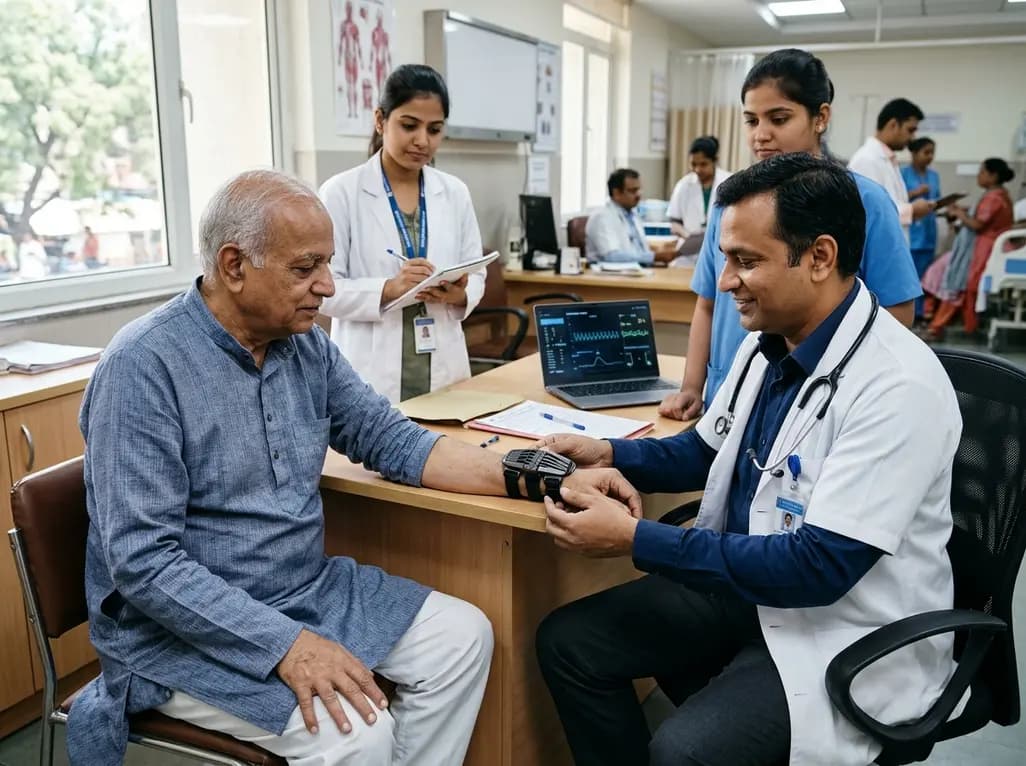
The TREM-AB open-label pilot study evaluated a wearable passive nonlinear vibration absorber for essential tremor. The Nonlinear Energy Sink bracelet reduced clinical Fahn-Tolosa-Marin tremor scores by 32.1% and electrophysiological tremor power by 49.2% with no adverse effects reported.
Today

A population-based study of 20,928 children reveals that small vulnerable newborns face sex-divergent mental capital outcomes at ages 6-7: term SGA girls show higher behavioral difficulties and lower resilience, while preterm non-SGA boys experience increased behavioral problems.
Today
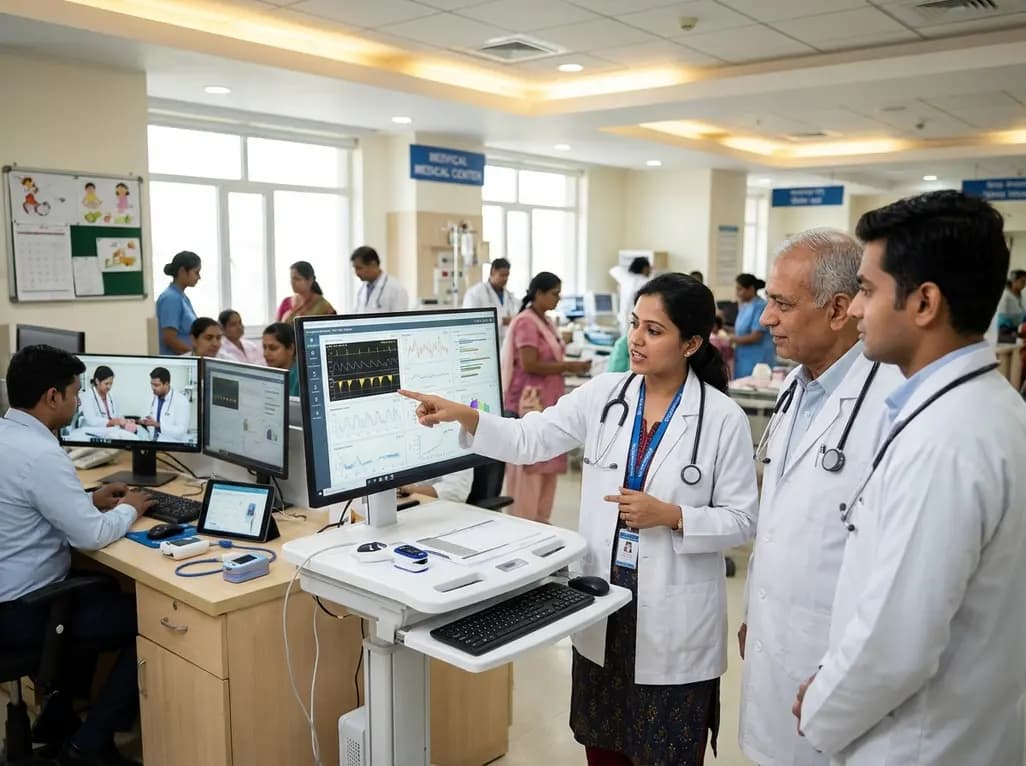
A landmark study details how an enterprise pediatric remote patient management model expanded from a single cardiology pilot to 16 diverse specialty programs by combining centralized digital operations with specialty clinical leadership.
Today
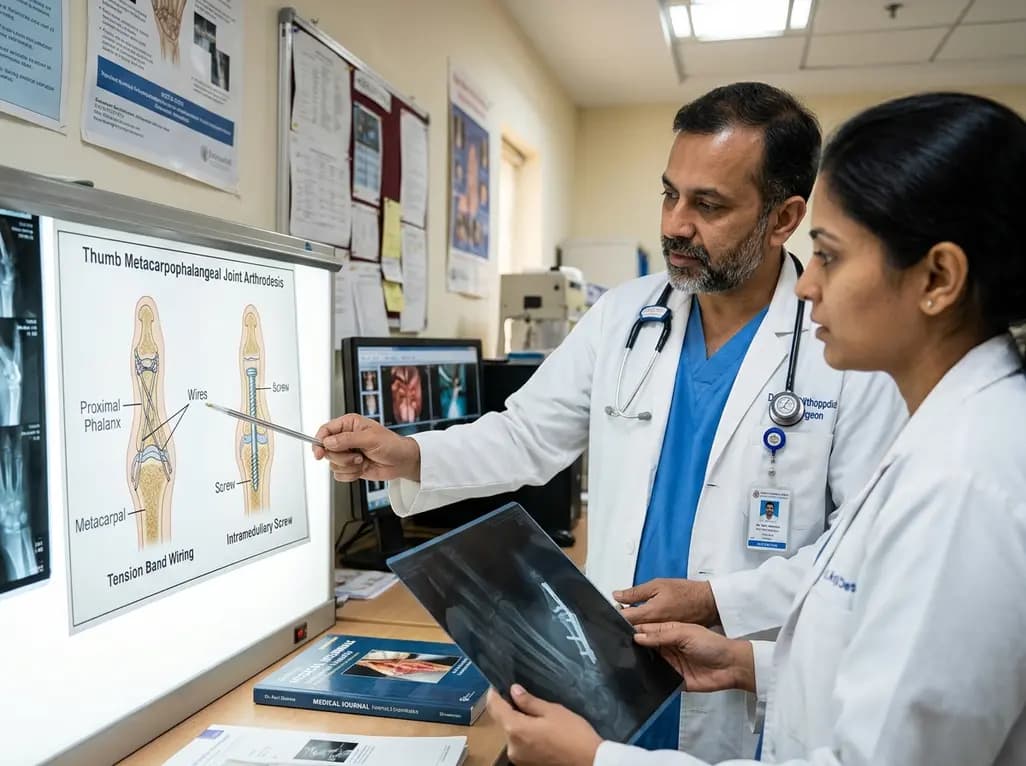
A comparative review of tension band wiring and intramedullary screw fixation in thumb metacarpophalangeal arthrodesis, evaluating union rates, hardware complications, and clinical outcomes.
Today
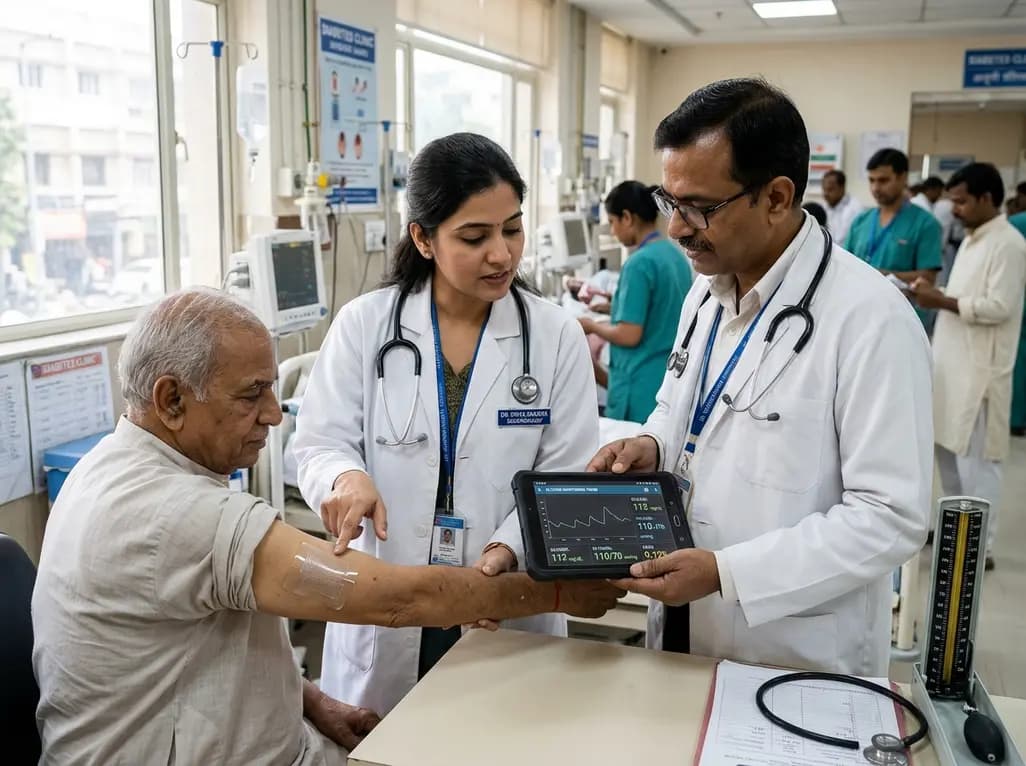
A breakthrough ultrathin multimodal sensor decouples physical hemodynamic monitoring from disposable electrochemical calibration, achieving long-term wearable glucose prediction with 81.36% accuracy and a 9.12% MARD. This offers a robust, drift-free solution for outpatient metabolic surveillance.
Today
